

China Has Begun To Push Russia Out Of The Arms Market In The Former Soviet Union
- 27.08.2026, 19:06
- 1,002
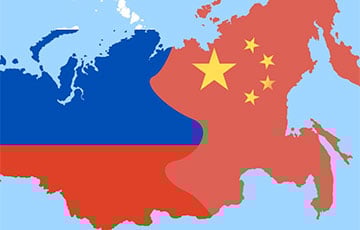
Central Asian countries are distancing themselves from the Kremlin.
After the collapse of the Soviet Union, Russia remained for a long time the natural partner of the Central Asian countries in the field of arms supplies—they all originated from the same military-industrial complex. China began gradually cooperating with them on defense matters as early as the late 2010s. But after Vladimir Putin unleashed a war in Ukraine, the former Soviet republics began to diversify their military arsenals much more actively—so as not to be so heavily dependent on a country that considers the “near abroad” a sphere of its undivided influence, reports The Moscow Times.
For Central Asian countries, China has long been primarily a trade and investment partner, but it is now rapidly gaining a foothold in their defense markets, according to an analysis by The Caspian Post. Beijing is selling drones, transport aircraft, armored vehicles, and air defense systems; financing infrastructure to secure borders; and expanding cooperation with regional security forces.
Turkmenistan, for example, has acquired long-range (HQ-9) and medium-range (HQ-12) air defense systems, while Uzbekistan has acquired the FD-2000, an equivalent of the HQ-9. Uzbekistan and Kazakhstan, in particular, have demonstrated a willingness to integrate major Chinese equipment into their air forces: the former appears to have recently received four Chengdu J-10CE multi-role fighters and may have agreed to the delivery of another 20, according to Eurasianet; the latter is already operating eight Y-8F-200 military transport aircraft. Air defense is one of the most critical and sensitive elements of national security, so admitting a new supplier into this sector has significant strategic implications, The Caspian Post points out.
The country is effectively allowing such a partner to become part of its airspace defense system. The same applies to fighter jets. Furthermore, the purchase of such systems creates long-term ties with a supplier that will provide missiles, spare parts, engines, software, and services for modernization and personnel training for years, if not decades.
The expansion of the arsenal with Chinese weapons is taking place despite the fact that Kazakhstan, Kyrgyzstan, and Tajikistan, along with Russia, are members of the Collective Security Treaty Organization (CSTO). But Tajikistan even showcases Chinese military equipment at parades in Dushanbe, according to the defense analysis firm Jane’s. In particular, it has purchased armored personnel carriers, armored vehicles, self-propelled mortar systems, and small arms.
China is also financing the construction and development of security facilities along the Tajik-Afghan border, including to protect its transport corridors and investments in the economies of Central Asian countries.
Countries in the region are also purchasing drones from China, a trend that has become particularly relevant against the backdrop of the “drone war” into which the conflict in Ukraine has largely turned. For example, Kazakhstan, Uzbekistan, and Turkmenistan have expanded their arsenals with Wing Loong and CH-3A combat drones.
According to the Stockholm International Peace Research Institute (SIPRI), Russia’s total arms exports fell by 64% between 2021 and 2025 compared to 2016–2020, and its share of global exports dropped from 21% to 6.8%.

Bank's name: Bank Millennium S.A.
Address: ul. Stanislawa Zaryna, 2A, 02-593, Warszawa
IBAN: PL97116022020000000216711123
SWIFT: BIGBPLPW
Name of the account holder: Fundacja “KARTA ‘97”
Purpose/title of payment: Donation for statuary aims
You can contact us by the e-mail charter97@gmail.com