
Scientists Have Uncovered The Secret Of A Scroll That Survived The Eruption Of Vesuvius
1- 30.08.2026, 20:34
- 3,802
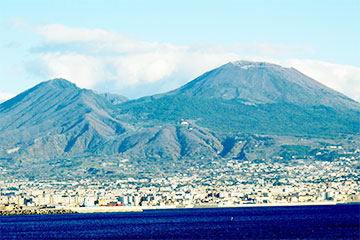
An unknown philosophical treatise was found inside.
Using X-ray tomography, 3D reconstruction, and artificial intelligence, researchers were able to fully decipher the preserved portion of one of the charred scrolls from Herculaneum. Nearly 1.5 meters of ancient text were successfully reconstructed without physically unrolling the papyrus, which could have crumbled at the slightest touch, according to DescOPERĂ.
Nearly two thousand years ago, the eruption of Vesuvius destroyed Herculaneum and buried its library under layers of volcanic debris. The intense heat charred hundreds of papyrus scrolls, rendering them extremely fragile.
In the 18th century, the scrolls were discovered during excavations at the so-called Villa dei Papiri. However, attempts to physically unroll some of them resulted in damage or the complete destruction of the papyrus. Because of this, a significant portion of the ancient library remained inaccessible to researchers.
The international Vesuvius Challenge project is attempting to change this situation. On June 25, 2026, the team announced the first virtual unrolling and complete reading of the surviving portion of scroll PHerc. 1667.
What They Were Able to Read
The researchers obtained nearly 1.5 meters of text, spread across approximately 20 columns. It is tentatively dated to the 2nd century BCE or, possibly, the late 3rd century BCE.
The text is devoted to philosophy, specifically issues of ethics, human behavior, virtues, vices, choice, happiness, and impulse. It also mentions the concept of “phronesis”—practical wisdom.
Based on its content, researchers believe the work is most likely associated with Stoic philosophy. The text mentions Aristocreon—a relative and student of the famous Stoic Chrysippus. However, the author’s name and the title of the treatise itself remain unknown.
How the papyrus that must not be touched was deciphered
To study the scroll, the team used X-ray microtomography at a high-energy facility, specifically at beamline BM18 of the European Synchrotron Radiation Facility in Grenoble, France.
This technology allows for the creation of an extremely detailed 3D image of the scroll’s interior. Computer algorithms then reconstruct the individual layers of the papyrus and virtually unroll them. The next step is to search for traces of ink, which—due to charring—are almost indistinguishable from the papyrus itself.
This is where artificial intelligence comes into play: algorithms help identify structures that may be letters. The results are then verified by papyrologists.
In this way, the scroll is effectively unrolled in a digital space without physically damaging it.
Another scroll revealed the title of a lost work
PHerc. 1667 is not the only significant finding from the 2026 research. While working on papyrus PHerc. 139, scholars were able to decipher the inscription at the end of the scroll: “Philodemus, On the Gods, Book VIII.”
This discovery is of particular significance to historians of ancient philosophy. It indicates that the work by the Greek Epicurean philosopher and poet Philodemus of Gadara, *On the Gods*, consisted of at least eight books. Previously, only the first book was known.
Hundreds of scrolls still conceal texts
Despite this technological breakthrough, the work is just beginning. More than 600 scrolls from Herculaneum remain unexamined.
As part of the Vesuvius Challenge project, 45 scrolls and fragments have already been scanned, but PHerc. 1667 was the first to be successfully virtually unrolled and read from beginning to end within the limits of the surviving portion.
Each papyrus has its own distortions, tears, and damage, so there is no universal method for reading all the scrolls yet. One of the main challenges remains the detection of ink.
However, the results from PHerc. 1667 demonstrate a fundamentally new possibility: texts that were considered lost forever can be reconstructed without opening the ancient scrolls themselves.

Bank's name: Bank Millennium S.A.
Address: ul. Stanislawa Zaryna, 2A, 02-593, Warszawa
IBAN: PL97116022020000000216711123
SWIFT: BIGBPLPW
Name of the account holder: Fundacja “KARTA ‘97”
Purpose/title of payment: Donation for statuary aims
You can contact us by the e-mail charter97@gmail.com