

NATO Has Made It Clear What It Will Do About Kaliningrad
3- 31.08.2026, 9:47
- 5,542
The Alliance is ready to respond.
In July, the Russian military conducted exercises in the Kaliningrad Region to practice procedures in the event of the mobilization of the region’s residents. By the end of August, U.S.-led allies had assembled an air force task force near the enclave’s borders.
A week after the NATO military aviation exercises, CIA Director John Ratcliffe arrived in Moscow on an unannounced visit. This was the CIA director’s first visit to Russia since the Kremlin launched a full-scale war against Ukraine.
Scheduled exercises?
Across Russia, exercises have taken place or are currently underway in which the military is testing the system’s readiness to accommodate a large number of newly mobilized personnel, as recently reported by Western intelligence sources. One such exercise took place in the Kaliningrad region—military personnel from St. Petersburg traveled there specifically to practice the practical procedures for mobilizing local residents: where to house them, what to feed them, and how to supply them with weapons and everything else needed to send them to the front lines. So far, the Kremlin is in no hurry to announce whether a decision on mobilization has been made; it is possible that it will be announced after the State Duma elections in September. So for now, this is just a rehearsal: the system is testing whether it is ready to accept people it has not yet been ordered to recruit.
The mass mobilization of people into the army could give new impetus to the Russian military machine, which has been badly battered by the Ukrainian Armed Forces, but at the same time, it is both a signal and a threat to Western countries—and above all to Lithuania, Latvia, Estonia, and Poland. The situation in the Baltic Sea region is tense. On August 16, a drone appeared in Romanian airspace and was shot down by the Romanian Air Force. Two days earlier, an Italian Eurofighter, scrambled from a military base in Šiauliai, Lithuania, shot down a drone over eastern Latvia—35 km from the Russian border. It later emerged that the drone was Ukrainian and had likely veered off course due to Russian electronic warfare measures, though another theory suggested that the Ukrainian drone had been grounded, reprogrammed, and sent to Latvia with provocative intentions by the Russian military.
The Key to the Gate
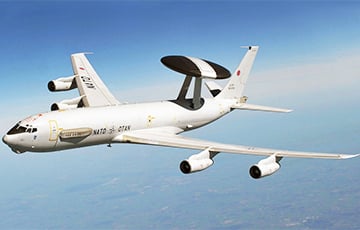
In late August, the North Atlantic Alliance unexpectedly assembled an impressive military aviation task force in the Baltic region. The force included American and Norwegian fighter jets, an E-3A AWACS long-range radar detection aircraft, an Artemis II reconnaissance aircraft, aerial refueling tankers, and Apache attack helicopters. According to various sources, between 25 and 50 aircraft were in the air at any given time.
Officials did not disclose the exact number, citing operational security. The star of the show was the EA-37B Compass Call—the latest American electronic warfare aircraft, designed to jam enemy communications, radars, and command-and-control systems. It joined the operational mission from its base in Crete: it flew to Poland and circled west of Kaliningrad for about two hours. It is unknown what tasks the aircraft was performing near the border of the exclave. Publicly available data does not allow us to determine whether its specialized equipment was activated or exactly which systems may have been the targets of surveillance. However, the route itself demonstrates and proves that the Americans decided to display military force near one of the areas with the highest concentration of Russian air defense and electronic warfare installations. It is quite possible that NATO’s air forces were demonstrating their ability to neutralize modern Russian defense systems deployed in Kaliningrad.
Paper and the Sky
The day before the start of the maneuvers in Alliance airspace near the Kaliningrad region, the German newspaper *Bild* published an article detailing NATO’s land warfare concept—the NATO Land Warfighting Concept. NATO plans to stop a Russian attack on the Baltic states in three steps.
The first is neutralizing the missile threat, with the Kaliningrad region—and its concentration of air defense systems and missile complexes—as the primary target.
The second step is an “autonomous zone” along the borders with Russia and Belarus, where only drones and ground robots engage in combat.
And the third is strikes against logistics deep within Russian territory.
Whether this is a coincidence or not, I’ll say it again: first, Bild publishes an article on how NATO intends to gain air superiority and defend the Baltic states, and the very next day, NATO’s air forces demonstrate that this plan exists not only on paper.
And a week later, CIA Director John Ratcliffe arrived in Moscow on an unannounced visit.
Why did Ratcliffe come?
When we talk about Ratcliffe’s visit to Moscow, the first thing that comes to mind is surprise and shock: the director of the U.S. Central Intelligence Agency is flying to Russia for the first time since the Kremlin unleashed a full-scale war against Ukraine.
Previously, special envoys Steve Whitcoff and Jared Kushner had traveled to Moscow on business jets. But Ratcliffe flew to Moscow on a U.S. Air Force Boeing C-17A Globemaster III, even though he could have used business jets modified for U.S. Air Force needs, such as the C-40 Clipper or the C-37A/B. This massive military transport aircraft, capable of deploying about 100 fully equipped paratroopers, is one of the symbols of the U.S. Air Force’s might—and it is a language that the Kremlin has understood best, at least since the time of Peter the Great. The media cite several reasons for Ratcliffe’s visit: a likely Russian mobilization, an intensification of Ukrainian attacks on Russian territory, a war with Iran, or a possible provocation by Moscow against NATO member states. It is possible that the reason is quite prosaic: Congressional elections will be held in the U.S. this fall, Trump’s approval rating—and consequently that of his party—leaves much to be desired, and the U.S. president simply needs something he can pass off as a success.
Script in the actors’ hands
Air Force activity in the Kaliningrad region has long become routine; intercepts of Russian military aircraft with their transponders turned off are so routine that the Lithuanian Ministry of Defense publishes them almost like a weather forecast. But large-scale NATO exercises are a different story. Aircraft conducting reconnaissance, target designation, and electronic warfare were operating simultaneously in the air, including fighters and tanker aircraft. In other words, this was a composition required not for patrolling, but for operations within Russia’s access-denial system.
The NATO Air Force exercises serve simultaneously as training, reconnaissance, and an unambiguous signal to the Kremlin.
And CIA Director John Ratcliffe’s visit to Moscow is most likely a final warning: do not cross what is already a very thin red line.
Not every rehearsal means that the premiere is scheduled. It means something else: the script has already been written, the roles have been assigned, and the actors have their lines in hand.
Vytold Yanchys, The Moscow Times

Bank's name: Bank Millennium S.A.
Address: ul. Stanislawa Zaryna, 2A, 02-593, Warszawa
IBAN: PL97116022020000000216711123
SWIFT: BIGBPLPW
Name of the account holder: Fundacja “KARTA ‘97”
Purpose/title of payment: Donation for statuary aims
You can contact us by the e-mail charter97@gmail.com