
The SBU Reported The Results Of A Special Operation Against Russia Approved By Zelenskyy
1- 4.08.2026, 22:16
- 1,832
The campaign lasted 40 days.
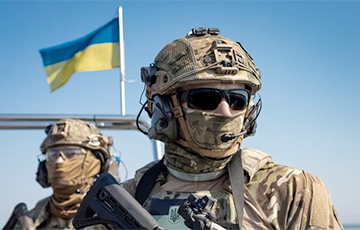
As part of a 40-day campaign to exert pressure on Russia, approved by Ukrainian President Volodymyr Zelenskyy, the Security Service of Ukraine (SBU) has carried out more than 100 successful strikes against strategically important targets in Russian territory and in the temporarily occupied territories of Ukraine. The SBU press service reported this on August 4.
According to the agency, the president has already coordinated new operations with the head of the SBU, Major General Oleksandr Poklad.
“Over the past 40 days, the Security Service has targeted enterprises of the military-industrial complex, air bases, air defense systems, the occupiers’ command posts, military ships, and tankers of the ‘shadow fleet,’ oil refineries, as well as transportation and military logistics facilities. At the same time, SBU units operating on the front lines and behind enemy lines have destroyed more than 21,000 pieces of military equipment, weapons, and military infrastructure, and have eliminated nearly 5,000 occupiers,” the press release states.
The SBU reported on the systematic destruction of Russian military aircraft and air defense systems. One of the main focuses of the campaign was described as the systematic destruction of the enemy’s aviation infrastructure. According to the agency, strikes were carried out during the specified period against the military airfields in Saki, Gvardeyskoye, Belbek, Bagero, Engels, and Khanskaya, as well as against the Yevpatoria Aviation Plant.
In addition, the SBU reported the destruction of a Tu-95MS strategic bomber, confirmed the destruction of two Su-35 fighters and two L-39 combat-training aircraft, as well as the destruction of hangars containing Su-24s, Su-30 and Su-30SM aircraft, hangars housing Shahed drones, and airfield fuel infrastructure.
During this time, Ukrainian forces also weakened the occupiers’ air defense systems; targets struck included the “Nebo-U” radar, the 92N6E multifunctional radar of the S-400 system, the “Tor-M2” air defense missile system, the “Pantsir-S2” air defense system, the “Pole-21” electronic warfare system, three “Podlet-K1” radars, and the “Kasta-2E2” radar.
“One of the key focuses of the campaign has been the systematic destruction of the Russian Federation’s fuel and energy infrastructure. Over the course of 40 days, the SBU struck 14 oil refineries, dozens of oil depots, tank farms, oil pumping stations, oil terminals, and an oil production platform,”, the press service reported. It identified the most important targets as the St. Petersburg, Yaroslavl, Nizhny Novgorod, Perm, and Volgograd oil refineries; three oil refineries in Ufa; the “First Plant” complex; the “Cherkasy” and “Subhankulovo” oil pumping stations, as well as the oil production platform at the Filanovsky field in the Caspian Sea.
The SBU also reported on the destruction of “shadow fleet” vessels and the results of combat operations on the front lines, specifically the destruction of 24 Russian tanks, 63 armored fighting vehicles, 124 artillery systems, 22 multiple-launch rocket systems, 40 air defense systems, 14 aircraft and helicopters, as well as more than 11,000 UAVs and ground-based robotic systems, including 176 Shahed-type drones, 712 UAV crews along with their positions, launchers, and equipment.
“Overall, the 40-day campaign was aimed at simultaneously weakening key elements of the Russian military machine. In terms of intensity, geographic scope, and the number of strategic targets struck simultaneously, this operation proved to be an effective mechanism for exerting pressure on the aggressor state. Efforts to reduce Russia’s military-economic potential will continue,” the ministry concluded.

Bank's name: Bank Millennium S.A.
Address: ul. Stanislawa Zaryna, 2A, 02-593, Warszawa
IBAN: PL97116022020000000216711123
SWIFT: BIGBPLPW
Name of the account holder: Fundacja “KARTA ‘97”
Purpose/title of payment: Donation for statuary aims
You can contact us by the e-mail charter97@gmail.com