

How Ukraine And The West Can Overcome Russia's Ballistic Missile Trap
7- 5.08.2026, 19:27
- 2,566
Analysis by military experts.
Ballistic missiles remain one of the greatest threats to Ukraine and the West, and only a few air defense systems are currently capable of shooting them down.
Why are the Patriot and SAMP/T systems insufficient? Is it realistic to establish missile defense production? What are the prospects for Ukraine’s Freyja project? And could Ukraine’s own ballistic missile program be part of the solution? Find out in this article RBC-Ukraine.
Destroying launchers before a missile is even launched could prove to be a crucial part of defense. That is precisely why the development of Ukrainian long-range weapons and ballistic systems is viewed as one of the key elements in deterring Russian attacks.
Currently, Ukraine’s anti-ballistic capabilities consist of American Patriot systems equipped with PAC-3 missiles and Franco-Italian SAMP/T systems with the latest Aster B1NT missiles. At the same time, their numbers remain insufficient, and global production lags significantly behind the pace of Russian ballistic missile production.
RBC-Ukraine spoke with military-political analyst Alexander Kovalenko and military expert Ivan Stupak about the global shortage of anti-ballistic systems, the prospects for Ukraine’s Freyja project, the possibility of localizing PAC-3 production, and the role of Ukraine’s own ballistic missile defense in protecting the country.
Patriot, SAMP/T, and THAAD. Which systems are capable of shooting down ballistic missiles
Today, only two systems in Ukraine are capable of intercepting ballistic missiles—the American Patriot with PAC-3 missiles and the Franco-Italian SAMP/T with Aster B1NT missiles. This was reported by military and political analyst Alexander Kovalenko.
“Specifically regarding Ukraine, these are the American Patriot with PAC-3 missiles and the Franco-Italian SAMP/T with B1NT missiles. They are capable of intercepting ballistic targets,” says the expert.
There are other systems in the world, including the American THAAD, the Israeli “David’s Sling,” and the Aegis naval system; however, they are either unavailable to Ukraine or cannot be used under our conditions, the analyst notes.
It currently seems virtually impossible for Ukraine to acquire THAAD. It is one of the most expensive and scarce missile defense systems in the world, and traditional U.S. allies have priority in its delivery, explains Kovalenko.
The main problem today is not a lack of technology, but a simple shortage of anti-ballistic systems. This shortage stems from the fact that Western countries underestimated the scale of the future threat for years, according to Ivan Stupak.
“Russia, Iran, and North Korea have long possessed ballistic capabilities. Meanwhile, for years, the West was preoccupied with entirely different issues. Now it turns out that many countries simply lack the capabilities to counter such threats,” the expert notes.
Russia produces more ballistic missiles than the West produces anti-missile systems
One of the main reasons for this shortfall is the disparity between the production rates of offensive and defensive weapons. “Russia alone currently produces more ballistic missiles than the U.S. produces PAC-3 anti-missiles,” says Kovalenko.
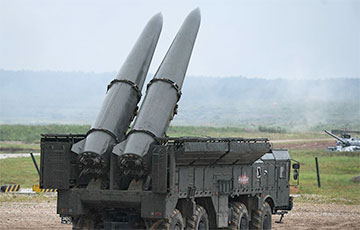
“Lockheed Martin produces about 700 PAC-3 missiles per year. At the same time, Russia produces more than a thousand 9M723 ballistic missiles for the Iskander-M tactical missile system.” But to guarantee the interception of a single such missile, at least two PAC-3s are required,” the military analyst explains.
Thus, combating the annual production of “Iskanders” alone requires about two thousand American anti-missiles. In addition, Japan’s Mitsubishi Heavy Industries manufactures PAC-3s under a U.S. license, but its annual output is only about 70 missiles.
“Sometimes Kyiv doesn’t even have enough of those 70 interceptors to last a single night of a massive attack. That is precisely why the problem is critical not only for Ukraine but for the entire world,” says Kovalenko.
Legal restrictions also remain a serious obstacle. Japan manufactures PAC-3s under a U.S. license, so it cannot independently transfer them to Ukraine without U.S. approval. In theory, a multi-stage re-export via third countries is possible provided all necessary permits are obtained, but such a mechanism has not been implemented.
South Korea is also not considered a viable source of anti-missile supplies. This is due both to Seoul’s current export restrictions and to the need to maintain its own stockpiles because of the constant threat from North Korea.
Even slower than the PAC-3 are the missiles produced for the Franco-Italian SAMP/T systems, notes Kovalenko.
“The number of new systems is also limited. Western countries have not prepared for such large-scale use of ballistic weapons for decades, although it is well known that Russia, Iran, and North Korea are systematically investing in this very area,” he says.
According to the analyst’s assessment, Russia continues to ramp up production of several types of ballistic missiles. While the “Iskander-M” is produced at a rate of about three units per day—or more than a thousand per year—the 48N6DM missiles for the S-400 systems, which are increasingly being used to strike ground targets, are produced at a rate of approximately two units per day — about 600–700 per year.
At the same time, there is currently no precise data on the production of “Kinzhal,” Kh-22/32, “Onyx,” and other types of ballistic weapons. According to Kovalenko, this largely depends on shipments of imported components that Russia obtains by circumventing sanctions.
Can Ukraine Produce PAC-3s on Its Own?
One solution to the problem that has recently been discussed is the localization of production of American PAC-3 anti-missile systems in Ukraine. Ukrainian President Volodymyr Zelenskyy and President Donald Trump have publicly discussed this possibility. At the same time, following a series of statements from the U.S. side, the prospects for this project remain uncertain.
The main obstacle at this stage is not technology, but political decisions, according to Alexander Kovalenko. In his view, provided there are no bureaucratic obstacles, it is entirely feasible to set up production in Ukraine.
“If there are no bureaucratic obstacles—neither from our partners nor within Ukraine—production could begin in about six months,” the expert is convinced.
We’re not talking about large-scale serial production, but he estimates that it’s entirely feasible to begin producing the first missiles right from the start.
Ivan Stupak takes a much more cautious view of the prospects. In his opinion, even obtaining a license does not solve the main problem—production security.
“Today, there isn’t a single square centimeter of Ukrainian territory that isn’t within range of Russian strikes—whether by drones, cruise missiles, or ballistic missiles,” says Stupak.
Therefore, he considers locating production facilities in European Union countries to be a more realistic option. The necessary infrastructure is already in place there, but even in that case, questions remain regarding the transfer of technology and components.
Freyja—Ukraine’s Chance to Develop Its Own Anti-Ballistic System
In parallel with negotiations on Western systems, Ukraine is working on its own solution. This refers to the joint Ukrainian-European Freyja project by Fire Point, which could become the country’s first domestically developed system for countering ballistic targets.
The first results may be available soon, provided there are no delays in the delivery of components from partners, according to Alexander Kovalenko.
“Under the most optimistic scenario, we could be talking about the first combat duty in about six months,” the expert notes.
However, he notes that everything will depend on the supply of radars, fire control systems, target tracking equipment, and other components that must operate as a single integrated system. It is still too early to assess Freyja’s actual capabilities—only testing will show which ballistic targets the system can reliably intercept, Kovalenko notes.
At the same time, he draws attention to the missile’s core design. The project uses a modernized 5V55 missile, the latest Soviet modifications of which were already capable of intercepting ballistic targets. If modern technologies have significantly expanded its capabilities, the system’s potential could be very high.
Ivan Stupak also cites Freyja as one of the most promising areas of development for Ukrainian anti-ballistic defense, though he cautions against expecting quick results. In his view, there are currently three realistic ways to strengthen Ukraine’s defenses: a large-scale increase in the production of American PAC-3 missiles, the development of the Franco-Italian SAMP/T system, and the joint Ukrainian-European Freyja project.
“Yes, this is the longest path, but it allows Ukraine to stop being completely dependent on imports,” the expert is convinced.
Is it possible to destroy Russian ballistic missiles before launch
In addition to developing air defense systems, experts point to another way to counter ballistic strikes—destroying launchers before the missiles are even launched. This is precisely why Ukraine has recently been increasingly active in developing its own long-range strike capabilities.
Such a scenario is entirely realistic, but its implementation requires maximum coordination between all intelligence and strike assets, explains Alexander Kovalenko.
“It is necessary to identify the launch pad while it is still on the move or preparing for launch and strike it literally within a matter of minutes,” notes Kovalenko.
According to him, this is precisely why Ukraine needs its own ballistic missiles, which would allow it to strike almost instantly after detecting a target.
Active defense could become one of the key elements of a future defense system, agrees Ivan Stupak. If there is information about preparations for a launch, the best solution is to destroy the launch pad itself before the missile is launched.
At the same time, he believes that the development of Ukrainian ballistic missiles could become one of the most effective tools for deterring Russian attacks.
“I hope that the Ukrainian programs, which have been the subject of much discussion lately, will indeed move from mere announcements to mass production,” says Stupak.
The shortage of anti-ballistic missiles will remain a problem for many years to come
Despite active production ramp-ups in the U.S. and Europe, the shortage of anti-ballistic missiles is unlikely to disappear in the coming years. According to experts, the global defense industry has for decades focused on local conflicts rather than on a large-scale war involving the widespread use of ballistic missiles.
The international community is already increasing investment in the production of Patriot, SAMP/T, and other systems, but this process takes time. That is precisely why, as RBC-Ukraine’s sources agree, even under the most optimistic scenario, it will be practically impossible to fully protect Ukrainian airspace using only missile defense systems in the coming years.
Solving the problem will require simultaneous progress on several fronts—scaling up production of Western anti-missile systems, developing domestic systems such as Freyja, and advancing Ukrainian long-range weapons capable of destroying Russian launchers before the missiles are even launched.

Bank's name: Bank Millennium S.A.
Address: ul. Stanislawa Zaryna, 2A, 02-593, Warszawa
IBAN: PL97116022020000000216711123
SWIFT: BIGBPLPW
Name of the account holder: Fundacja “KARTA ‘97”
Purpose/title of payment: Donation for statuary aims
You can contact us by the e-mail charter97@gmail.com