

"There Is Some Kind Of Profound Old Testament Metaphysics At Work Here."
- 15.09.2026, 14:19
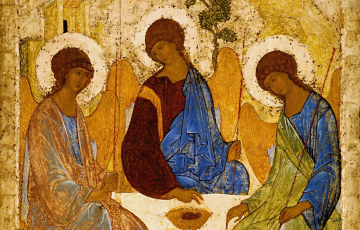
Everything turned out just as the experts had predicted.
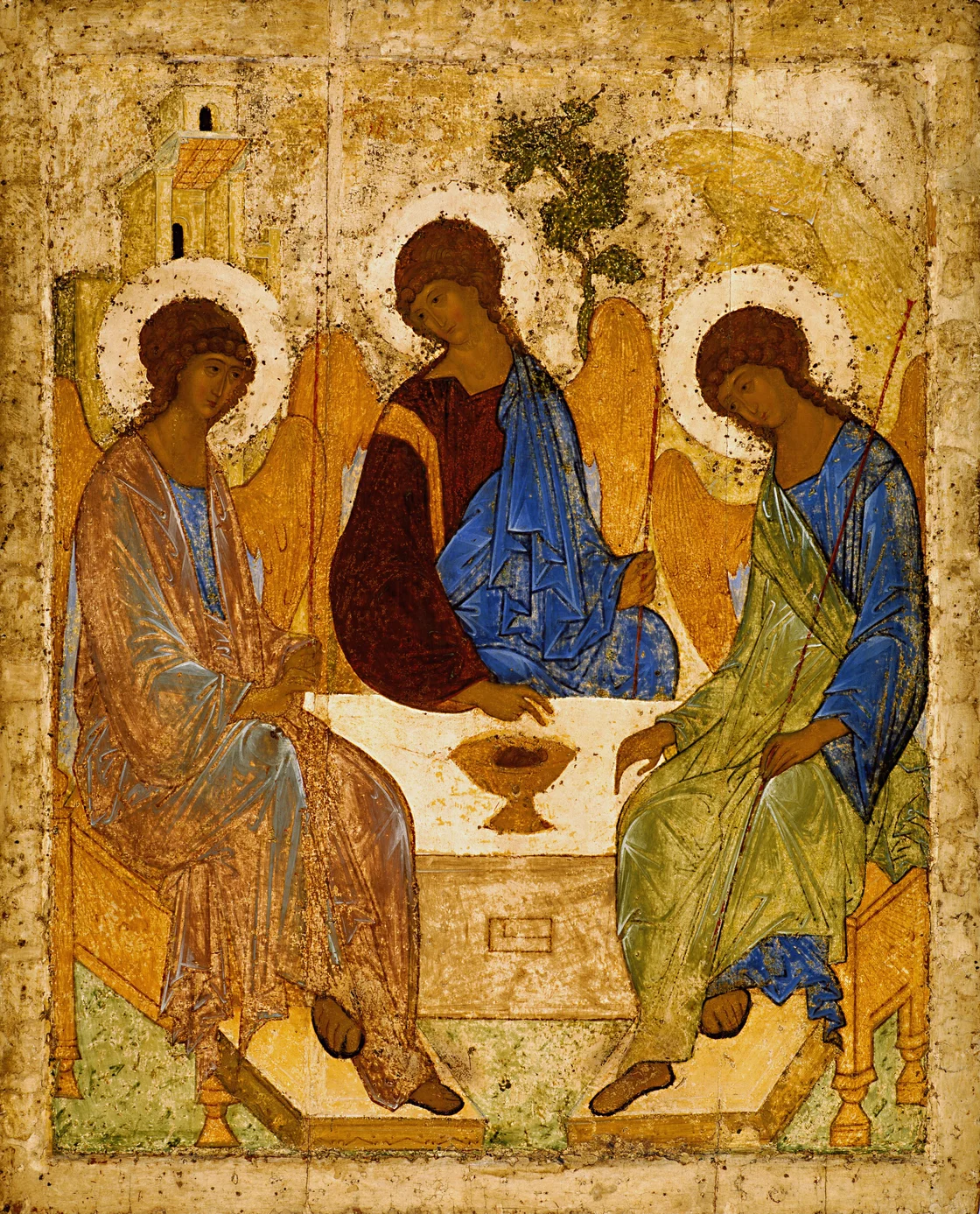
Three years ago, Putin ordered that the Rublev “Trinity” be transferred to the Russian Orthodox Church. Previously, it had been housed at the Tretyakov Gallery, and experts had demanded that it remain there, arguing that church officials, unlike museum curators, would be unable to provide the proper conditions for preserving the relic.
In recent days, reports have emerged that problems have arisen. Some equipment has broken down, humidity levels have risen, and so on. Everything is unfolding just as the experts predicted.
There is a kind of profound Old Testament metaphysics at play here. Or rather, the preconditions for it to emerge. For centuries, “The Trinity” has accumulated symbolic capital. It has long since ceased to be merely an object of liturgical use, having become one of the highest manifestations of Russian culture as society conceives it. It has become the visual embodiment of the ideals of harmony, humility, love, and unity. And if the state—which talks from morning till night about its commitment to the ideals of “traditional values”—proves incapable of preserving this very relic, a very powerful symbol emerges. After all, it is not the opposition that is destroying this sacred site, nor is it the liberals or the “spiritless West.” It is being done by people who have declared themselves defenders of Russian tradition. The authorities wanted to say: “We are the guardians of this sacred site.” The result refutes this claim: “You are no guardians at all. You are destroying the very thing you’ve declared yourselves guardians of.”
Why did I mention the Old Testament in this context? Because in the Old Testament, when something happens, it is almost never by itself—in accordance with the logic of some specific process—but because such was the higher plan. God often uses X to influence Y.
In Isaiah, for example, Assyria is explicitly called an instrument of God’s wrath. Through it, God punishes Israel for breaking His commandments. Second Isaiah calls the Persian king Cyrus God’s “anointed one,” because he becomes an instrument in God’s hands, through whom God liberates a forgiven Israel.
It seems to me that what is happening now with “The Trinity” may have a deeper meaning than it appears at first glance. The message is just too striking. It’s aimed precisely at the most conservative audience—the one that until now has been completely unreachable.
In the First Book of Kings, the Israelites are defeated by the Philistines and decide to bring the Ark of the Covenant onto the battlefield. The logic is practically magical: we have the greatest holy relic—therefore, God is obligated to grant us victory.
Nothing of the sort happens. The Philistines rout the Israelites and capture the Ark. The sons of the high priest Eli are killed. Upon learning of the loss of the Ark, Eli himself dies.
It turns out that a sacred object is neither a weapon in the hands of those who possess it nor a talisman guaranteeing them God’s protection. Moreover, God allows His own holy object to be humiliated so that the unrighteousness of those who consider themselves its rightful custodians may be exposed.
We might recall the story of the destruction of the First Temple. The Jews at that time convinced themselves: “We,” they said, “have the Temple of the Lord; therefore, Jerusalem cannot perish.” Jeremiah told them: Do not place your hope in the magic formula “the Temple of the Lord.” If you commit injustice, the mere fact of possessing the sanctuary will not save you. Then the unthinkable happens—the Babylonians destroy the Temple.
It turns out that the Almighty is quite capable of allowing the destruction of His own sanctuary if its preservation begins to serve as a moral justification for an unjust order.
And so I wonder: if this could be done with the Ark and the Temple, why couldn’t an icon revered by Russians be used to demonstrate to them the injustice of the very authority they thoughtlessly elevated to a pedestal? Perhaps it is precisely at the moment of its destruction that the icon performs the very act for which it was once created? It forces Russians to see what they refuse to look at.
Buddhists have a parable about a group of people who happened to find themselves together and took shelter in a small roadside shrine from a snowstorm that caught them on a mountain pass. It was bitterly cold, there was no firewood to be found, and it became clear that the people would freeze to death overnight. Then a monk among those seeking shelter took an axe and chopped a wooden statue of Buddha into pieces. The people built a fire, and they were saved. One of them asked how the monk could bring himself to destroy a sacred object. “Is not the true nature of the Buddha, hidden within the wood from which the statue was made, precisely that this wood can be burned to warm a few freezing people, including children?” replied the monk.
If destroying a wooden Buddha saves a person, then destroying it may turn out to be a more “Buddhist” act than praying to it.
This logic is not foreign to Christianity either. Jesus placed the substance of the commandment above its sacralized form: “The Sabbath was made for man, not man for the Sabbath.” Meaning takes precedence over ritual.
In light of the above, when applied to the Rublev icon, the question can be posed squarely: which is more important—the physical preservation of the icon or the realization of the divine plan it embodies?
If we imagine that a masterpiece is destroyed, but its destruction becomes a powerful moral event—forcing millions of people to see through the lies of those who have declared themselves guardians of Christian relics— — a paradox emerges: the icon can fulfill its purpose precisely at the cost of its own destruction. Wasn’t this the meaning originally embedded in it at the time of its creation—just as it was once predestined for Jesus, at his birth, to die on the cross?
I do not know whether what is happening is part of some original, lofty plan, but we can speak with complete certainty about the political consequences of the icon’s destruction, should it occur.
The significance of the handover of “The Trinity” was perfectly clear: the government is returning a holy relic to the Church, and Putin is presenting himself as the restorer of historical justice, as the protector of Orthodoxy and Russian tradition. The lamentable outcome of these events nullifies this message from the authorities. Putin is not restoring sanctity—he is destroying it.
Well, if the Russians, like ancient Israel, fail to understand the meaning of what has happened, more and more misfortunes will rain down upon them.
Abbas Galliamov, “Telegam”

Bank's name: Bank Millennium S.A.
Address: ul. Stanislawa Zaryna, 2A, 02-593, Warszawa
IBAN: PL97116022020000000216711123
SWIFT: BIGBPLPW
Name of the account holder: Fundacja “KARTA ‘97”
Purpose/title of payment: Donation for statuary aims
You can contact us by the e-mail charter97@gmail.com