

Yuri Felshtinsky: Putin Is Changing His Tactics
- 26.09.2026, 13:43
Photo: charter97.org
The Kremlin's main objective with regard to NATO and the EU remains the same.
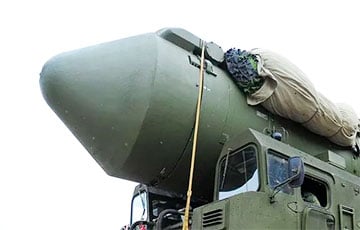
Moscow has likely abandoned the idea of a large-scale ground offensive against European Union countries due to a shortage of military resources. Instead, the Russian army plans to employ the tactic of massive airstrikes using inexpensive drones to destroy European cities.
This shift in the nature of Russian aggression was reported by “Channel 24”Yuri Felshtinsky, a historian and Ph.D. According to him, the Kremlin’s main goal remains the destruction of the North Atlantic Alliance and the collapse of the EU. However, for a conventional invasion of Poland or the Baltic states, the aggressor would need a full-fledged second army, which cannot be mobilized discreetly.
Why a ground invasion is unlikely
Moscow’s attempts to form a new strike force failed as early as the fall of 2025, when the deployment of a 100,000-strong contingent to exercises in Belarus fell through. Moreover, any concentration of enemy troops near the borders would immediately provoke a harsh response.
Felshtinsky emphasized that Ukrainian forces, drawing on their experience from the start of the full-scale war, will launch a preemptive strike against areas where occupiers are concentrated while they are still in the preparation phase.
Instead of tank breakthroughs, Russia may be preparing to employ aerial terror tactics similar to those used in conflicts in the Middle East. The main weapons will be mass-produced, low-cost drones.
“They (the Russians—ed.) can produce them in large quantities and use them effectively to devastate life in any European city,” said the historian.
He added that during such attacks, it would be extremely difficult for European governments to quickly determine whether this is an accidental incident or the actual start of a war. Currently, the European Union lacks a unified strategy to counter this hybrid threat, as shooting down cheap drones with expensive anti-aircraft missiles is economically unfeasible. Poland and the Baltic states are currently most at risk from such attacks.

Bank's name: Bank Millennium S.A.
Address: ul. Stanislawa Zaryna, 2A, 02-593, Warszawa
IBAN: PL97116022020000000216711123
SWIFT: BIGBPLPW
Name of the account holder: Fundacja “KARTA ‘97”
Purpose/title of payment: Donation for statuary aims
You can contact us by the e-mail charter97@gmail.com