


Exoskeletons Are No Longer The Stuff Of Science Fiction
1- 3.09.2026, 17:41
- 4,870
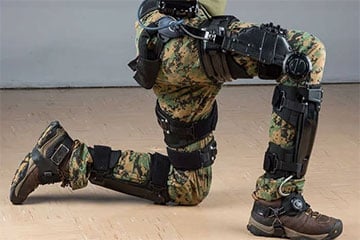
It is now a standard tool on construction sites, in factories, in warehouses, and even in hospitals.
Exoskeletons, which until recently seemed like something out of a science fiction movie, are gradually becoming a practical tool on construction sites, in factories, in warehouses, and even in hospitals. The main secret to their success turned out to be surprisingly simple: modern devices do not attempt to replace the entire human body, but rather assist specific parts of it, writes The Economist.
One example is the “Ironhand” electric-powered glove, which costs about 10,000 euros. After suffering a severe hand injury, the Dane Remko Letchert was able to return to a construction site thanks to this device. Sensors detect the pressure from the fingers and palm, after which small motors amplify the grip.
As of 2024, “Ironhand” is being used by about 200 companies worldwide. Other exoskeletons help lift heavy objects, reduce strain on the spine, or enable people with spinal cord injuries to walk again.
According to Vanderbilt University expert Karl Zelik, the main technological breakthrough was not power, but the abandonment of attempts to create a universal “super suit.”
“The industry has stopped chasing Hollywood-style universal designs,” the expert notes.
Exoskeletons are increasingly being used in settings where workers face constant physical strain. For example, the German company German Bionic has supplied its devices to approximately 300 employers. Among the most active users are nurses, who have to regularly lift patients.
Now the technology is entering the consumer market as well. Skip is preparing to ship a lightweight knee exoskeleton designed for hikers, while Nike, in collaboration with Dephy, is developing motorized shoes intended to help athletes move faster and expend less energy.
“Young workers are increasingly reluctant to use their bodies as mere resources for the company,” says a representative of the German manufacturer Ottobock.
It is precisely this approach that could make exoskeletons mainstream—they don’t turn a person into a robot, but help them reduce wear and tear on their own body.

Bank's name: Bank Millennium S.A.
Address: ul. Stanislawa Zaryna, 2A, 02-593, Warszawa
IBAN: PL97116022020000000216711123
SWIFT: BIGBPLPW
Name of the account holder: Fundacja “KARTA ‘97”
Purpose/title of payment: Donation for statuary aims
You can contact us by the e-mail charter97@gmail.com