
Reuters: Fico's Pro-Russian Government Faces Collapse
1- 30.09.2026, 7:38
- 2,046
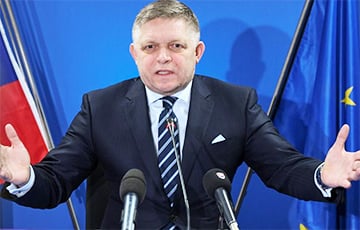
Photo: European Council
In Slovakia, there is talk of early elections.
In Slovakia, there is talk of early parliamentary elections due to the crisis within the ruling coalition led by Prime Minister Robert Fico. This was triggered by the resignation of Deputy Prime Minister and Minister of the Environment Tomáš Taraba.
This was reported by Reuters.
Along with the opposition, deputies from the Slovak National Party (SNS)—which is part of the governing coalition and had previously nominated him for the position—voted in favor of Tarabu’s dismissal.
Consequently, this situation has cast doubt on the government’s survival one year before the scheduled parliamentary elections.
Seventy-seven lawmakers voted in favor of Taraba’s dismissal. All 77 lawmakers present in the chamber during the vote supported his dismissal; another 73 were absent.
At the same time, Fico’s coalition currently controls only 78 of 150 seats and depends on the support of several loyal independent lawmakers.
Fico Allows for Early Elections
After the vote, Fico stated that on September 30 he would convene the leadership of his party, Smer-SD, to determine the next steps.
“What the Slovak National Party did today compels Smer-SD to convene the party leadership tomorrow at 5:00 p.m. and decide on further actions,” NewsNow quoted the prime minister as saying.
The Taraba Scandal
The conflict surrounding Taraba has been ongoing for several months. Although he was an SNS nominee, the minister’s relationship with the party leadership has deteriorated sharply.
SNS leader Andrei Danko stated that there had been no substantive dialogue with Tarabu for a long time, particularly regarding important documents and decisions by the Ministry of the Environment.
The party also did not want to bear political responsibility for a number of the ministry’s areas of work—ranging from zoning and wind farms to battery plants, pumped-storage power plants, and other projects.
Tarabu himself insisted that there were no grounds for his resignation and that, in fact, attempts were being made to dismiss him for properly fulfilling his duties.
Back in May, Tarabu, Fico, and Danko reached an agreement: if the conflict between the minister and the SNS could not be resolved, Tarabu would have to leave the government by the end of September. He stated that he had no intention of stepping down voluntarily.
On the eve of the current vote, Fico withdrew his own proposal to dismiss Taraba, which he had previously submitted to President Peter Pellegrini. The prime minister explained this by the need to preserve the parliamentary majority and prevent further destabilization of the government.
The SNS disagreed with this decision and supported the opposition’s motion in parliament calling for Taraba’s resignation.
The crisis could have much broader consequences
Fico has already raised the possibility of holding early parliamentary elections in January 2027 if the conflict within the coalition cannot be resolved. At the same time, shortening the parliament’s term would require a qualified majority of lawmakers.
However, the collapse of the current government would not in itself automatically trigger elections, as the Slovak constitutional system provides for the possibility of attempting to form a different cabinet. Fico may also attempt to reshuffle the current coalition.
Meanwhile, the leader of the opposition party “Progressive Slovakia” Michal Šimečko called early elections the only way out of the situation after the vote.
He stated that the party would push for them to be held as soon as possible and called on Fico to resign.

Bank's name: Bank Millennium S.A.
Address: ul. Stanislawa Zaryna, 2A, 02-593, Warszawa
IBAN: PL97116022020000000216711123
SWIFT: BIGBPLPW
Name of the account holder: Fundacja “KARTA ‘97”
Purpose/title of payment: Donation for statuary aims
You can contact us by the e-mail charter97@gmail.com