MEP: “Disrespect to human rights is a terrible thing, and we do not accept that”
15- 7.09.2009, 12:43
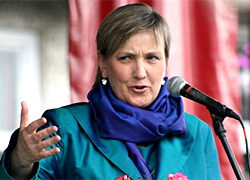
Belarus is a country full of wonderful potential, and some day this potential will be used.
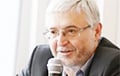
It has been stated in the exclusive interview to www.charter97.org website by a deputy of the European Parliament Róża Thun. She took part in celebration of the 20th anniversary of the Independent Self-governing Trade Union "Solidarity" victory in the first free election in Poland. Róża Thun was one of the participants of the Express Solidarity project held in Poland August 26-September 2.
- This year Poland celebrates the 20th anniversary of the Solidarity victory in the election. Summing up the results of this victory, how do you view these events 20 years after? What do they mean for Poland and for the whole Europe?
- I would say it meant a lot not only for Poland, but for all countries and the rest of Europe. This partition of Europe, two sides of the iron curtain, those two blocs – this was like a scar, or rather like a wound, on the European organism, completely artificial, destructive and painful.
So this movement of Solidarity, this uprisal, which started with the uprisal of shipyard workers and then like a flood covered the whole of Poland and other countries of the so-called Eastern bloc, was a kind of liberation for the whole of Europe from despotism. And it opened the door for re-unification of Europe. “Re-unification” we call it because we united again, we came to normal. And we live in normality today. And I hope that it was a certain example for those countries that are our neighbours from the East, or outside of the EU but partners of the EU, that we can do a lot together to live in peace, democracy and respect to human rights.
For the last 20 years, and especially last 5 years since the membership in the European Union, Poland plays an important role in spreading of these values. And this Solidarity Express event is a project in which we are involved now today, also is a part of this big European project: let’s spread those values of freedom, democracy and respect to human rights where some countries have problems with it.
- Do you mean Belarus?
- Well, not that we are especially involved in Belarus, but of course we are following very closely what is going on in Belarus, what happens there. There is hope that al those things about real democratic elections, about the prospective of closer cooperation with United Europe will win with the time, that the reforms will take place in Belarus. This country is full of wonderful potential, so I hope some day this potential will be used, that Belarus would show its really good face, as it does often. We see wonderful young people from Belarus coming here, and when we visit Belarus we realize the problems it really has.
- But do you know there are political prisoners and there is no freedom of speech in Belarus?
- Well, of course we know that. Every now and then we learn about prisoners, Belarus does not call them political prisoners, but the fact is they are political prisoners. We follow those events very closely. Of course we know. And that’s why Poland is so open for cooperation with people in Belarus, for students that cannot study in Belarus, and gives support as far as it can.
- What is your assessment of the recent policy of the EU to conduct a dialogue with the last dictator of Europe?
- On the one hand, there are aspects that the democratic countries of the EU cannot accept. On the other hand, it is always important to keep the door open, and to keep the dialogue. And there is a dialogue with Belarus. It is not that there is no cooperation. There is cooperation with Belarus, but it depends finally on Belarus, how it is organized. The citizens of Belarus must realize that if they want to get support for their democratic endeavors, finally it depends on them. And what we do in the European Union, we want to mark that the lack of respect to human rights is a terrible thing, and we do not accept that. On the other hand, we want to remain in dialogue with all countries in Europe, as only this way we can create a better future.
- Should it be a dialogue under certain conditions?
- But there are very clear conditions. If there is a breach of human rights, there is a reaction from the side of the European Union. Conditions are rather clear.
- You believe that liberation of Europe started with the ides of the Solidarity, with Poland. Should this liberation be concluded by the victory of democracy in Belarus?
- Democracy has to be fought for and achieved by all of those countries that do not have it yet. Being as difficult as it is, each country has to fight for freedom s on its own account, counting on support, cooperation, but the initiative has to come from inside. There won’t be any outsides that would do it for us, as difficult as it may be.
I think also this is the example of the Solidarity. I never thought in my youth that it would happen, but with common efforts and solidarity the victory is possible. We can achieve much more than we imagine. But we must only believe that we can do it. The responsibility relies on us. It were finally the Poles who achieved those changes, much more than I would ever think in my youth. And in their endeavours they can count on support, but the endeavours should come from the inside. And there are victorious examples from many countries around Belarus.
- How important was solidarity and the principled stand of Europe for the Polish nation in the time of the Solidarity in 1980-ies?
- I would say from 1980, despite of the martial law, despite of the military dictatorship, this was already the agony of dictatorship. Too slow, it lasted for a few years, unnecessarily. Well, but probably this time was needed. But the Solidarity existed already, it was extremely important because this was our life already, it existed partially in the underground, but it was there. So finally that opened the door for a possibility of a round table, and later admission to European structures, EU structures and so on. It was completely basic and vital, this Solidarity, and in the West, from other countries, the attitude to Poland changed a lot, as in many heads this perspective that this country would free itself sooner or later from the Soviet domination and from the Soviet dictatorship became real. And this mentality and the attitude towards Poland and towards the Eastern bloc have something that will last forever.