

A Short History Course
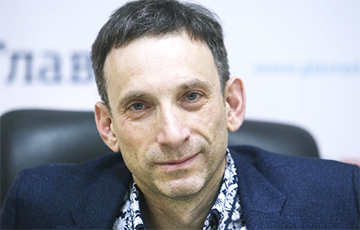
8- Vitaly Portnikov
- 2.06.2026, 13:43
- 12,708
Who is fighting for power in Russia.
In 1917-1920, the Russian Empire and hopes for Russian democracy were destroyed by the Bolsheviks. Power shifted to a dictatorship that relied on three key forces-the party apparatus that ran the new state, the security organs that carried out the Red Terror, and the army that had won the Civil War.
A constant struggle for influence began between these three groups almost from their earliest days. Stalin, who took control of the party apparatus, after Lenin's death managed to neutralize the army, led by Trotsky, and the terror apparatus, first headed by the unexpectedly deceased Dzerzhinsky and then by the executed Yagoda.
Stalin, however, was wary of overstrengthening the party nomenklatura and bet on an alliance with the Chekists. The new generation of security service officers effectively destroyed much of the party apparatus of the time, as well as many commanders of the already weakened army.
World War II brought the army back to the forefront. After the war, Stalin, with the help of the security organs, tried to limit its influence and the popularity of the most famous "Victory Marshals." But after his death, the party apparatus, which became headed by Khrushchev, in alliance with the military, led by Marshal Zhukov, effectively crushed the state security organs and put them under the control of the party. Five years later, Khrushchev got rid of Zhukov as well, once again relegating the army to the background.
The era of dominance of the party apparatus came, which lasted until the late 1980s, when the Chekists took revenge and created the conditions for the ban of the CPSU.
In the new Russia, they could not immediately come to power and began to prepare for it against the background of the economic crisis and redistribution of property in favor of structures associated with the security services. In 1993, the army again came to the forefront, which ensured President Yeltsin's victory over the Congress of People's Deputies and became the main instrument of the first Chechen war. However, the wave of terror that followed the conflict allowed the security services to strengthen their position even further. Power was briefly concentrated in the hands of the Federal Guard Service, and in 2000 it was finally taken over by the FSB.
Today, as Russia itself is increasingly under attack, the Federal Guard Service is trying to take revenge, and the generals of an increasingly marginalized army are watching closely.
The future power struggle in Russia is likely to be between these three forces. And the one who will prevail will lead not only the state, but also the continuation of conflicts in the post-Soviet space, as there is a consensus among all these groups on the need to restore Russian influence within the borders of the former USSR.
Vitaly Portnikov, Facebook

Bank's name: Bank Millennium S.A.
Address: ul. Stanislawa Zaryna, 2A, 02-593, Warszawa
IBAN: PL97116022020000000216711123
SWIFT: BIGBPLPW
Name of the account holder: Fundacja “KARTA ‘97”
Purpose/title of payment: Donation for statuary aims
You can contact us by the e-mail charter97@gmail.com