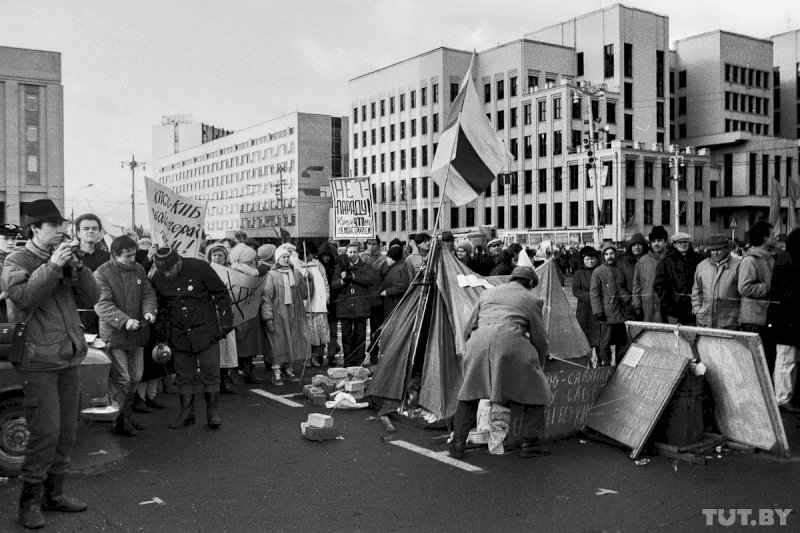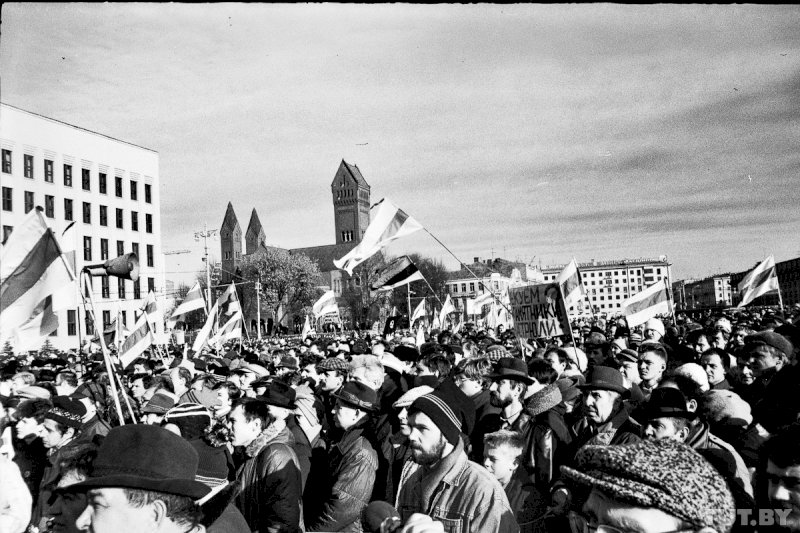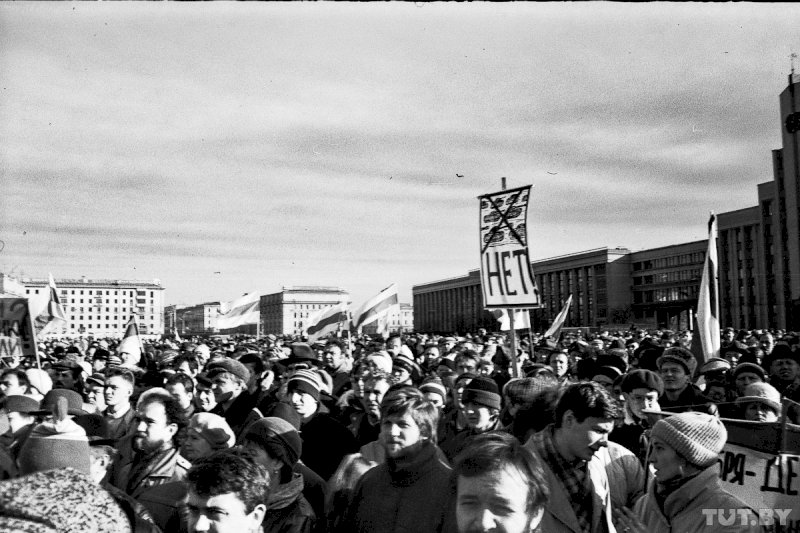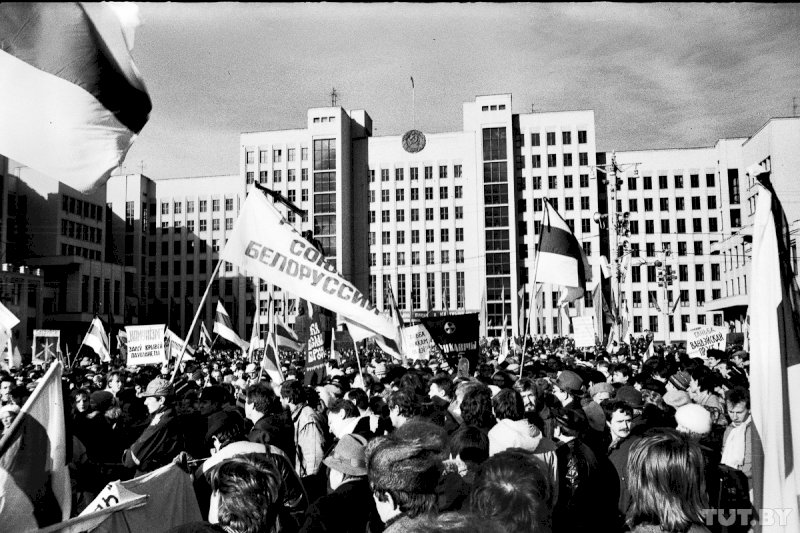
Anti-Communist Ploshcha-1990 in Minsk
2- 7.11.2019, 11:39
- 18,916
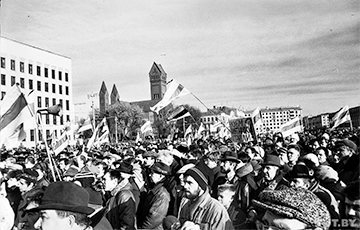
This rally is still considered to be the most successful demonstration of the BPF.
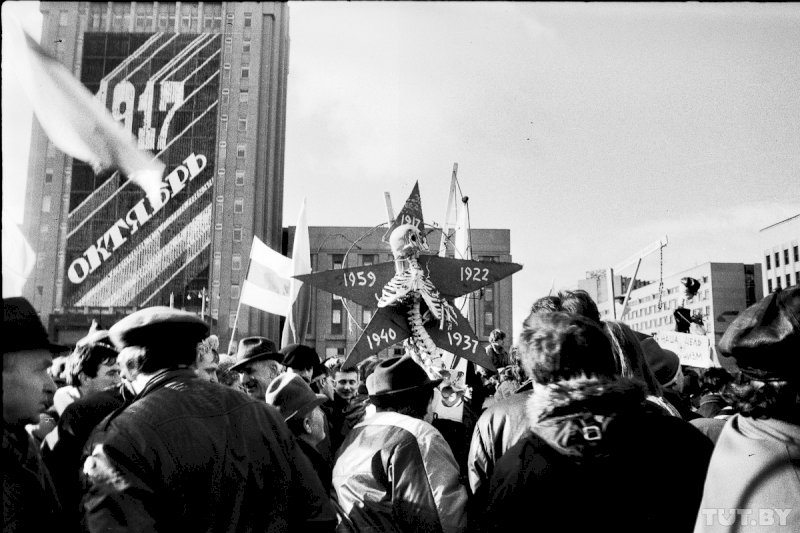
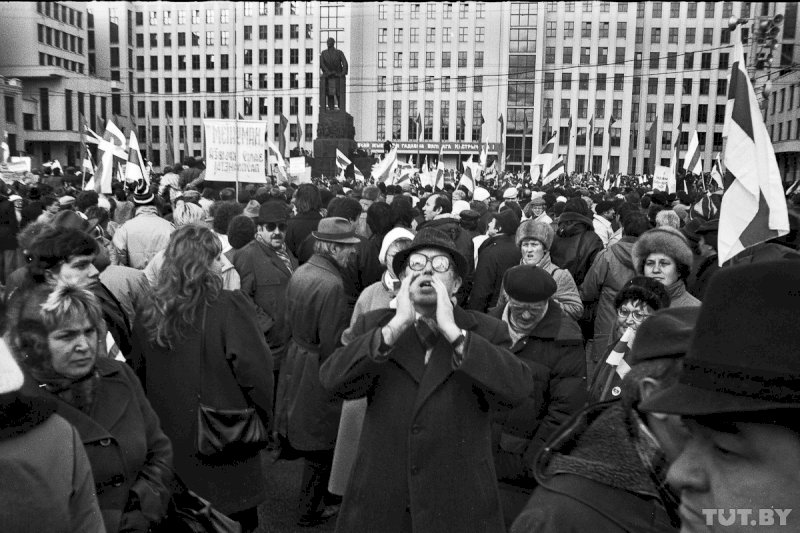
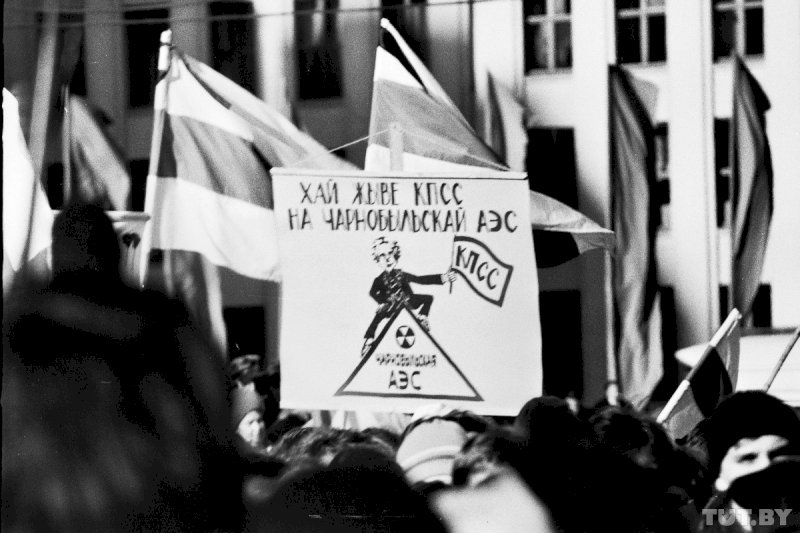
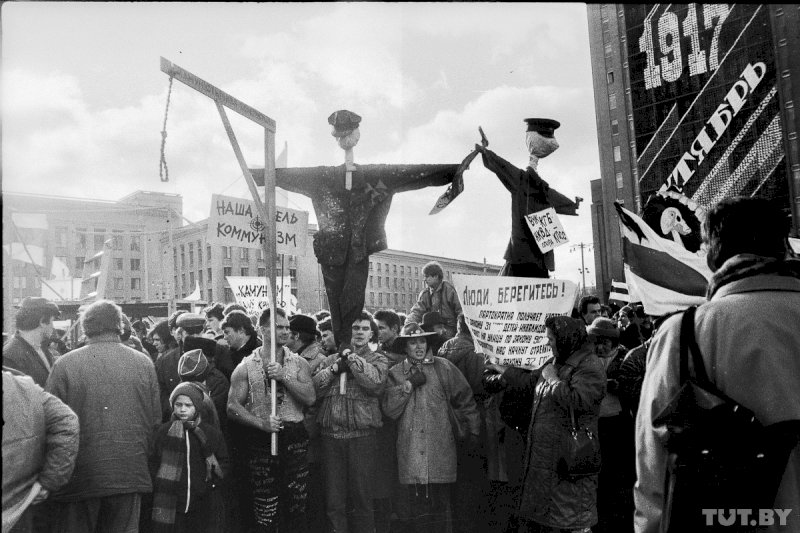
The events of November 7, 1990, which took place right after the official meeting on Lenin Square, can be called "Ploshcha-90". The Belarusian Popular Front (BPF) organized an alternative march called "Memory of the Victims of the Communist Dictatorship". It started on Yakub Kolas Square and ended with a large-scale rally on Lenin Square. At least 5 thousand people were there, tut.by writes.
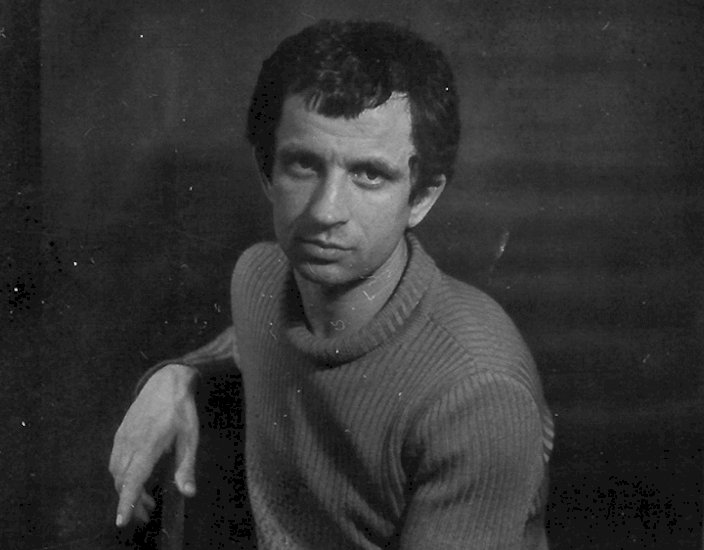
Vladimir Sapogov (1952-2012) is a Belarusian photographer.
In the 80s he was a participant of the youth democratic movement. He was brought up in an orphanage in Brest and studied in Moscow. He lived in a dormitory of the Minsk Tractor Plant. After Vladimir Sapogov's death, representatives of the dormitory administration threw away the original photos. A friend of the photographer Mikhail Myakish saved the negatives.
In 2015, the Center for Civil Society Studies of Belarus organized a photo exhibition of Vladimir Sapogov dedicated to the 30th anniversary of the Artel youth association.
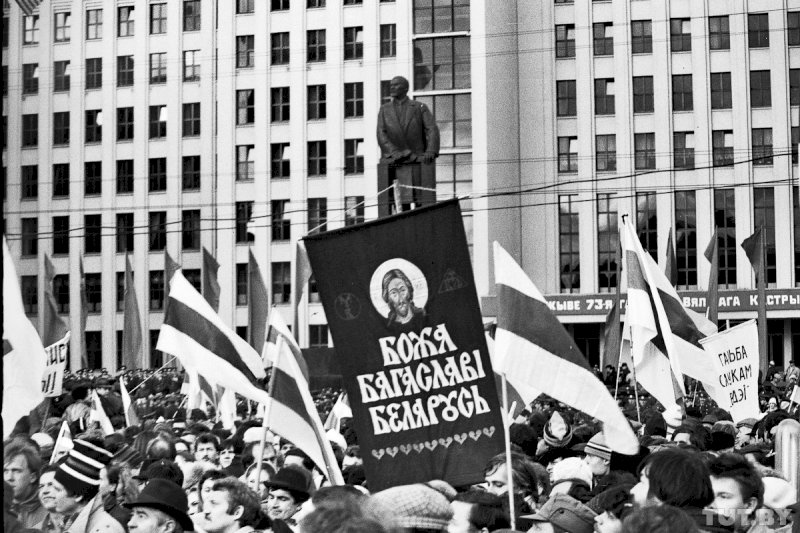
The results of the march were so resonant and unexpected for the authorities that it is still considered to be the most successful rally of the BPF and the strongest blow to the communist system, Nasha Niva writes.
It all began on October 23, 1990. Sergei Androsov appealed to the executive committee of Minsk City Council of People's Deputies. He asked to hold an alternative march "In memory of the victims of the Communist dictatorship" on November 7, 1990. On November 1st, the permission was received.
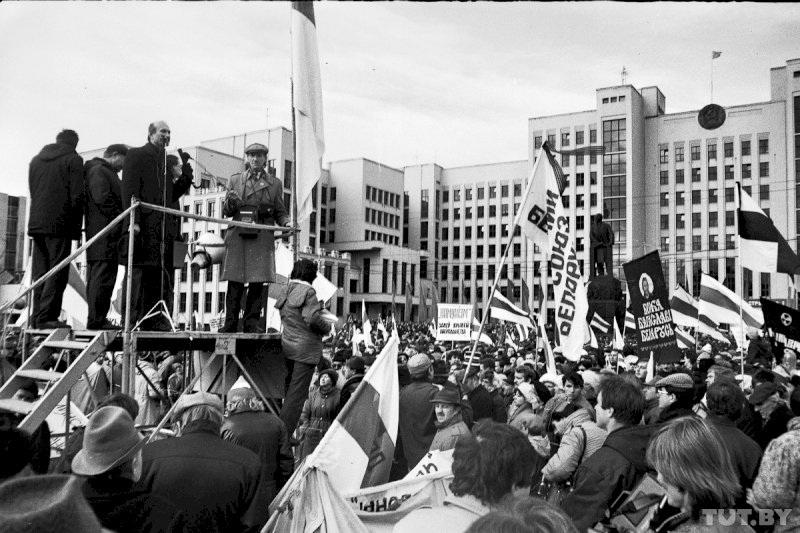
The idea of the procession fully met the policy line and ideology of the BPF: uncompromising anti-communism, i.e. criticism of the Communist Party, rejection of the USSR as a national-state entity, rejection of Marxism-Leninism, and finally, harsh criticism of the founders of the Soviet system, in particular, Vladimir Lenin and Joseph Stalin.
This march was the first open confrontation between the authorities and the opposition. According to official data, ten policemen were slightly injured.
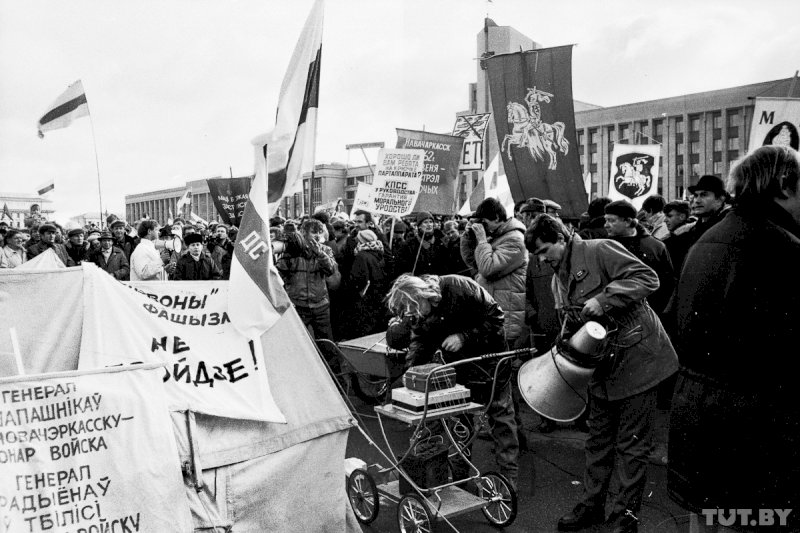
After the march, the parliament received dozens of appeals expressing "indignation at the actions of the deputies of the Supreme Soviet who took part in the anti-constitutional action." Some even stated that the participants in the rally, people's deputies Zenon Pozniak and Valentin Golubev "have no moral right to work on the draft Basic Law - the Constitution of our republic".
A few days after the rally, Minsk Prosecutor's Office initiated a criminal case under Part 3 of Article 186 of the Criminal Code of the BSSR ("Organization or active participation in group actions violating public order").
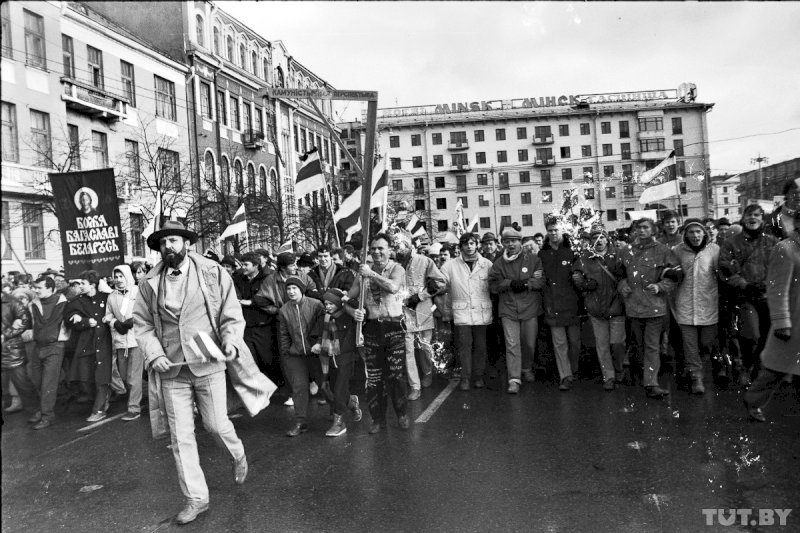
But in June 1991, the BSSR prosecutor Henadz Ternavsky made a statement. "...During the preliminary review, the role of Pozniak in mass unrest that took place in Lenin Square was investigated. Based on the analysis of the text of Pozniak's speech, his behavior during and after the meeting, the testimony of more than 800 witnesses and other evidence, the investigation recognized no intention of Pozniak to organize the mass unrest, as well as the absence of causality between Pozniak's appeal to lay symbolic "gifts" to Lenin monument and the criminal actions of a number of participants in the rally that followed. Due to the absence of a crime in Pozniak's actions, the Prosecutor's Office of the Republic refuses to initiate a criminal case against him on June 17.
At the same time, Ternavsky asked the Supreme Soviet to give its consent to hold Pozniak administratively liable. But the issue was put on agenda at the meeting of the Supreme Soviet. The actions of other deputies - Golubev, Antonchik, Semdyanova - were not criminalized by the prosecutor's office either.