


Bloomberg: Rosneft Is Deliberately Delaying Refinery Repairs
- 22.10.2026, 19:57
- 1,180
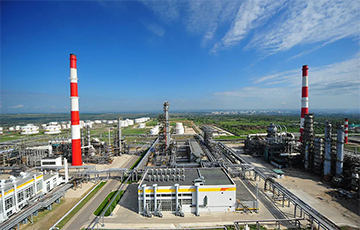
It's too expensive to keep repairing them.
Russia's largest oil company, Rosneft, is deliberately delaying repairs at some of its oil refineries, extending the repair period from a few days to weeks.
Rosneft is deliberately delaying repairs at some of its oil refineries, stretching the process from a few days to weeks. The reason is that Ukrainian drones often launch repeated strikes on the facilities immediately after repairs are completed, and the company unofficially describes the costs of constant repairs as prohibitive, writes Bloomberg reports, citing informed sources and internal damage assessments.
Repairs are also complicated by a shortage of spare parts. The most difficult part is restoring oil refining units, for which parts were previously purchased from the West. Due to sanctions, Rosneft is now forced to rely on Russian equivalents and Chinese imports: deliveries take months to arrive, and they are not always compatible with existing equipment.
According to Bloomberg, attempts to protect the plants from swarms of drones using containers, nets, and steel cables have failed.
Rosneft owns 12 refineries, which account for about one-third of Russia’s refining capacity. Some of them have been out of service for a long time. The Tuapse refinery has been idle since April, and the Ryazan refinery—one of the largest, supplying fuel to Moscow and the surrounding region—has been out of operation more than half the time since the first attack in May.
For the past six months, the Syzran refinery has mostly either been idle or operating at less than one-third of its capacity.
These setbacks are already taking a toll on the company’s finances. In the first half of the year, Rosneft’s net profit fell by nearly a fifth—to 200 billion rubles—while its debt burden reached its highest level in more than five years.
According to sources, company management fears that several more months of attacks will cause long-term damage to the business. Rosneft itself assured the publication that it is taking measures to protect its refineries and that none of its gas stations have closed.
Since the beginning of the year, Ukrainian drones have attacked Russian refineries at least 114 times (according to Bloomberg’s calculations)—twice as many as during the same period last year. In September, the International Energy Agency lowered its forecast for oil refining in Russia over the next 18 months to approximately 4 million barrels per day, which is nearly 30% less than the figures prior to the full-scale invasion.

Bank's name: Bank Millennium S.A.
Address: ul. Stanislawa Zaryna, 2A, 02-593, Warszawa
IBAN: PL97116022020000000216711123
SWIFT: BIGBPLPW
Name of the account holder: Fundacja “KARTA ‘97”
Purpose/title of payment: Donation for statuary aims
You can contact us by the e-mail charter97@gmail.com