


An Expert On The Housing Market In Minsk: Is This Really A Crash?
- 23.10.2026, 14:59
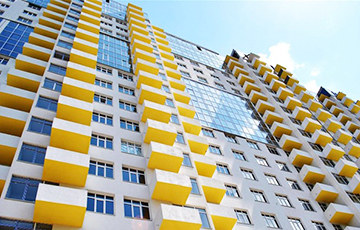
What's happening with prices, and what will happen after the New Year.
In Minsk, the rise in apartment prices virtually came to a halt in September. “Prices have reached an all-time high and have begun to adjust to effective demand,” notes Angela Tretyak, head of the secondary housing market sales department at the “Tvoia Stolitsa” agency. She also spoke about four “signs” that may indicate changes in the real estate market.
“Lately, everyone and their mother has been shouting about an impending collapse in housing prices. My colleagues are often asked the same question: ‘Maybe we should wait? What if prices plummet?’” Angela Tretyak quotes. “Tvoia Stolitsa” has been in the real estate market for thirty years. And every time this kind of panic sets in, we ask a counterquestion: ‘Exactly what kind of decline are you expecting? 50%? 10–15%? Or maybe 1–2%?’ You have to admit, the difference is significant and directly affects your decision.”
The End of a Long Cycle
The expert notes that “the real estate market isn’t like stocks or currency, which can crash in a single day.”
“It’s a cyclical system where the length of the cycle is measured in years. Today we’re seeing the end of a long cycle of price growth. The graph has leveled off. I don’t expect prices to rise, even when accounting for the supply shortage and cheaper loans. Why? Because people simply don’t have the money to buy apartments at prices higher than today’s,” explains Angela Tretyak. “Pressure on prices can be offset by the banking system. The government’s announced reduction of mortgage rates to 9–12% by 2027 may slightly boost buyer activity. But this activity will only be able to maintain the current price level; it will by no means push prices upward.”
Lessons from the “Popitzot”
“Remember 2010? Against the backdrop of the global crisis and falling prices in 2009, a hypothesis emerged on Onliner forums. Prices would fall to a “fair” $500 per square meter. That’s how the idea of “popitsot” was born. The name was an ironic reference to the government’s salary benchmark,” adds the expert. “The strongest surge in belief in a ‘fair’ price occurred after the 2014 currency crisis. Forum analysts were certain: the bottom hadn’t been reached yet. But what was the reality? Prices peaked in October 2008 at $2,000 per square meter. The market didn’t hit bottom until mid-2017—$1,200.”
The analyst notes that the real estate market is characterized by long cycles.
“2000–2008: growth. 2009–2017: decline. Since 2017: growth again. It took the market nearly 10 years to lose 40% of its value. Is that a crash? No. It’s a slow, gradual correction. And those who were waiting for a ‘big boom’ simply missed out on those years,” adds Angela Tretyak.
What might be the signs of a price drop
The real estate market is very conservative. It reacts to internal and external factors with a significant delay. Even the most advanced econometric model cannot predict its behavior, the expert notes.
According to her, there are several factors that could put pressure on prices:
a rise in the dollar exchange rate;
rising loan rates or stricter requirements for borrowers;
a large number of investment apartments flooding the market, as their owners decide to lock in profits;
a sharp increase in external risks.
“So far, we haven’t seen any of these factors materialize. Although risks remain, it’s too early to talk about the start of a rapid decline,” notes Angela Tretyak.
She expects “prices to stabilize at the current level, with a possible cautious correction after the New Year—specifically a correction, but by no means a collapse.”

Bank's name: Bank Millennium S.A.
Address: ul. Stanislawa Zaryna, 2A, 02-593, Warszawa
IBAN: PL97116022020000000216711123
SWIFT: BIGBPLPW
Name of the account holder: Fundacja “KARTA ‘97”
Purpose/title of payment: Donation for statuary aims
You can contact us by the e-mail charter97@gmail.com