
The Kremlin Is Losing The Balkans
- 27.10.2026, 12:51
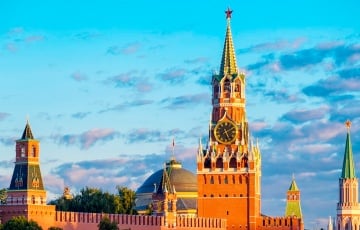
For Moscow, the situation is made even worse by one additional factor.
Yet another European politician on whom Moscow had been counting for years has suffered a defeat.
In Serbia’s early parliamentary elections, the opposition “Student List” won about 52.7% of the vote, compared to 39.2% for the coalition led by Aleksandar Vučić.
The former president himself conceded defeat.
Vučić had led the country since 2014, alternating between the posts of prime minister and president. In September, he stepped down from the presidency ahead of schedule, hoping to return to power as head of government. Instead, he paved the way for the opposition.
It is particularly noteworthy who exactly defeated him. The movement grew out of protests following the collapse of a canopy at the Novi Sad train station, where 16 people died in 2024.
Over the course of two years, outrage over corruption and the authorities’ irresponsibility transformed into a political force that managed to secure an absolute majority in parliament. Voter turnout approached 69%.
For the Kremlin, this is a serious geopolitical loss.
For many years, Vučić skillfully balanced relations between Brussels and Moscow. Serbia officially sought EU membership, received European investments, but continued to purchase Russian gas, maintain relations with Putin, and refused to join sanctions against Russia.
This arrangement suited Moscow just fine. In the heart of Europe remained a country that could be held up as proof that, even after the invasion of Ukraine, Russia’s political isolation was not complete.
Now this familiar arrangement has lost its chief architect.
The new government intends to focus on fighting corruption, restoring the independence of institutions, and normalizing relations with the European Union.
And this inevitably raises the question of foreign policy. Especially since EU countries account for more than 58% of Serbia’s foreign trade. Serbia’s economic geography is significantly closer to Brussels than to Moscow.
Vucic is already predicting the imposition of sanctions against Russia by the spring of 2027 and blames his defeat on European states and the American “deep state.”
It is telling that he chose to attribute even his own defeat to external interference. The loss of life, two years of protests, and discontent over corruption fit much less comfortably into this worldview.
For Moscow, the predicament is compounded by the fact that just six months ago, Viktor Orbán lost the election in Hungary. Two politicians who had maintained special relationships with the Kremlin for years have, one after another, lost power.
The conclusion is obvious: a foreign policy built on personal relationships with a few long-standing leaders is extremely vulnerable at the ballot box.
The Kremlin has long since grown unaccustomed to such mechanisms. But in Europe, they still work.
Telegram channel “Forbidden Opinion”

Bank's name: Bank Millennium S.A.
Address: ul. Stanislawa Zaryna, 2A, 02-593, Warszawa
IBAN: PL97116022020000000216711123
SWIFT: BIGBPLPW
Name of the account holder: Fundacja “KARTA ‘97”
Purpose/title of payment: Donation for statuary aims
You can contact us by the e-mail charter97@gmail.com