


Scientists Have Made An Unexpected Discovery About Earth's Distant Past
- 31.10.2026, 12:00
- 1,102
A 440-million-year-old fungus helped make this possible.
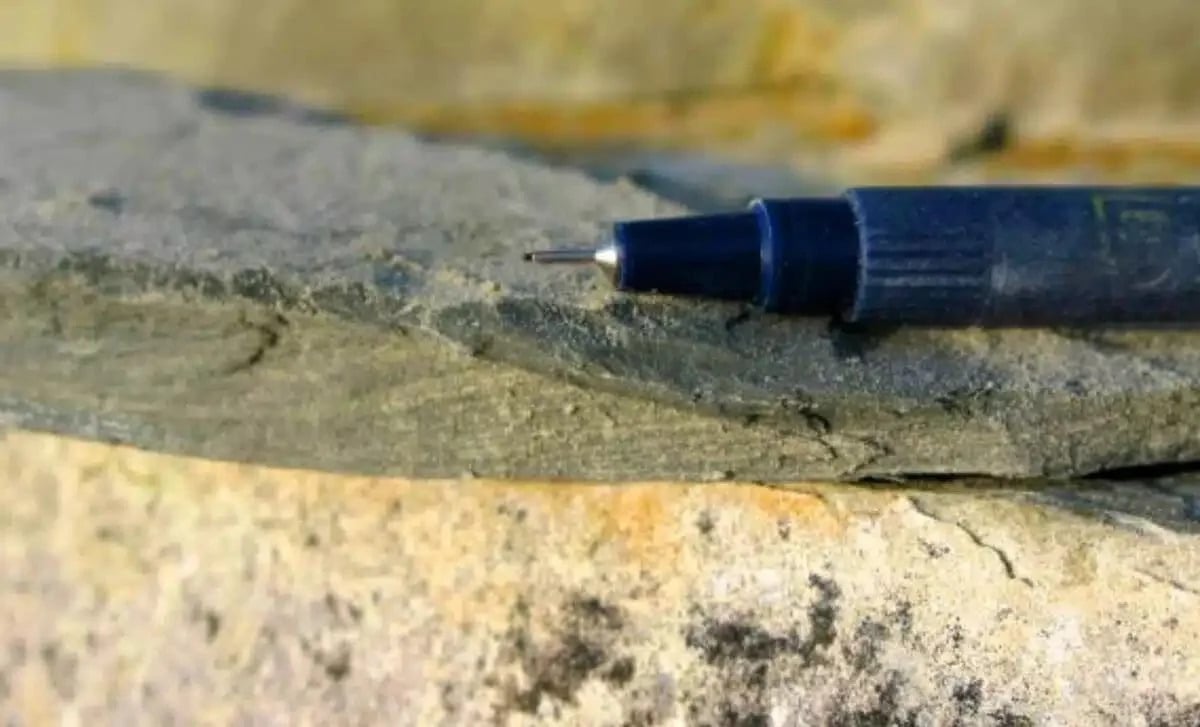
A tiny 440-million-year-old fossil led to an unexpected discovery about Earth’s distant past. Scientists have identified it as Tortotubus protuberans—an ancient fungus that existed during an era when nearly all life was concentrated in the oceans. This is reported by The Daily Galaxy.
Interestingly, its unusual structure provides a key to understanding how fungi helped transform barren land into an environment suitable for other organisms to thrive.
This discovery was made by Dr. Martin Smith, a paleontologist at Durham University. In 2016, this find was described as the oldest known fungus, as well as the oldest known example of a terrestrial organism at that time.
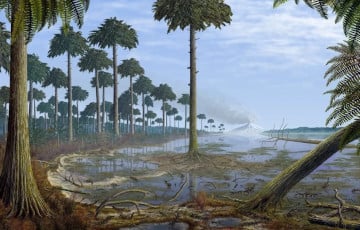
During the Silurian period, the Earth looked completely different. There were no forests or flowering plants, and the few representatives of terrestrial flora resembled mosses or lichens. And yet, processes were already underway beneath the Earth’s surface that would ultimately lead to the formation of soil—and fungi played a key role in this.
A Surprisingly Complex Structure
It is noted that at first glance, Tortotubus protuberans looks rather unremarkable, but its microscopic filaments tell an interesting story. Dr. Smith discovered that the fungus had a cord-like structure resembling that of some modern fungi. Smaller branches extended from the main filament, which then curved, returned to the main stem, and gradually wrapped around it. For such an ancient organism, this was a remarkably organized structure.
In modern fungi, such networks serve to transport nutrients within the colony—a function that is extremely important when resources are scarce or unevenly distributed. According to a study published in the *Botanical Journal of the Linnean Society*, the branching pattern of this fossil is very similar to the structures in modern fungi that are responsible for nutrient transport and decomposition processes.
In addition, such networks help fungi spread across surfaces and colonize new territories—a huge advantage in the early era, when nutrients on land were scarce and distributed extremely unevenly.
How Fungi Helped Form Soil
It is important to note that 440 million years ago, the Earth was a very different place: early plants lacked roots, which limited their interaction with the material beneath the surface. Fungi, on the other hand, can spread their hyphae through the soil and help break down organic matter.
This activity was significant: by facilitating decomposition, sediment stabilization, and weathering, fungi helped establish the processes that transform loose material into soil. Smith explained: “What we see in this fossil is complex fungal ‘behavior’ in some of the earliest terrestrial ecosystems, contributing to soil formation and initiating the process of decay on land.”
What did this ancient fungus eat?
One detail about what it had to decompose remains a mystery. Modern fungi often feed on dead plants and other organic material, but when Tortotubus lived, there were no deciduous trees and no forests producing large amounts of plant debris.
Smith speculates that the fungus may have fed on material produced by much simpler organisms: bacteria and algae likely already lived on land during the Silurian period and could have provided organic matter for decomposition. The problem is that these tiny organisms rarely leave fossils, so it is difficult to determine exactly what was present there.

Bank's name: Bank Millennium S.A.
Address: ul. Stanislawa Zaryna, 2A, 02-593, Warszawa
IBAN: PL97116022020000000216711123
SWIFT: BIGBPLPW
Name of the account holder: Fundacja “KARTA ‘97”
Purpose/title of payment: Donation for statuary aims
You can contact us by the e-mail charter97@gmail.com