
Natalia Dulina Replied To Maria Kolesnikova
- 5.10.2026, 9:25
- 1,268
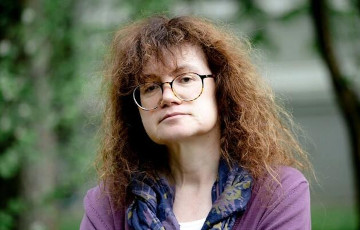
Photo: social media
Negotiations with Lukashenko—that's some pretty lackluster diplomacy.
Former political prisoner Natalia Dulina commented on a post by another former political prisoner, Maria Kolesnikova, who called for negotiations with Lukashenko.
“As is my custom, I’d like to respond to Maria Kolesnikova’s post and comment on the points where Maria argues for the possibility and necessity of negotiations with Lukashenko,” Dulina writes. “The first point.
Maria writes: “Negotiations do not mean abandoning principles. Sanctions create the necessary pressure. Negotiations should turn that pressure into results: the release of people, their return home to their families, and a reduction in repression.”
Maria, principles have nothing to do with this, believe me. For those who oppose negotiations, it’s primarily an analysis of Lukashenko’s behavior and a forecast of the outcomes of these negotiations. I hope you know how many negotiations have taken place over these thirty-plus years with Lukashenko—and how they ended.
Lukashenko is a card cheat... Just recall the brazen violation of the 1996 agreements between the Belarusian parliament and Lukashenko, who got his way through deception by dissolving the parliament. If you don’t remember, look it up. That’s how it all started.
Don’t even try to negotiate—it’ll just end in yet another deception. Just look, Maria, at the conditions now facing those who were released but remained in Belarus—those who couldn’t, or, damn it, simply wouldn’t leave their homes.
Next. Point 2:
“Diplomacy is neither weakness nor concession. I myself am free today in part because this tool worked. For me, this isn’t just theory.”
Today’s negotiations with Lukashenko—well, that’s diplomacy for you. And it works, to put it bluntly, in a very peculiar way. Again, I’m referring to Lukashenko. A recent example: 25 people were taken abroad, and dozens of political prisoners were not released—even though their relatives had been told the day before to come and pick them up. And what about the refusal—expressed to Cole—to stop the repression?
Point 3.
“Belarus cannot be left to Russia. And we cannot abandon the people who remain inside the country. That’s 9 million people who continue to live there. An independent and sovereign Belarus is a necessary condition for the architecture of European security. Isolation only strengthens Russian influence.
It’s easy to be uncompromising. But being uncompromising on Facebook doesn’t open prison doors or bring people home.”
I completely agree. But I have a question: how will negotiations help protect 9 million people? How can Europe and America protect Belarus from Russian influence?
Can’t you see that Lukashenko’s Belarus has been thoroughly permeated by this toxic influence, and no amount of “cleansing” will help?
Do you really naively believe that if Europe “accepts” Lukashenko, he’ll immediately abandon his “big Russian brother” and turn into a European liberal?
You write that it’s easy to be uncompromising. Maria, I, too, went through a penal colony, though in a milder form than you did. No, believe me, being uncompromising isn’t easy—and you know that yourself...

Bank's name: Bank Millennium S.A.
Address: ul. Stanislawa Zaryna, 2A, 02-593, Warszawa
IBAN: PL97116022020000000216711123
SWIFT: BIGBPLPW
Name of the account holder: Fundacja “KARTA ‘97”
Purpose/title of payment: Donation for statuary aims
You can contact us by the e-mail charter97@gmail.com