
Oil Exports From The Middle East Have Returned To Pre-war Levels
- 6.10.2026, 18:15
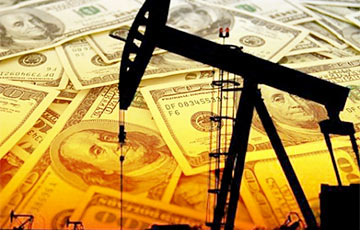
The price of Brent futures fell below $100 per barrel.
Oil exports from the Persian Gulf countries have reached pre-war levels thanks to the diversification of supply routes and the partial resumption of shipping traffic through the Strait of Hormuz. Brent futures prices have fallen below $100 per barrel, but fuel prices remain near record highs. Most of the oil currently being exported from the Middle East is crude, as many local refineries remain shut down due to damage caused by Iranian strikes and the ongoing threat of attacks. As a result, the world continues to face a shortage of petroleum products.
During the week of September 21–27, more than 160 million barrels—or 23.3 million barrels per day—were exported from the region, according to The Wall Street Journal reports, citing data from Kpler. Similar volumes were exported in the first half of February. But now, about 55% is exported from the Gulf of Oman, located just off the Strait of Hormuz (which Iran is trying—with diminishing success—to block), and from the Red Sea, where Saudi Arabia pumps oil via pipeline. Before the war, more than 80% was shipped through the Strait of Hormuz.
Exports from the region via all routes for 14 days in September exceeded pre-war levels, which averaged 18 million barrels per day in the year leading up to the war, Reuters adds. According to Kpler, the recent surge in shipments is due to Saudi Arabia, in an effort to regain its market share, has begun more actively exporting oil by tanker through the Strait of Hormuz and pumping more through the pipeline, which was restored after the September 10 attack carried out by Iranian-backed militants from Iraq.
Brent futures had remained above $100 per barrel for most of the first half of September. But on Tuesday, they fell to $98.1. This was driven by reports that Saudi-backed Yemeni government forces had recaptured the coastline near the Bab el-Mandeb Strait, through which ships enter the Red Sea. As a result, the Iran-backed Houthi group was driven out of most of the territory it had seized in September, from which it had been able to control the movement of ships.
Executives at U.S. oil companies are asking the U.S. Navy—which protects ships transiting the Strait of Hormuz from Iranian attacks—to focus more on escorting tankers carrying petroleum products, industry sources told the WSJ. Until now, the U.S. has mainly assisted supertankers capable of carrying about 2 million barrels of crude oil.
Saudi Arabia has been actively utilizing these vessels recently, traders and analysts told Reuters. Due to such large export volumes, the capacity to transship oil in the Gulf of Oman onto vessels that then deliver it to buyers has reached its limit, they say.
Crude oil exported in this manner is mainly shipped to Asian countries, which refine it for their own needs and do not export the resulting products to any significant extent. As a result, the United States, the world leader in oil production and refining, remains one of the few major suppliers capable of providing the world with fuel.
Even if current export volumes from the Persian Gulf can be maintained, analysts believe the global market is unlikely to stabilize before mid-2027. Countries in the region will need time to restore oil fields and refineries, and the market will need time to replenish the hundreds of millions of barrels of oil drawn from reserves as a result of the war and the crisis.
In the U.S., the average price per gallon of diesel reached a record $6.53 at the end of September (compared to $5.6 a month earlier and $3.7 a year earlier), and in California, where supply is lower and taxes are higher, it reached $8.44. Diesel currently costs $6.37 in the U.S., and high fuel prices are one of the most important factors that could undermine the Republicans’ standing in the congressional elections to be held in a month.

Bank's name: Bank Millennium S.A.
Address: ul. Stanislawa Zaryna, 2A, 02-593, Warszawa
IBAN: PL97116022020000000216711123
SWIFT: BIGBPLPW
Name of the account holder: Fundacja “KARTA ‘97”
Purpose/title of payment: Donation for statuary aims
You can contact us by the e-mail charter97@gmail.com