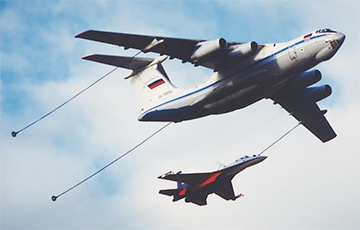


A Historic Event Has Taken Place That Could Forever Change The Balance Of Power In The Air
- 7.11.2026, 14:43
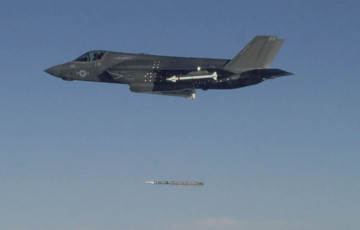
An F-35 fired a Meteor missile for the first time.
The fifth-generation F-35B fighter jet fired a long-range Meteor missile from its internal weapons bay for the first time. This was reported by the website of the missile’s developer, MBDA.
“On October 7, the Meteor system reached a significant milestone in its integration into the F-35 aircraft by conducting the first launch from the F-35B’s internal weapons bay on U.S. soil,” MBDA noted in its press release.
It is important to note that test flights of the F-35B with the Meteor missile were already conducted last year. However, at that time, the missile was merely transported inside the aircraft’s internal weapons bay without being launched.
Separation tests allow for an assessment of how cleanly and safely the missile separates from the aircraft under normal operating conditions or during an emergency termination of flight.
The tests ensure that the missile separates precisely without striking the fuselage, damaging the wing structure, or disrupting the fighter’s flight dynamics.
“During flight tests, the safe release of the weapon from the F-35’s bay under challenging aerodynamic conditions was demonstrated, and important data was obtained to improve the digital prediction models used to evaluate weapon release characteristics,” the company added.
The Meteor system is expected to undergo a full series of release tests over the coming months. The tests will conclude with live-fire exercises aimed at verifying the munition’s flight characteristics under various conditions.
Why This Matters
The integration of the Meteor into the F-35’s arsenal creates one of the most dangerous fighter systems in the world, thanks to the combination of the F-35’s stealth capabilities and the Meteor’s speed and firing range.
The F-35’s primary air-to-air missile has traditionally been the American AIM-120 AMRAAM. However, the emergence of the Chinese PL-15 long-range missiles and the Russian R-37M has begun to threaten NATO’s air superiority.
Unlike conventional missiles, the “Meteor” is equipped with a ramjet engine. Thanks to this engine, the missile maintains tremendous speed (over Mach 4) even during the final phase of its flight path, potentially creating the world’s largest “No-Escape Zone” for enemy aircraft. The Meteor’s range is estimated at approximately 200 km.

Bank's name: Bank Millennium S.A.
Address: ul. Stanislawa Zaryna, 2A, 02-593, Warszawa
IBAN: PL97116022020000000216711123
SWIFT: BIGBPLPW
Name of the account holder: Fundacja “KARTA ‘97”
Purpose/title of payment: Donation for statuary aims
You can contact us by the e-mail charter97@gmail.com