


WSJ: Ukrainian Drones "Took Out" Russia's Air Defense System
4- 27.06.2026, 8:20
- 4,964
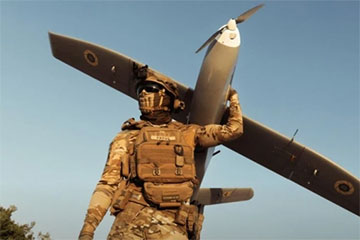
June proved to be a fateful month for the Kremlin.
Massive attacks by Ukrainian drones are overwhelming Russian air defenses and have disabled about 20% of Russia’s oil refining capacity.
This was reported by The Wall Street Journal.
Effectiveness of Long-Range Strikes
The increase in the number and improvement in the technical characteristics of Ukrainian drones have made it possible to significantly increase the effectiveness of attacks deep behind enemy lines. In June alone, approximately 35% of all verified successful strikes inside Russia this year took place.
The vastness of Russian territory, previously considered a defensive advantage, now complicates the protection of infrastructure, as air defense systems are forced to cover both a vast front line and remote targets.
To break through the defenses, the Ukrainian military is using attrition tactics.
The first waves of drones pinpoint the positions of air defense systems, allowing subsequent drones to find safe routes.
Russian “Pantsir” systems can track no more than four targets simultaneously, so large groups of drones simply overwhelm the system.
“We simply used a large group of drones, and they overloaded the Russian air defense systems,” said Denis Shtilerman, chief designer at Fire Point.
According to him, domestically produced drones and missiles are deployed in 8–10 missions daily over Russian territory and in the occupied territories of Ukraine.
The strikes on Moscow and occupied Crimea inflict the greatest political damage on the Kremlin; there, due to successful attacks on ferries, bridges, and oil depots, the local occupation authorities have been forced to suspend the sale of fuel to private individuals.
Expansion of Production
Ukraine plans to produce more than seven million drones this year, compared to more than two million in 2024. Most of these will be short-range frontline drones, but production capacity for long-range drones is also being expanded in parallel.
Defense contractors are aiming to reach a production rate of up to 300 long-range drones per day, capable of covering long distances.
In addition, domestic “Neptune” and “Flamingo” cruise missiles are increasingly being used to strike fortified targets and bunkers. They have a larger warhead compared to drones and are significantly more difficult for Russian systems to intercept.

Bank's name: Bank Millennium S.A.
Address: ul. Stanislawa Zaryna, 2A, 02-593, Warszawa
IBAN: PL97116022020000000216711123
SWIFT: BIGBPLPW
Name of the account holder: Fundacja “KARTA ‘97”
Purpose/title of payment: Donation for statuary aims
You can contact us by the e-mail charter97@gmail.com