

In Crimea, Actions Have Begun That Run Counter To The Interests Of Putin's Oligarch Usmanov
1- 27.06.2026, 13:38
- 2,604
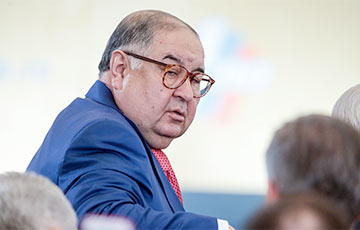
Photo: TASS
Due to problems with electricity and the internet.
Amid power outages and internet access disruptions in annexed Crimea, local businesses have been temporarily permitted to disregard the requirements of the “Honest Mark” labeling system without risking a fine.
This was reported the Moscow-appointed “head” of the peninsula Sergey Aksyonov. According to him, Russia’s Ministry of Industry and Trade has notified regulatory authorities of the need to take the current situation in the region into account when conducting inspections.
A similar statement was made by the “governor” of annexed Sevastopol Mikhail Razvozhayev. The decision was made against the backdrop of damage to energy infrastructure resulting from attacks by the Ukrainian Armed Forces, the introduction of rolling blackouts, and a regional state of emergency.
The “Honest Mark” system, operated by the Center for the Development of Advanced Technologies (CDAT), mandatorily covers more than 20 product groups—from dairy products and water to medicines, shoes, and bicycles. At the same time, its development and operations are closely linked to billionaire Alisher Usmanov.
In 2025, Usmanov transferred his stake in the CRPT to a little-known buyer, Vasily Nekhoroshkov; however, as FBK investigator Sergey Ezhov discovered, Nekhoroshkov had accompanied Usmanov on trips for more than ten years, and one of his acquaintances had saved his phone number as “ABU’s head of security” (ABU — Alisher Burkhanovich Usmanov. — TMT), which indicates that Usmanov retains control. According to data for 2023, CRPT’s revenue exceeded 24 billion rubles, and among its shareholders, in addition to Usmanov, were Vladimir Putin’s nephew Mikhail Shelomov and oligarch Yuri Kovalchuk.
The system itself, designed to combat counterfeiting, has, according to *Izvestia*, given rise to a black market: Data Matrix codes are freely sold on online marketplaces and at Moscow’s “Sadovod” market for 3 to 15 rubles apiece, while the official cost of a code is about 50 kopecks. For 13,500 rubles, one can purchase a trade declaration from an accredited laboratory without any quality inspection of the goods. The Center for the Protection of Consumer Rights (CRPT) claims that labeling has reduced the share of counterfeit goods by 71% in footwear, 36% in light industry, and 43% in perfumery; however, industry associations continue to report a high proportion of counterfeits. Against this backdrop, the Ministry of Industry and Trade previously announced tighter controls over licensing documentation.

Bank's name: Bank Millennium S.A.
Address: ul. Stanislawa Zaryna, 2A, 02-593, Warszawa
IBAN: PL97116022020000000216711123
SWIFT: BIGBPLPW
Name of the account holder: Fundacja “KARTA ‘97”
Purpose/title of payment: Donation for statuary aims
You can contact us by the e-mail charter97@gmail.com