
"Everyone Is Unhappy, Even The 'yabatki'"
- 13.07.2026, 9:06
- 4,128
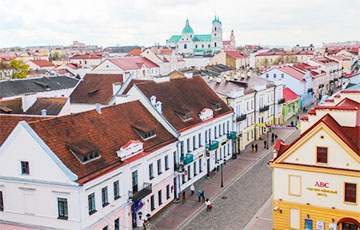
A resident of Grodno described what life is like in the city right now.
Nadezhda (name changed for security reasons) moved to Minsk for several years: there, she studied, worked, and also helped political prisoners—writing letters and sending care packages. A year ago, she faced a choice about how to move forward with her life—whether to return to her hometown or move to Poland (an option made possible by her roots), writes “Solidarnast”.
Nadezhda chose the first option: Grodno.
— I decided to stay in Belarus because, first of all, I have my own two-room apartment here. Even if I sold it, the money wouldn’t be enough to buy a place in Poland. Second, I was worried about the job situation. I have a good position in Grodno, but in Poland—after Belarus withdrew from the Bologna Process—I wasn’t eligible for anything anymore.
I found out that to have my Belarusian degree recognized, I’d have to spend about a thousand dollars and a lot of time—and there’s no guarantee it would even work out in the end.
What’s life like in Grodno?
It’s practically a holiday in the city every day: one race or another, a festival, or something else. It wasn’t like that before. I guess they want to show people that everything’s great here: “we’re the coolest” and “we’re better off than in Europe.”
Besides, I think there’s an element of competition with other cities. For example, with Brest. Who will have the coolest 100,000th event.
There’s a lot of patriotism and ideology in these shows. You read the program—every one starts with a wreath-laying ceremony.
In recent years, Grodno has drifted far away from European culture. The holidays that used to be celebrated are gone. Instead, Russian artists have started arriving in droves.
There are more tourists now than ever before: mostly Russians and Uzbeks, but I also hear Polish being spoken. Because of this influx of tourists, restrictions have even been imposed at the most iconic sites. In the church, for example, you’re no longer allowed to go beyond a certain point.
Nadezhda notes that the people of Grodno are deeply pained by the severing of ties with Poland.
“In the past, a lot of children from Grodno went to study in Poland. Now the preparatory schools have closed. Some people are still preparing students on an individual basis, but the number of applicants has dropped significantly. The same goes for those who live in both countries.”
It used to be common: you’d go to Poland for a couple of months to work, then come back and buy a car here. That doesn’t happen anymore—you’re either here or there. Even relatives who left for non-political reasons and could return have stopped coming to Grodno—it’s become too costly in terms of both money and time.
Everyone is unhappy that opportunities to travel to Poland for shopping, vacations, or studies are now severely limited. Even the “old-timers.” “How can this be—no Polish powder?” Economic issues always concern people the most.
“They’re asking for a reference”
Also, the publication’s interviewee adds, major city enterprises like “Grodno Azot,” “Khimvolokno,” “Grodnoenergo,” there’s a severe labor shortage, judging by what locals say.
— Although it used to be impossible to get a job at “Grodno Azot,” for example. Now, to get in there, you have to go through a background check and list where your relatives work. Who can pass that? Even if you haven’t been flagged (in 2020—ed.), one of your relatives might have been.
And everyone is now being asked for a reference from their previous job. I haven’t even seen mine. But since I’m working, that means everything’s fine. Although there’s a section on “political views.” They even include it in references for schoolchildren. These are 16-year-olds—what kind of views could they possibly have? But they still write that kind of thing.
In general, society has long been divided into “us” and “them.” You look at a person, at what they say, and you think: are they one of us or not?
But in our organization, everyone just tries to do their job and avoid talking about politics. It’s clear that the events of 2020 affected many people. I know for a fact that several colleagues have relatives in prison. But people don’t talk about that now. Back in 2020–2021, there was a lot of talk about it.
Management doesn’t pressure us with ideology. At most, they might call us in for a community cleanup day. Based on what I’ve observed, the ideological pressure is felt most acutely right now by preschoolers, schoolchildren, and their parents. They’re forced to come to school with a flag one day, or a lapel pin the next.
I have school-age children in my family. And they’re really being terrorized. There was even a time when they brought a film about “SVO” to school. We even had to pay five rubles for that. I told my child, “Don’t watch it, don’t listen to it—just scroll through your phone,” and my child replied, “That’s exactly what I was planning to do.”
I think it’s not so easy to convince kids of this ideology these days. Most of us used to listen to our teachers and think, “Well, yeah, that’s right—that’s how it should be.”
But kids today are bolder; they consume a lot of information through TikTok. At the same time, judging by their conversations, teenagers don’t understand the horrors of the war in Ukraine, but they also don’t buy into the ideology—they say, “They’re forcing us to go out and watch this; it’s just absurd.”
“No Global Plans”
Well, if we’re talking about the overall atmosphere—everyone wants freedom, but no one knows exactly what’s best right now, because the situation in the world is changing.
Before, the mood was: “Well, just another six months.” Then: “The war will end soon, and we’ll get back to normal.”
Now it’s become clear that there’s no end in sight to any of this. That’s why many people are just getting by day by day, night by night. No one has any long-term plans.
Even if you look at government propaganda, no one there is talking about the future or what Belarus will be like in 10 years—not even the government is making any plans. And people, of course, are in limbo—clinging to their families and friends.
When I returned to Grodno, it seemed to me that there were fewer Catholics. Although my parents say that’s not the case—everything is as usual.
Services used to be in Polish; now they’re in Belarusian. People still pray openly for Belarus, for those who are imprisoned, and for an end to the war.
“Tuteyshya”
Nadezhda sums it up: despite the pressure she feels living in Belarus, she’s glad she decided to stay.
— If only to get to know myself and my homeland. I travel a lot around Belarus now; I’ve started compiling a family tree that already includes 300 people. I visit relatives and cemeteries. And I’ve finally understood what ‘local’ means.
Grodno has always been a melting pot of cultures. My mom considers herself Polish; I consider myself Belarusian. So I go out to the countryside and ask, “Who are you? Where are you from?” And they reply, “We’re locals.”
People feel like they’re children of this land. And I started to feel the same way. Everyone may have their own dialect and traditions (some people still inscribe gravestones in Polish), but they’re all united in the fact that they’re “tuteyshy.”
I find it inspiring to see that people view their homeland not only from the perspective of being Belarusians, but also through their connection to the land itself.
So Belarusians will survive. And Belarus is “worth” studying.

Bank's name: Bank Millennium S.A.
Address: ul. Stanislawa Zaryna, 2A, 02-593, Warszawa
IBAN: PL97116022020000000216711123
SWIFT: BIGBPLPW
Name of the account holder: Fundacja “KARTA ‘97”
Purpose/title of payment: Donation for statuary aims
You can contact us by the e-mail charter97@gmail.com