

The U.S. Struck A Tanker Heading For An Iranian Port
1- 16.07.2026, 10:29
- 1,492
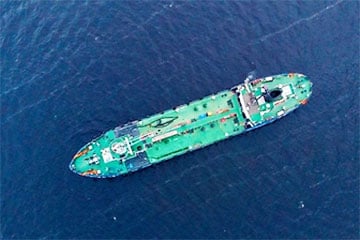
And they attacked targets on a strategic island in the gulf.
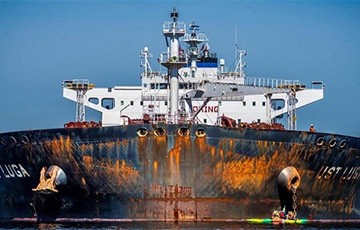
As part of the blockade of Iranian shipping in the Strait of Hormuz, U.S. forces struck the empty Belma tanker, which was sailing under the Curaçao flag toward Kharq Island—a key Iranian oil export hub—according to U.S. Central Command (CENTCOM).
The crew “ignored numerous warnings while attempting to breach the blockade,” and a U.S. aircraft fired Hellfire missiles at the ship’s smokestack, the command said. (Bloomberg https://www.bloomberg.com/news/articles/2026-07-16/us-strikes-iranian-linked-oil-tanker-deep-within-persian-gulf) reports that the Belma subsequently changed course and moved away from the island. This was the first attack on an Iran-linked tanker after the U.S. announced the start of the blockade the day before.
During the first day of the operation, CENTCOM forces intercepted two commercial vessels that complied with orders and disabled one vessel that failed to comply. In addition, U.S. forces carried out strikes “for an hour and a half” against coastal defense positions and cruise missiles on the island of Big Tomb. As CNN notes, this is a strategically important island in the Persian Gulf that forms part of Iran’s “defensive arc.” Strikes were also carried out against a number of Iranian command centers, air defense facilities, missile and drone systems, as well as coastal reconnaissance facilities. This marks the fifth consecutive day that the U.S. and Iran have exchanged strikes amid tensions over the Strait of Hormuz.
The Islamic Revolutionary Guard Corps (IRGC), for its part, announced further attacks on U.S. military facilities in Jordan, Bahrain, and Kuwait. Jordanian authorities reported that their air defense systems intercepted and shot down eight Iranian missiles. Iranian Foreign Ministry spokesman Esmail Baghai said that Tehran would continue to respond “resolutely” to U.S. strikes and has no plans to negotiate with Washington.
The day before, the IRGC threatened to close all export corridors that benefit the U.S. and its allies, in addition to the Strait of Hormuz. “Regional energy supplies will either be available to everyone or to no one,” the corps stated.

Bank's name: Bank Millennium S.A.
Address: ul. Stanislawa Zaryna, 2A, 02-593, Warszawa
IBAN: PL97116022020000000216711123
SWIFT: BIGBPLPW
Name of the account holder: Fundacja “KARTA ‘97”
Purpose/title of payment: Donation for statuary aims
You can contact us by the e-mail charter97@gmail.com