

The Fuel Crisis Is Dealing A Fatal Blow To Putin's Military Economy
- 16.07.2026, 18:26
- 1,162
Inflation is accelerating.
The fuel crisis has disrupted the fragile balance that the Russian economy had been struggling to maintain. Inflation is accelerating again, and sluggish economic growth (0.2% year-over-year in January–May, according to the Ministry of Economic Development) most likely turned into a contraction in June, reports The Moscow Times.
Business activity in Russia fell sharply in June, according to a Central Bank survey of thousands of companies. Investment banker Evgeny Kogan calls the results “quite dismal.” The business climate indicator calculated based on these results has plunged deep into negative territory, which historically corresponds to crises, he notes. “It appears that the fuel crisis has, after all, plunged the economy into a recession,” write MMI analysts.
At the same time, inflation is accelerating. In June, it stood at 0.87%, and in the first two weeks of July, at 0.43%. A survey of businesses revealed an explosive rise in costs and a surge in businesses’ inflation expectations, Kogan notes: “As a result, the fuel crisis has the potential to both accelerate price growth and push the economy into a recession. This situation is called stagflation.”
This is a major problem: if the key interest rate is raised to combat inflation, it could cripple the economy; but if it is lowered to support business activity, price growth will accelerate even further and spiral out of control, explains Kogan: “Something will have to be sacrificed.”
The ongoing war further complicates Russia’s economic policy choices, notes the Bank of Finland. The government is once again forced to increase spending and the budget deficit, which intensifies inflationary pressure and prevents a cut in the key interest rate—a situation that, in turn, curbs investment and hurts businesses, especially those without access to preferential loans.
The costs of the war are rising rapidly, according to a report by the Center for Strategic and International Studies (CSIS): “The Russian economy is in dire straits, and military spending may become increasingly unsustainable.” The economy is rapidly deteriorating, growth has stalled, reserves are dwindling, and dependence on China is increasing—these were the conclusions reached by participants in a discussion organized by the Center for Economic Policy Research (CEPR). But Putin will continue the war, even if it leads the country to an economic, political, and military abyss, according to CSIS experts.
The Center for Macroeconomic Analysis and Forecasting (CMACP), a think tank close to the government, had already identified stagflation at the beginning of the year. Its leading indicators signal a high probability that the economy will enter a recession (a decline in GDP over the past 12 months compared to the same period last year) no later than July, and that it will be protracted—lasting more than a year.
Analysts at Promsvyazbank no longer expect GDP growth this year (their previous forecast was 0.6%), and they have revised their forecast for 2027 down to 0.5% from 2%, reflecting the growing risk that the economy will become entrenched in a phase of stagnation. Next year also promises to be challenging, they warn. In their view, the consensus currently underestimates the consequences of the new inflationary impulse, which has not yet fully materialized; moreover, there is a risk that the fuel shortage will worsen.
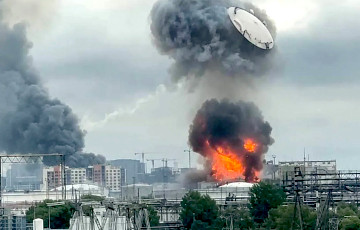
According to Rosstat, petroleum product output fell by 13.5% year-over-year in May, while industrial production declined by 0.7%. Over the first five months, petroleum products production was down 4.9%, while industrial growth totaled just 0.4%. The shutdown of oil refineries also impacted other sectors. This affected oil production volumes (due to the inability to quickly redirect it for export), wholesale trade, and freight traffic in May, according to Central Bank analysts. Data for June is not yet available, but the fuel crisis intensified in July.
The Central Bank assumes that the government will handle the situation and that the temporary stagflation will resolve itself. “The only question that remains is: what if it doesn’t go away?” writes Kogan. Even if there are no new attacks on refineries, Russia is unlikely to have enough time in two months to restore the approximately 40% of refining capacity that has been lost, Reuters reported, citing a source.
And in 2.5 months, inflation could gain new momentum: the details of the 2027 budget will be announced in late September, and utility rates will rise starting in October. This year, the average utility bill will increase by 11.9%.

Bank's name: Bank Millennium S.A.
Address: ul. Stanislawa Zaryna, 2A, 02-593, Warszawa
IBAN: PL97116022020000000216711123
SWIFT: BIGBPLPW
Name of the account holder: Fundacja “KARTA ‘97”
Purpose/title of payment: Donation for statuary aims
You can contact us by the e-mail charter97@gmail.com