


Workers' Uprising In Uzbekistan: Lukashenko Miscalculated For The Second Time
13- 20.07.2026, 15:20
- 23,532
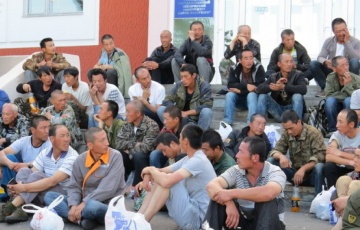
Eleven years ago, Chinese construction workers staged a protest march.
The story of the organized transfer of migrant workers migrant workers from Uzbekistan to Belarus, which just a few days ago Lukashenko and the authorities in Tashkent were touting as an example of successful international cooperation, has unexpectedly turned into an unpleasant surprise. The workers refused to work for a pittance, and the authorities had to urgently put out the fire of discontent.
“Flagstok” recalls the high-profile story of Chinese construction workers in Dobrush. Their protest march in 2015 was an unprecedented event for the region and a clear example of the Belarusian authorities’ irresponsibility in monitoring the working conditions of foreign labor.
A Factory of Discord
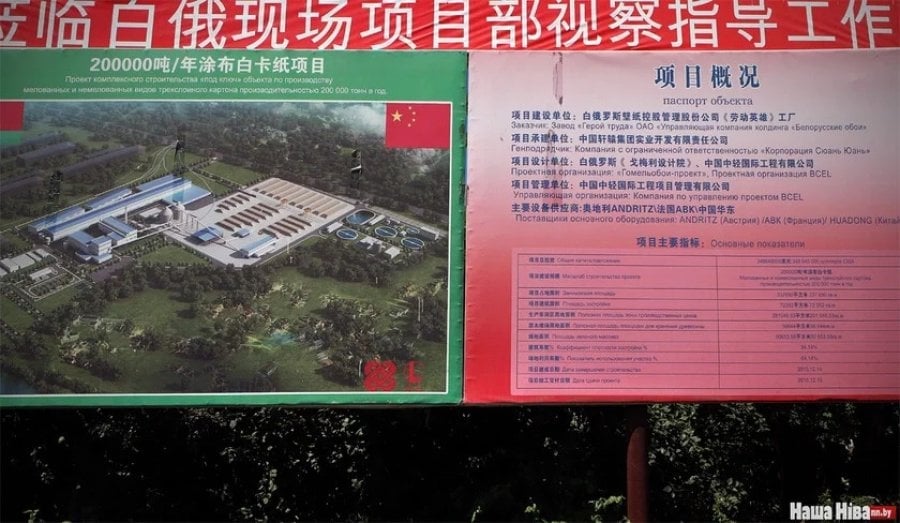
In 2012, the Belarusian authorities launched a large-scale project to reconstruct the Dobrush “Hero of Labor” paper mill. The goal was ambitious: to build a new large-scale plant for the production of coated and uncoated cardboard with an annual capacity of 200,000 metric tons. This plant was intended not only to supply the domestic market but also to strengthen Belarus’s position in European and Asian export markets, becoming a key facility in the country’s pulp and paper industry.
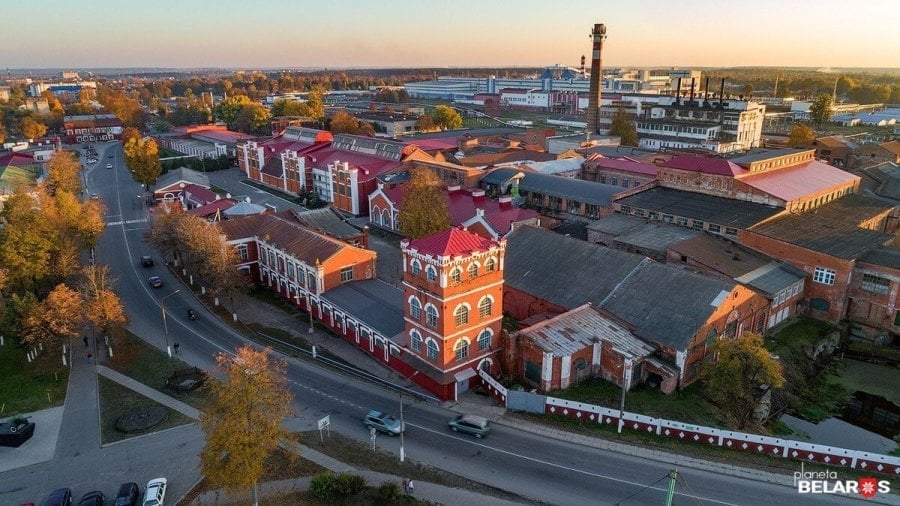
The project was financed primarily through a loan from the China Development Bank, which provided Belarus with approximately $348.6 million, while the total cost of the project was estimated at roughly $500 million. These funds were intended for the purchase of process equipment, construction, and design work. Project management was entrusted to OJSC “Management Company of the ‘Belarusian Wallpaper’ Holding,” which included the Dobrush factory.
The Chinese corporation Xuan Yuan Industrial Development Co., Ltd. was selected to carry out the construction and installation work. The choice of this company was no accident: it allowed Belarus to secure a large loan from China and, at the same time, expand Belarusian-Chinese economic cooperation. Along with the corporation, Chinese workers arrived in the country—between 900 and 1,200 people, according to various sources—who directly carried out construction work at the site. The Chinese company was granted favorable tax and customs incentives, including exemption from duties for bringing in foreign specialists, which was intended to accelerate and reduce the cost of implementing this large-scale project.
The reconstruction was hailed as the largest project in the industry—until the construction turned into a never-ending project, and instead of a ribbon-cutting ceremony, the news featured workers walking along the Dobrush–Gomel highway.
Progress of the Reconstruction
The project, launched in 2012, was scheduled to complete the full modernization of production facilities by the spring of 2016, but due to problems with the Chinese contractor, the Xuan Yuan Corporation, the launch did not take place until 2021—a five-year delay.
Before the high-profile protest in 2015, Chinese workers—numbering about a thousand, according to various estimates—lived in Dobrush under conditions bordering on slavery: the dormitories were located right on the construction site; residents huddled on three-tiered bunk beds and prepared meals in tiny kitchens not designed for hundreds of people. The words “comfort” and “safety” were clearly not included in the contract. The workers labored 10 hours a day without days off, with only a 15-minute lunch break. It was also reported that wages for Chinese workers were delayed by up to three months, leaving their families in China without remittances.
In addition, journalists documented instances of worker coercion: As the construction workers themselves recounted, representatives of the “Xuan Yuan” corporation confiscated their passports for safekeeping and prohibited them from purchasing local SIM cards, effectively cutting them off from the outside world. Due to these living and working conditions, the Chinese workers’ morale rapidly deteriorated; tensions among the workers reached a critical point and ultimately erupted into a mass protest.
Transition from Dobrush
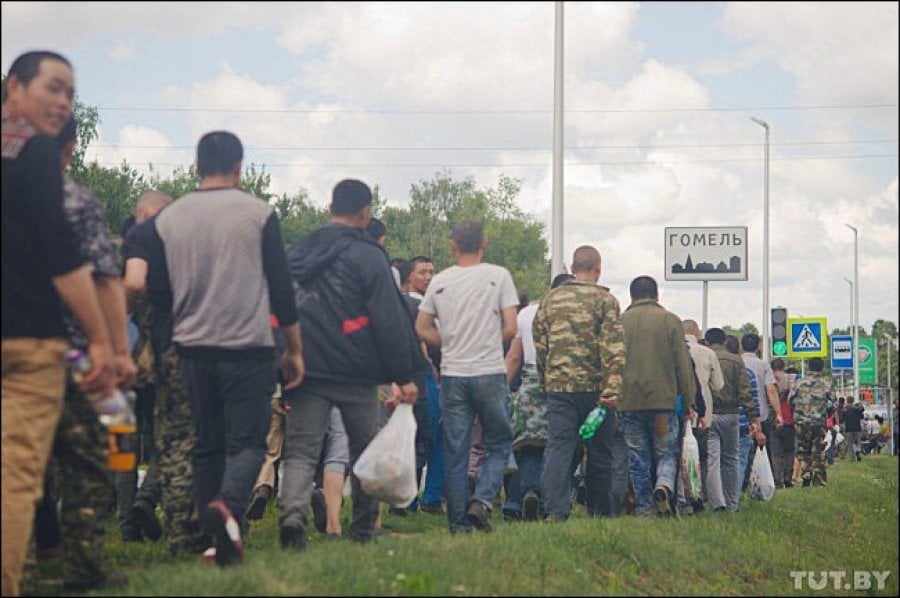
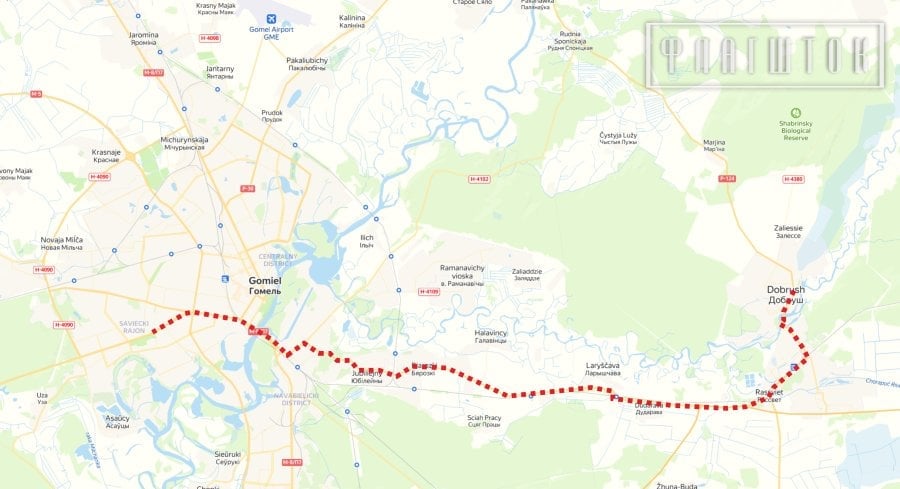
The protest by Chinese workers began early in the morning on July 2, 2015, at the construction site of a new cardboard factory in Dobrush. The reason for the mass demonstration was the chronic non-payment of wages to workers by the “Xuan Yuan” corporation—at that point, the arrears had already reached three months. The outraged construction workers—numbering between 200 and 300 people, according to various estimates—formed a march and set out from Dobrush along Highway M-13 toward Gomel. Their intention was to appeal to the Chinese ambassador to Belarus, asking him to intervene and help resolve the wage payment issues.
Police officers and OMON riot police escorted the workers’ convoy along the route. According to eyewitnesses, there was a heavy security presence on the highway, including traffic police patrols stationed at nearly every intersection. At one point during the march, a clash occurred between Chinese workers and the police: according to eyewitnesses, police officers wearing body armor and military helmets attempted to stop the procession by grabbing protesters by the arms and trying to detain them. However, these actions were not organized or clearly coordinated—thanks to this, the workers were able to break through the cordon and continue on foot toward Gomel.
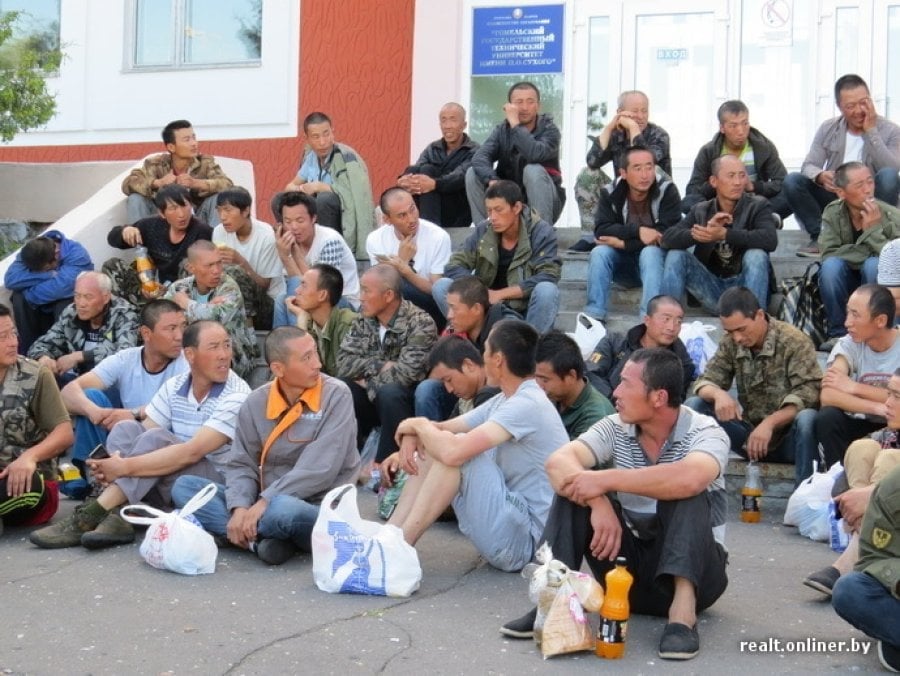
The procession passed through several settlements, including the villages of Yubileiny and Pobeda. The situation on the highway was tense; traffic was blocked in some places by traffic police, which caused alarm and concern among the local population. Social media and the media noted that local residents showed interest and curiosity about what was happening, and some expressed sympathy for the Chinese workers, impressed by their determination to defend their rights.
Events in Gomel: Local Authorities, Diplomats, and the Reaction of City Residents
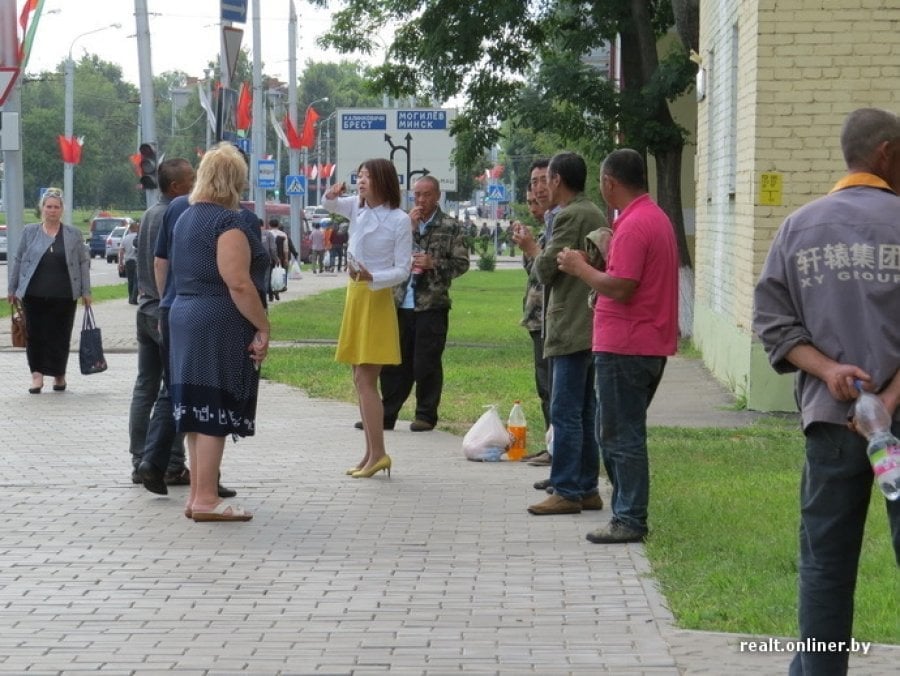
Around noon, the column of workers reached Gomel, entering the city via Barykina Street and gathering in Shevchenko Park and near the Sukhoi Technical University. Representatives of local authorities and the Chinese corporation arrived to meet with the protesters there. The chair of the Dobrush District Executive Committee, Olga Mokhoreva, was present at the scene and gestured to the Chinese to persuade them to call off the protest and return to Dobrush.
In addition to local officials, representatives of the Chinese embassy arrived to negotiate with the workers, attempting to persuade the protesters to end their march and return to the construction site. At one point, a disagreement arose among the workers: some of the protesters were determined to continue the march to Minsk, while others agreed to discuss the situation with representatives of the Chinese embassy. The atmosphere during the negotiations was tense, with brief skirmishes and arguments breaking out among the workers; however, the situation did not get out of hand, and the police, who were observing the events from the sidelines, hardly intervened at all.
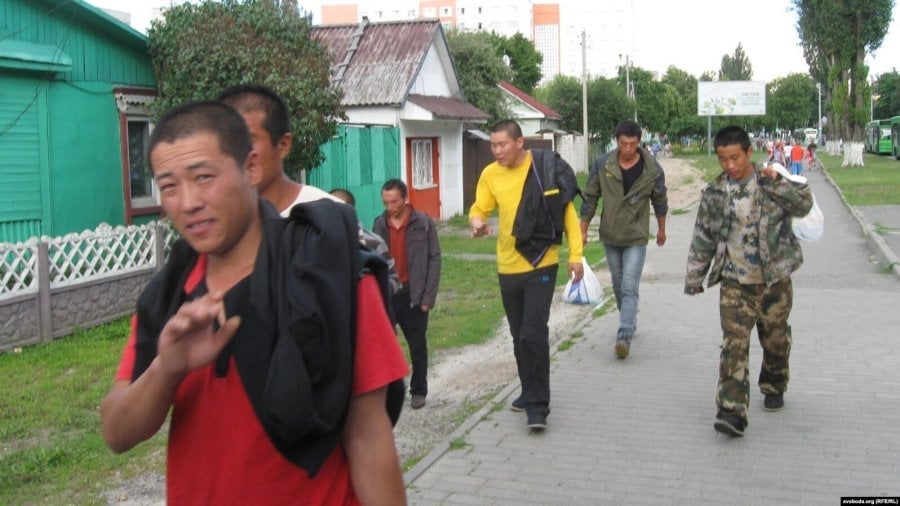
Toward evening, the Ambassador Extraordinary and Plenipotentiary of the People’s Republic of China to Belarus Cui Qiming arrived at the protest site and addressed the workers personally. According to journalists, his speech was brief—about twenty seconds—but after his arrival, most of the protesters decided to board the buses provided for them and return to Dobrush. The remaining workers hesitated for a while, waiting for some additional guarantees and assurances. After further negotiations with diplomats and executives from the Chinese company, they also decided to return to Dobrush by bus.
Residents of Gomel showed great interest in this unprecedented demonstration by foreigners in their city. Many residents watched the procession and actively discussed the events on social media, posting photos and videos. In their comments and posts, eyewitnesses expressed sympathy for the protesters, noting that Belarusians themselves were familiar with similar problems involving delayed wages.
Some Gomel residents personally encountered the protesters on the day of the march, and despite minor everyday conflicts, they generally showed human concern and compassion, understanding the reasons behind the protesters’ desperate act. The Chinese protest in Dobrush and Gomel became an event that vividly highlighted the problems of recruiting foreign workers without providing adequate living conditions and respecting their rights. The incident received widespread attention both in the independent media and among ordinary residents in social media posts.
Developments Following the Protest and the Wage Issue
The day after the Chinese workers’ march, the situation began to gradually return to normal. Representatives of the Chinese corporation “Xuan Yuan” began paying off wage arrears. Workers were paid an average of 9,000 to 10,000 Chinese yuan, which roughly corresponded to three months’ worth of back pay. However, no official confirmation of full repayment of all debts was published, and the Chinese construction workers themselves noted that some payments were incomplete or partial. As a result, in the days that followed, many workers—despite the resumption of payments—did not immediately return to their duties; and as Dobrush residents told reporters, the construction workers simply wandered around the city for several more days, complaining about the lack of work assignments and the uncertainty of the situation.
Deportation of the ringleaders and subsequent events at the construction site
A separate issue was the possible deportation of the protest’s ringleaders. According to information from Lukashenko’s deputy chief of staff Nikolai Snopkov, the conflict between the Chinese workers and the corporation had been officially “resolved.” He assured that the workers were able to discuss all issues with representatives of the Chinese Embassy and the hiring company. At the same time, Snopkov specifically emphasized that the authorities considered a group of approximately 10–20 people to be the instigators of the protest, who, according to him, could be deported back to China. A representative of the company “Xuan Yuan” confirmed that the issue of deportation falls under the jurisdiction of the Belarusian Ministry of Internal Affairs; however, the mass deportation of Chinese workers was never officially confirmed. Later, media outlets noted that, most likely, no mass deportations took place, or they occurred quietly so as not to fuel international outrage.
Subsequently, construction of the Dobrush plant encountered new problems. The Chinese general contractor began to experience increasing financial and organizational difficulties. As early as April 2017, “Xuan Yuan” was placed on Belarus’s list of tax debtors. In February 2018, the Chinese corporation filed a counterclaim against the Belarusian Ministry of Taxes and Levies in an attempt to challenge the tax claims, but to no avail. As a result, as Belarus’s then-Prime Minister Andrei Kobyakov stated in 2018, the government officially terminated its contract with “Xuan Yuan,” citing the company’s lack of necessary experience in implementing large-scale projects and its failure to complete construction on time.
The plant’s commissioning was postponed for several years and did not take place until 2021, five to six years behind the originally planned schedule. During this time, the management company of the “Belarusian Wallpaper” holding, which owns the plant, found itself in a difficult financial situation. In January 2022, the Economic Court of the Gomel Region ruled to collect from the “Xuan Yuan” Corporation a debt of 455,800 rubles (approximately 178,000 U.S. dollars) in favor of the State Tax Inspectorate for the Novobelitsky District for unpaid taxes and state fees accrued between 2016 and 2019. Thus, years later, the fallout from the conflict surrounding the reconstruction of the Dobrush Paper Mill continued to affect the enterprise’s financial condition, and the reconstruction project itself remained a striking example of the problematic interaction between Belarusian authorities and foreign contractors.
The story of the Dobrush Paper Mill’s reconstruction has become a striking example of how the authorities’ desire to implement a large-scale project quickly and cheaply, using foreign workers, turned into a resounding failure. The years-long delay in launching production, financial losses, and mass protests by Chinese construction workers over harsh working conditions and unpaid wages—all of this has left a lasting impression on the region’s residents.
Today, as the Belarusian authorities plan to bring in as many as 150,000 specialists from Pakistan, one gets the feeling that the lesson of the Dobrush factory has not been learned, and that past mistakes may be repeated on an even larger scale.

Bank's name: Bank Millennium S.A.
Address: ul. Stanislawa Zaryna, 2A, 02-593, Warszawa
IBAN: PL97116022020000000216711123
SWIFT: BIGBPLPW
Name of the account holder: Fundacja “KARTA ‘97”
Purpose/title of payment: Donation for statuary aims
You can contact us by the e-mail charter97@gmail.com