

Lavrov's First Meeting With Rubio This Year Lasted Just 35 Minutes
5- 23.07.2026, 8:51
- 4,686
The first details have emerged.
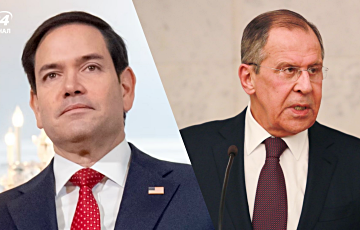
Russian Foreign Minister Sergey Lavrov and U.S. Secretary of State Marco Rubio held their first in-person meeting since last September on the sidelines of the ASEAN summit in Manila. The talks lasted just 35 minutes, according to Interfax. Representing Russia were Deputy Foreign Minister Andrei Rudenko and Director of the Department of Foreign Policy Planning Alexei Drobinin, as well as the Russian President’s Permanent Representative to ASEAN Evgeny Zagainov. Representing the U.S. side were Deputy Secretary of State for Political Affairs Alison Hooker and U.S. Special Envoy Sergio Gore.
Before the meeting, Lavrov stated that the talks would focus on Ukraine and the Anchorage agreements, which, according to the Kremlin, were reached by Vladimir Putin and Donald Trump. “We are proceeding on the assumption that, at least for now, our American colleagues have not rejected their own proposals, which have been put forward and are now well known to everyone,” Lavrov said. Rubio also stated that he plans to discuss the war in Ukraine at the meeting. “We believe it would be good for Russia if the war ended, so we will raise this issue,” the Secretary of State noted. He added that the conflict is preventing Washington and Moscow from “finding common ground on other issues.”
During his talks with Rubio, Lavrov may have taken a tougher stance than that of the Kremlin, which, according to Bloomberg sources in Moscow, has decided to abandon the idea of a “territorial swap” with Kyiv. According to the agency’s sources, Putin no longer intends to return parts of the Sumy and Kharkiv regions to Kyiv and plans to keep them under his control as a “buffer zone.”
At the same time, Bloomberg sources clarified that Putin still believes it is possible to capture the entire Donbas region by the end of this year. At the same time, the agency’s sources in the Russian Ministry of Defense called such a timeline overly optimistic and considered it more realistic that the war would not end until 2027.
Prior to this, Lavrov accused the U.S. of violating the Anchorage agreements and emphasized that Moscow has no intention of halting the war along the current front lines. He also did not rule out the possibility that the meeting between Putin and Trump in Alaska was a deception that ultimately resulted in additional arms deliveries to Ukraine. Furthermore, Lavrov asserted that Moscow no longer considers the U.S. an “objective mediator” and sees an intensification of sanctions pressure on Russia.

Bank's name: Bank Millennium S.A.
Address: ul. Stanislawa Zaryna, 2A, 02-593, Warszawa
IBAN: PL97116022020000000216711123
SWIFT: BIGBPLPW
Name of the account holder: Fundacja “KARTA ‘97”
Purpose/title of payment: Donation for statuary aims
You can contact us by the e-mail charter97@gmail.com