
Z-channels Mocked The Statement By The Head Of The Russian Navy
3- 27.07.2026, 9:47
- 3,678

The Kremlin's new project is bound to fail.
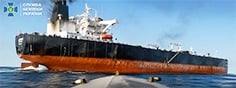
Russia is building its first unmanned vessel with a displacement of 500 metric tons, designed to search for submarines and other underwater objects. This was announced by the Commander-in-Chief of the Navy Alexander Moiseev on the “Zvezda” television channel. The admiral did not disclose the developer, the project’s cost, the launch date, or the vessel’s control system.
“It is under construction; it will be the first vessel of its kind. It will serve as the foundation for the further development of unmanned systems,” Moiseev said. According to him, the project is included in the current state armaments program.
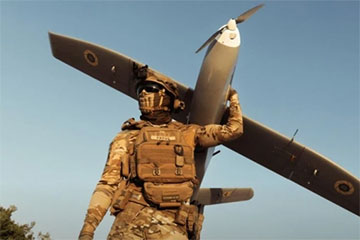
The announcement drew criticism from several major pro-military channels and commentators, writes The Insider. They believe that the Russian navy is attempting to shift toward large and expensive unmanned ships without having established mass production of the small, inexpensive attack boats that Ukraine is using against Russian ships, ports, and the Crimean Bridge.
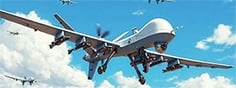
The Telegram channel “UAV Developer” compared this concept to building a single “unmanned Tu-95” instead of mass-producing drones. The channel’s authors argue that a 500-metric-ton vessel will not solve the Navy’s two main problems—the shortage of small attack unmanned surface vessels and the lack of reliable long-range communications at sea. A 500-metric-ton UAV carrier “will be sunk just like any other similar ship,” according to “UAV Developer.”
The publication was cited by military correspondents Vladimir Romanov and Yuri Kotenok. Romanov also added:
“Practice shows that some senior Ministry of Defense officers set as their key goal not the country’s defense capability and improving the actual effectiveness of our army, but a strategy that can be described as ‘how to make as much money as possible.’”
“Rybary” on Max noted that large unmanned platforms equipped with anti-submarine systems or air defense capabilities may indeed be needed by the navy, but described them as the next stage of development. According to the channel, the Navy must first master the serial production of small unmanned vessels and refine the necessary technologies using them. The authors believe that restrictions on the production of engines, hulls, and onboard equipment will prevent the mass production of 500-metric-ton unmanned ships.
Similar criticism was voiced by former Verkhovna Rada deputy Oleg Tsarev and “Komsomolskaya Pravda” military correspondent Dmitry Steshin, whose posts were later quoted by Konstantin Malofeev’s “Tsargrad” TV channel.
“It’s a real shame. Now is the time for cheap and effective unmanned weapons systems. But we won’t be building a small, fast, cheap unmanned surface vessel. We’ll be building a maritime super-drone with a displacement of 500 metric tons. We’ll spend billions.
<...> We see Ukrainian UAVs striking our ships and attempting to strike the Crimean Bridge. But we don’t see our own UAVs anywhere. “It’s obvious that right now we need to focus on small unmanned surface vessels, as I wrote above, rather than on mega-projects,” Tsarev lamented. He also disputed the claim that the project has no foreign counterparts: according to him, the U.S. has already tested the 145-metric-ton unmanned vessel Sea Hunter and is building MUSV platforms of comparable displacement for anti-submarine missions.
“It’s all in keeping with tradition: from the world’s largest electronic wristwatches to the largest unmanned ship,” wrote Steshin. He also contrasted the large vessel with inexpensive maritime drones, which can be deployed en masse against significantly more expensive targets. In his view, the transition to large unmanned platforms should come later, while the priority now should be simple and inexpensive unmanned surface vehicles.
Public information on the combat use of Russian maritime drones remains scarce. Russia first used such a drone to strike a bridge in Zatoka, Odessa Oblast, in February 2023; however, the structure did not sustain serious damage. Later, Russian authorities and pro-Russian sources reported several more attacks, but Russia has not yet demonstrated the widespread use of UAVs comparable to that of Ukraine.

Bank's name: Bank Millennium S.A.
Address: ul. Stanislawa Zaryna, 2A, 02-593, Warszawa
IBAN: PL97116022020000000216711123
SWIFT: BIGBPLPW
Name of the account holder: Fundacja “KARTA ‘97”
Purpose/title of payment: Donation for statuary aims
You can contact us by the e-mail charter97@gmail.com