The Military Engine Of Putin's Economy Has Stalled
2- 30.07.2026, 12:38
- 1,468
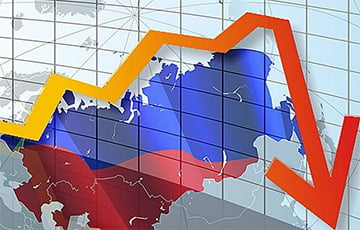
The government reported that Russia's GDP growth had slowed by a factor of four.
The Russian economy ended the first half of 2026 with 0.3% growth, according to the Ministry of Economic Development, as noted by the website The Moscow Times.
Compared to the same period last year (1.2%), the pace of economic growth slowed fourfold; compared to the second half of last year (0.9%), it slowed threefold. In June, according to estimates by the Ministry of Economic Development, the economy accelerated to 1.1% growth. However, this proved insufficient to offset the decline in the first quarter (-0.2%) and stagnation in April–May.
Following the military boom of 2023–24, when the government allocated a record amount of money to the military—the largest since Soviet times—and the country’s money supply increased by 50 trillion rubles, the Russian economy “stalled,” notes Elina Rybakova, a senior fellow at the Peterson Institute for International Economics.
Officials are “squeezing all other sectors of the economy to ensure that at least some growth continues in the military sector,” but even the military sector has begun to slow down, she notes. According to the Ministry of Economic Development, production of “finished metal products”—a category that statistics include bombs and shells—grew by 8.8% in the first half of the year (compared to 18% last year); production of “computers, electronics, and optics” rose by 4.3% (compared to 11.7%).
Meanwhile, civilian sectors of the economy are sinking deeper into recession: over the first half of the year, clothing production fell by 6.3%, and metallurgical enterprises saw a 9.1% drop in output. Following attacks on oil refineries, the output of petroleum products plummeted—by 21.7% in June and 7.7% over the first half of the year—marking the sharpest decline in the 20 years of available data.
A series of raids on the warehouses of Wildberries, the country’s largest marketplace, which sells goods worth 3% of GDP annually, also promises consequences for the economy, extending far beyond the loss of burned goods, warns Alexander Kolyandr, director of the Eurasia Group: thousands of sellers could go bankrupt, leading to defaults on loans and taxes, which in turn will hit the budget and the banking system.
Last year, the Russian economy grew by 1%—2.5 times less than the government’s initial forecast. For the current year, the Ministry of Economic Development had projected GDP growth of 1.2%, but lowered its estimate to 0.4% as early as this spring. At the same time, Sberbank and the Central Bank do not rule out the possibility of zero growth: their estimates range from 0% to 0.5%.
“In the best-case scenario,” the economy will end the year with zero growth, according to Rybakova of the Peterson Institute: the authorities are “scraping the bottom of the barrel” to find resources to continue the war, raising taxes and pumping money into the banking system so that it can continue lending. “But even in the coffers, there’s less and less to go around,” Rybakova notes.

Bank's name: Bank Millennium S.A.
Address: ul. Stanislawa Zaryna, 2A, 02-593, Warszawa
IBAN: PL97116022020000000216711123
SWIFT: BIGBPLPW
Name of the account holder: Fundacja “KARTA ‘97”
Purpose/title of payment: Donation for statuary aims
You can contact us by the e-mail charter97@gmail.com