


Saudi Arabia Is Sharply Cutting The Price Of Its Oil
8- 6.07.2026, 18:10
- 3,536
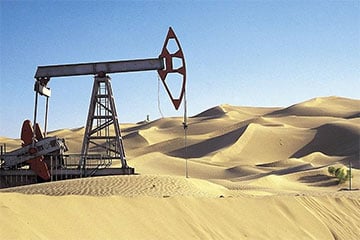
The decline will be the sharpest in at least the last 26 years.
Saudi Arabia is sharply cutting the price of its oil to attract buyers in Asia following the reopening of the Strait of Hormuz, where tankers carrying tens of millions of barrels of Middle Eastern oil had been blocked for several months.
According to Bloomberg, the kingdom’s state-owned oil company, Saudi Aramco, will reduce the official loading price of its main export grade, Arab Light, by $11 per barrel for August. Next month, Saudi oil will be sold at a discount of $1.50 to regional benchmarks for the first time since the 2020 pandemic.
The drop in Saudi oil prices will be the sharpest in at least 26 years, according to Bloomberg. It will affect, among others, India and China—key customers of Russia, which account for 90% of the Kremlin’s oil exports.
Due to the war in Iran, production volumes in OPEC countries, including Saudi Arabia, fell to their lowest level since 2000—16.13 million barrels per day. Now, however, the largest oil producers in the Persian Gulf are bringing wells back online, and this oil is already flowing into the market: According to economist Yegor Susin, citing data from Tankermap, tankers are transporting up to 12 million barrels per day out of the Strait of Hormuz. Iran is also exporting oil, having secured the lifting of U.S. sanctions and the ability to trade crude for dollars.
This is putting pressure on oil prices: the price of Brent crude has plummeted by 22% since the beginning of June and by 40% compared to the end of April—to $71.97 per barrel. The price of Russian Urals crude, which reached $115 in the spring, had plummeted to $40.4 per barrel as of July 2. This is $19 below the level factored into the Russian budget, which ended January–May with a record deficit of 6 trillion rubles. Discounts on Urals exceeded $27 per barrel, Bloomberg notes, citing data from Argus.
By the end of the year, the price of a barrel of Urals could drop to $60, Citi analysts predict. According to their estimates, as early as the beginning of June, oil flows from OPEC countries will return to pre-war levels, and subsequently, the global market balance will shift toward an oil surplus if producers bring all idled capacity back online. Oil production is exceeding forecasts by 1 million barrels per day, while demand remains weaker than expected, Citi reports.

Bank's name: Bank Millennium S.A.
Address: ul. Stanislawa Zaryna, 2A, 02-593, Warszawa
IBAN: PL97116022020000000216711123
SWIFT: BIGBPLPW
Name of the account holder: Fundacja “KARTA ‘97”
Purpose/title of payment: Donation for statuary aims
You can contact us by the e-mail charter97@gmail.com