

NATO's Secret Plan Against Russia
1- 9.07.2026, 14:05
- 1,004
How the West Is Preparing to Defend Itself Against the Russians.
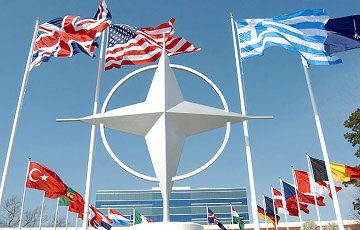
The North Atlantic Alliance is developing a new plan to deter Russia — the plan is to be based on a system that will use satellites, drones, other intelligence assets, and artificial intelligence to track the movements of Russian troops in real time. This is reported by Bild, citing documents obtained by the publication.
Bild obtained internal documents that reveal details of a large-scale plan codenamed “Eastern Flank Deterrence Initiative” (EFDI)—the “Eastern Flank Deterrence Initiative.”
It is claimed that the new concept will be based on continuous monitoring of troop movements using satellites, drones, and other intelligence assets, including ground robots. The plan is to process the information using artificial intelligence, which will analyze the situation and help assess the possible actions of the Russian command.
Another key innovation will be that all data and analytical reports will be simultaneously available to all NATO member countries. This will allow the Alliance’s military command to quickly determine which country, at any given moment, has the best capabilities to counter threats ranging from electronic warfare and cyber operations to various types of weapons.
The documents use the term “Kill Web,” which describes an integrated system for gathering intelligence and delivering strikes. Its operating principle is formulated as follows: “See first. Decide first. Strike first.”
As an example, the documents consider a scenario in which a drone detects a Russian tank column moving toward NATO territory. Afterward, information from various sources—satellites, radars, and other sensors—is integrated into a single picture, allowing for the rapid selection of the most appropriate weapon system, such as a drone, artillery, or a multiple launch rocket system.
U.S. Army spokesperson Major Matt Blubaugh (Matt Blubaugh) noted that the new concept is not intended to replace tanks, artillery, combat aircraft, or service members. According to him, its purpose is to increase the effectiveness of their use, preserve combat capability, and give commanders more time to make decisions.
In addition to “digital deterrence,” NATO plans to strengthen the technical capabilities of its eastern flank. According to Bild, the concept stipulates that in the event of an attack, unmanned systems—drones, unmanned vehicles, and ground robots—will be the first to respond. Their mission is to halt the enemy’s advance and weaken it even before units equipped with tanks, aircraft, and personnel enter the fray.
According to the publication, NATO expects to implement the project in the near future and believes that this model will help increase the effectiveness of deterrence and reduce the risk of a possible attack on alliance countries.

Bank's name: Bank Millennium S.A.
Address: ul. Stanislawa Zaryna, 2A, 02-593, Warszawa
IBAN: PL97116022020000000216711123
SWIFT: BIGBPLPW
Name of the account holder: Fundacja “KARTA ‘97”
Purpose/title of payment: Donation for statuary aims
You can contact us by the e-mail charter97@gmail.com