
"The First Thing That Comes To Lukashenko's Mind Is How Things Are Going With The Coffers."
- 9.07.2026, 14:24
- 1,934
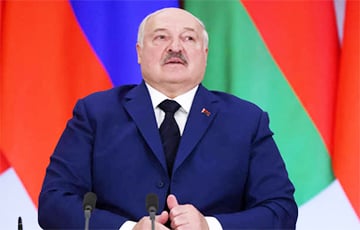
Everything here is wonderful.
Analyst Sergey Chaly on “Belsat” discussed Lukashenko’s first public appearance following a lengthy business trip abroad and the contradictions in his remarks.
— No sooner had Lukashenko been revived than he appeared in public on July 6, meeting with Viktor Lukashenko. Let’s see what he said there: “What’s going on on the international front: who recognizes us, and who doesn’t? Well, the issues that need to be discussed—these are matters of state that are on your shoulders: Oman, the United Arab Emirates, and, to some extent, Africa.”
Everything here is perfect. What ‘foreign track’—you yourself just came back from the foreign track (Lukashenko visited Russia, China, Indonesia, and Myanmar—ed.)? But the funniest part—and most likely the reason for the conversation—is that, supposedly, “I left you in charge of the farm,” and that implies you’re also responsible for what’s happening on the foreign policy front—Oman, the UAE—basically, all the places where the wealth amassed through backbreaking labor is stashed.
This is very telling. “The first thing that comes to Lukashenko’s mind is how things are going with the coffers,” Chaly noted on the program.
On the same day, Chaly points out, Lukashenko awarded general’s epaulets to senior officers. This time, unlike previous occasions, the event was not just a formality. There, the ruler made several remarks that the analyst highlighted.
— “The deployment of the ‘Oreshnik’ and tactical nuclear weapons in Belarus has become a serious factor of strategic deterrence, capable of cooling even the hottest heads,” Lukashenko stated, adding afterward that these weapons are “no junk.”
“His speech is built on contradictions,” says Chaly. “Tactical nuclear weapons are a factor of strategic deterrence.” That’s not how it works. Strategic deterrence can be provided by strategic forces—for example, the “Oreshnik” in its nuclear version, not the one he ended up with.
And he was also forced to say that it’s not junk. It’s clear he’s talking about the “Oreshnik,” since it was recently revealed that it contains gyroscopes dating back to the 1970s.
Another contradiction I noticed is when Lukashenko says: “Certain Western politicians are annoyed by our independence. Our alliance with Russia.” So is it independence and self-reliance after all, or an alliance with Russia that looks like you’re being summoned to humiliate yourself at Valdai?
And this, by the way, is the Russian line. When they visit their vassals, they say: “You can only be truly independent with us.” Because, in their view, independence means being rude to the West. That’s roughly what Lukashenko and his Foreign Ministry are doing right now.
Next, there’s a point that sounds like a strong assertion, a direct promise. Lukashenko said: “I emphasize once again, dear comrades, no one will send you into this slaughter.” I believe this was said sincerely and on his own initiative.
This speech is a direct result of his international tour, including Valdai and China. The latter is important here because Lukashenko began talking about nuclear weapons not only because “Oreshnik” doesn’t scare anyone, but also because it is believed that Xi Jinping does not approve of this path of escalation.
And then there was the conclusion of his speech, which left me in shock: “The heirs of the Third Reich are tormented by phantom pains.” (Lukashenko said this in the context of the war in Ukraine. The leader noted that he supports a peaceful resolution to the issue, but “the international war party does not want this”). Actually, this is a thesis I came up with myself.
Ever since the first trade wars began, and Russia wouldn’t give us loans, saying that they were “sponsoring” us, but we weren’t giving anything in return—and that, they claimed, was “subsidization.” I said: “No, this isn’t a subsidy; no one is forcing you to do anything. You’re entering into a free transaction, which means you’re paying for something with these subsidies. Would you like me to spell out what? For the anesthesia of phantom imperial pains.” That’s where it comes from (this thesis—ed.).
It’s obvious that the source of the war in Ukraine is precisely those phantom imperial pains that Putin conjured up while reading books and conversing with Catherine and Peter during his isolation. That’s what this is really about.

Bank's name: Bank Millennium S.A.
Address: ul. Stanislawa Zaryna, 2A, 02-593, Warszawa
IBAN: PL97116022020000000216711123
SWIFT: BIGBPLPW
Name of the account holder: Fundacja “KARTA ‘97”
Purpose/title of payment: Donation for statuary aims
You can contact us by the e-mail charter97@gmail.com