

Potato Prices Have Skyrocketed In Russia
5- 18.08.2026, 14:55
- 4,204
In some regions, the harvest situation is catastrophic.
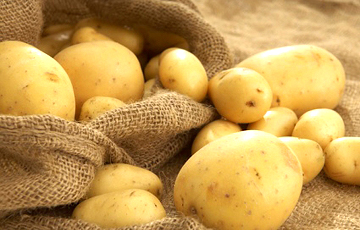
In Russia, potato prices began to rise sharply this summer, even though they typically fall at this time of year in anticipation of the new harvest. In the wholesale market in early August, the price of potatoes rose by 38.9% year-over-year—to 24.7 rubles per kilogram—while retail prices increased by 22%—to 56 rubles. This is according to data from “AB-Center,” as reported by Forbes. The price increase is due to a decline in potato production: while last year’s harvest totaled 8.5 million metric tons, this year’s harvest is expected to fall by 6% to 8 million metric tons, says Alexey Krasilnikov, executive director of the “Potato Union” Alexey Krasilnikov.
“Due to inclement weather, certain regions have seen a decline in yields, primarily the Urals, especially the Sverdlovsk Region, where soil moisture is very high because of the rains,” Krasilnikov explained. According to him, the Astrakhan Oblast—which is among the leaders in potato production—will also see a poor harvest. At the same time, farmers are reducing the amount of land devoted to potatoes because current prices barely cover production costs. “In 2026, according to preliminary data, the area planted with potatoes in the commercial sector decreased by 3.7%, to 272,600 hectares. This is the lowest figure in the last 18 years,” noted Alexey Plugov , CEO of AB-Center .
Meanwhile, according to data from the Association of Retail Companies (AKORT), the share of Russian potatoes in retail chains has exceeded 80% over the past year, while the share of imports has nearly halved. As a result, foreign shipments—primarily from Egypt, Belarus, and Azerbaijan—currently serve only to supplement the product range.
As the harvest progresses in the Central, Volga, and Siberian Federal Districts, potato prices will fall, but not as significantly as last year, Plugov predicts. At the same time, he said, the seasonal price increase—which usually begins in December and lasts until early June—will start earlier this year and will be more pronounced. Therefore, retailers may begin purchasing potatoes from abroad earlier than usual, Plugov concluded.
In the first half of 2025, Russia saw the sharpest rise in potato prices since 2002. The retail price per kilogram reached nearly 85 rubles. This was due to the previous year’s poor harvest and the depletion of stockpiles. As a result, potatoes were imported from Egypt, Pakistan, and China, and the government discussed temporary price controls for the crop.

Bank's name: Bank Millennium S.A.
Address: ul. Stanislawa Zaryna, 2A, 02-593, Warszawa
IBAN: PL97116022020000000216711123
SWIFT: BIGBPLPW
Name of the account holder: Fundacja “KARTA ‘97”
Purpose/title of payment: Donation for statuary aims
You can contact us by the e-mail charter97@gmail.com