

A Russian Ka-52 Was Unable To Shoot Down A Ukrainian FP-1 Drone With A Missile
- 21.08.2026, 13:20
- 1,900
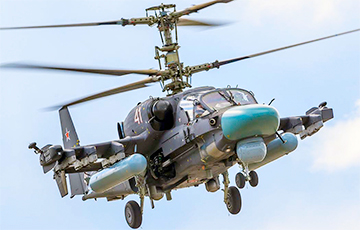
Military experts have revealed an interesting detail.
A video has surfaced online showing a Russian Ka-52 helicopter attempting to intercept a Ukrainian FP-1 kamikaze strike drone. According to Defense Express, what is interesting here is the attempt to use an “air-to-air” missile, which missed and failed to shoot down the UAV.
“In other words, we see that to counter drones, the occupiers’ attack helicopters are using not only cannons—as they have been doing since 2023—but also their available missile arsenal. It is also evident that the operation of the latter is quite complicated,” experts analyze.
It is noted that in the video caption, the missile is identified as an “Igla-V,” which is the airborne variant of the Soviet-Russian “Igla” man-portable air defense system (MANPADS). However, the Ka-52M can also use the newer “Igla-S” thanks to the “Strelets” system.
“In general, missiles in this family use an infrared seeker capable of locking onto aircraft, helicopters, cruise missiles, and jet-powered drones. However, it may have difficulty engaging targets that emit little heat, which includes many Ukrainian long-range UAVs, including the FP-1,” analysts note.
Thus, the video demonstrates the weakness of infrared seeker heads against the threat of strike UAVs in action. As a result, the helicopter was forced to continue attempting to intercept the target using its cannon, which requires more effort and time.
Defense Express noted that the Russians have now returned to the “Vikhr” anti-tank missile system in its “air-to-air” variant with a non-contact fuze. It features semi-active laser trajectory guidance, which the helicopter crew uses to guide the missile toward the target, thereby increasing the chances of shooting down UAVs such as the FP-1. On the Ukrainian side, the British LMM operates on the same principle.
“In general, the Russian defense industry has already announced the start of combat use of a new version of the ‘Vikhr,’ but it is still difficult to say whether it was specifically this version that was captured on video, although such a possibility exists. The missile’s signature and behavior suggest that this particular Ka-52 was attempting to use the “Igla,” the article notes.
According to experts, the use of the “Igla-V” or “Igla-S” can be explained by the fact that they are already in the arsenal of the Russian invaders, whereas the new modification of the “Vikhr” missile still needs to be manufactured.

Bank's name: Bank Millennium S.A.
Address: ul. Stanislawa Zaryna, 2A, 02-593, Warszawa
IBAN: PL97116022020000000216711123
SWIFT: BIGBPLPW
Name of the account holder: Fundacja “KARTA ‘97”
Purpose/title of payment: Donation for statuary aims
You can contact us by the e-mail charter97@gmail.com