
"Lukashenko Is Afraid To Acknowledge The Scale Of The Problem"
6- 21.08.2026, 22:35
- 17,826
Russian drones flying over Belarusian cities are no longer a coincidence.
Incidents involving drones have become more frequent in Belarus. In Zhlobin, local residents reported an explosion and the crash of a drone near BMZ, with eyewitnesses noting that the drone was Russian. In Gomel, people were also woken by loud noises in the sky and an explosion, which they attribute to the flight or an attempt to shoot down a Russian UAV.
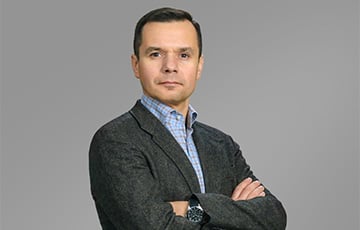
Why have there been noticeably more instances of Russian drones flying over Belarus recently? What could be the reason for this activity? Charter97.org discussed this with political scientist and Candidate of Philosophical Sciences Maksim Pleshko:
— I wouldn’t be quick to speak of a sharp increase in the number of incursions as a proven fact. But there is another important factor: Russian drones have long since ceased to be a rare occurrence for Belarus. Such incidents have been recorded before. In June 2026 alone, at least 17 incursions by Russian drones were recorded. Therefore, the incidents in Zhlobin, Gomel, and other similar cases should be viewed as part of a broader picture.
Russia is constantly changing its drone routes, seeking new trajectories, and testing the capabilities of air defense systems and the electronic warfare environment. Belarusian territory is of obvious interest to the Russian military—primarily due to its geography and existing infrastructure.
And this raises the key question: if a Russian drone is found over Belarus, this is no longer just Russia’s problem. It is a problem for Belarusian territory, security, and the regime’s accountability.
— Could this be related to the fact that in Belarus Russian relay stations have resumed operations, which are used to guide drones toward northern Ukraine?
— That theory seems plausible, but for now it must be distinguished from confirmed facts. We know that Russian relay stations were used on Belarusian territory. In June, Ukrainian officials reported four such sites in the Gomel and Brest regions. According to available data, following statements by Volodymyr Zelenskyy, they were shut down. However, Russian drones continued to be detected along the Belarusian-Ukrainian border. Therefore, I would take a broader view. Repeaters are just one element of the system. Russia may be using Belarusian mobile networks, electronic warfare infrastructure, and other technical capabilities. If it is now indeed confirmed that the repeaters have resumed operation, this would mean the restoration of a specific component of Russia’s infrastructure for directing airstrikes using Belarusian territory.
And then the question for Minsk is simple: Who authorized the use of Belarusian infrastructure for a Russian military operation?
— Only a few such cases are known, although the actual number of drone flights and crashes may be significantly higher. Why is the Lukashenko regime, despite the threat to people, concealing information about drone overflights and crashes over Belarus?
— Because acknowledging the scale of the problem means acknowledging something much bigger. Lukashenko wants to remain an ally of Moscow while simultaneously convincing Belarusians that the war does not directly concern them.
Russian drones flying over Belarusian cities are making this narrative less and less convincing. That is why the regime has opted for a media blackout: no official acknowledgment means no political accountability. The incident in Zhlobin is telling. People hear an explosion near a major industrial facility, see the aftermath, and discuss what happened, yet there is no official information.
This is not merely censorship. It is an attempt to conceal the true cost of Lukashenko’s alliance with the Kremlin. The more Russia uses Belarus as a theater of war, the less autonomy Lukashenko has left. If Russian military operations are being conducted from the country’s territory, the argument that “Belarus has nothing to do with this” ceases to hold water.
Lukashenko is trying to pretend that Belarus is outside the war. But Russian military infrastructure is gradually making Belarus part of this war—whether he wants it to be or not.

Bank's name: Bank Millennium S.A.
Address: ul. Stanislawa Zaryna, 2A, 02-593, Warszawa
IBAN: PL97116022020000000216711123
SWIFT: BIGBPLPW
Name of the account holder: Fundacja “KARTA ‘97”
Purpose/title of payment: Donation for statuary aims
You can contact us by the e-mail charter97@gmail.com