"The Belarusian Police Have Sided With The People"
1- 25.08.2026, 9:30
- 1,258
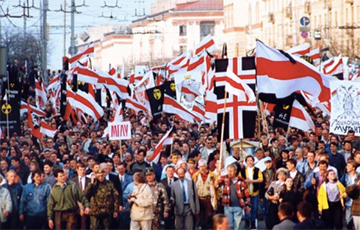
Vyachislav Siuchyk revealed little-known details about the historical events of July 25.
July 25 marks the 35th anniversary of the day Belarus gained independence was enshrined in law. In 1991, the Supreme Soviet granted the Declaration on State Sovereignty the status of a constitutional law.
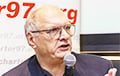
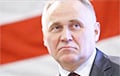
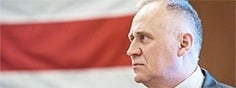
Regarding these historical events, the website Charter97.org spoke with Belarusian politician, leader of the solidarity movement “Razom” and one of the founders of the Belarusian Popular Front Vyachislav Siuchyk. In July 1991, he was one of the active participants in the events in Minsk; led a BNF unit, and was present in the square during the decisive days of September 24–25.
— You witnessed those historic events and were one of the organizers of the street protests in support of independence. What happened in Belarus 35 years ago? How do you assess the significance of the events of July 25, 1991?
— July 25, 1991—that must have been the happiest day of my life. I can only compare it to the days my sons were born.
At that time, I was the leader of the BNF team. The street events themselves were were Viktor Ivashkevich, secretary of the BNF Executive Committee. Those were extraordinary events. I can proudly say that when I woke up on August 19 in the BSSR, as the GKChP coup began, I fell asleep already in an independent Belarus. That’s because there was a great deal of work to be done in those days. Issues of *Rabochaya Khronika* were being published, and the struggle against the coup plotters was underway. These issues of *Rabochaya Khronika* were distributed to all enterprises in Minsk.
If I’m not mistaken, we printed four issues of *Rabochaya Khronika* at that time. Immediately after that, preparations for the square began, because the Supreme Soviet session was scheduled for July 24. Flyers were printed and distributed. There was plenty of work to do.
Naturally, people were in the square from the very start of the session on July 24. A great many events took place there. Those days were truly historic. Belarusian statehood was restored. A fierce struggle was underway both in parliament and on the streets on July 24 and 25. Our sound equipment kept breaking down. From the very beginning, we demanded that the session on July 24 be broadcast. And we managed to achieve that.
At the call of one of the leaders of the workers’ strikes, Mikalai Razumov from Orsha, the National Guard was formed. On July 24, nearly two thousand Belarusian citizens signed up to defend Belarus in the square. They were divided into “hundreds.” The National Guard had practically already driven the Belarusian police out of the Supreme Soviet building. In general, very turbulent events were taking place there.
You must know that young people staged a protest calling for the “burial of the CPSU”: they carried a coffin to the Central Committee building. But a very important moment came on the morning of July 25, when representatives of the Belarusian police approached Viktar Ivashkevich.
There was a lieutenant Ivan Srybny, who was effectively held responsible, as we joked at the time, for the mass disturbances—that is, for our street protest. I was present at that meeting along with Viktar. Srybny came with another Belarusian police officer. He asked us to provide 100 people for the Central Committee, 100 for the regional committee, and 100 for the district committee. He said they would handle the district committees on their own.
Afterward, there was another fierce struggle in the Supreme Soviet’s session hall, which lasted all day, until the Declaration of July 27 was finally granted the status of a constitutional law. But the Belarusian police had already sided with the people practically from the morning. I was a direct witness to this very important event.
This was also facilitated by the fact that, early in the morning, BNF deputies to the Minsk City Council had effectively taken over the Minsk Regional Committee and the Minsk City Committee of the CPSU. The Central Committee was surrounded; the Communists were terribly disoriented.
One of the incidents that took place on Independence Square—when it was still called Lenin Square—also played a certain role. People, naturally, were dissatisfied with the actions of the Communist majority. We wanted them to do what the BNF opposition had demanded over the microphone.During the scuffle, the deputies began to come out onto the square toward the crowd. They apparently didn’t realize themselves just how much the people already hated them.
And I saw, near the spot where our equipment was set up and our command center was located, that two generals had come out. The crowd, essentially, rushed at them. I was afraid for Uladzimir Kavalyenka, who was a member of parliament at the time. I asked my friends from the group—there were four of us—to escort him so that no incident would occur. By the time they approached, the crowd had already calmed down and the situation with the generals had been resolved. Then Valery Tikhiny, one of the leading Communist Party figures in Belarus, stepped forward. The crowd simply pounced on him. His bodyguards, grabbing him by the shoulders, practically carried him from the entrance to the Supreme Soviet to the “Minsk” hotel. And he even thanked the security guards for saving him.
One of them simply told him: “I didn’t save you so that you could thank me here, but so that you could be put on trial.” After that, an incident occurred in Tikhino. This also affected the deputies of the Supreme Soviet, the vast majority of whom were Communists.
Notably, the historical events, the pressure from the square, and the actions of the BPF deputies forced the Communists to practically ban themselves. And yet they were forced to restore Belarus’s statehood. This is an absolutely significant historical event.
There are many dates associated with our independence. For me, the most significant date in our history is, after all, April 25. This marks the adoption of the Third Constitutional Charter of the Belarusian People’s Republic in 1918. Freedom Day, the day of the Belarusian People’s Republic. But I believe that the official Independence Day is still July 27. And until that moment—until there is a parliament, until the Belarusian people’s right to elect their government is restored—it must remain so.
A very important date—July 25—which we are discussing today. Another date we must not forget is December 8, 1991, when the Belavezha Accords were signed. And on December 10, Belarus and Ukraine ratified them. Since we’re talking about Independence Day, Belarusians should also remember these dates.
And July 25—undoubtedly—was a great victory for the Belarusian people. I can speak for those of us who were in the square: we were truly happy. I will never forget the words of Viktar Ivashkevich, who emphasized that evening on July 25, 1991, that this was true happiness and that it was a great blessing that we had won independence without bloodshed. For the Belarusian people had shed a great, great deal of blood in the 20th century.
— Just a few years later, the dictator Lukashenko came to power in Belarus. He began to draw closer to Russia, effectively declaring himself the heir to the USSR, and Belarus’s national and state symbols were banned. Why did this happen?
— This happened because the KGB sought revenge. I want to emphasize that the catastrophe was that there was no trial of communism. The consequence of this was a revenge campaign, when, following the first presidential election in Belarus, power was seized by Alexander Lukashenko, who is a genuine criminal, the practically entire middle and lower ranks of the former Soviet secret services came to power.
Moreover, this KGB-style revenge was not limited to Belarus. On the same day, elections were held in Ukraine. As you know, Leonid Kuchma, a representative of the Soviet Union’s military-industrial complex, was elected. But Kuchma was still not as much of a monster as Lukashenko. Lukashenko, according to his own biography, simply hates the Belarusian people, and this is evident in his actions. He is an absolutely disastrous figure. And, unfortunately, Belarus has become a testing ground for this KGB-style revenge.
Let me remind you that there was a time when it was fashionable for journalists to ask: “Who is Putin?” That was in 2000, when Putin came to power in Russia. And Lukashenko said at the time—and these were not just empty words—that Putin was the Russian Lukashenko.
The consequences of this KGB-style revenge are absolutely horrific. I’d like to remind you that when Lukashenko seized power, he popped up like a jack-in-the-box right before the elections. No one in Belarus would have told you that Alexander Lukashenko would win that presidential election.
When he became president, everyone was convinced that he’d only be there for a year or two. It’s now been 33 years since this monster illegally seized power. And, unfortunately, there is no end in sight to his criminal rule.
Naturally, Lukashenko began to destroy practically everything Belarusian. And so we are faced with this paradox: thugs have seized power in our country and are pursuing a consistent anti-Belarusian policy.
It wasn’t just the flag that was banned. The police were ordered to crack down on the Belarusian flag even back when it was the national flag. Even before this illegal referendum on national symbols had taken place, the white-red-white flag was already being persecuted—and today it is practically banned in Belarus by Lukashenko’s gangster regime.
But an even more powerful blow was dealt to education and the Belarusian language. This is an absolutely tragic chapter in the history of the Belarusian people, because we were the only Soviet republic where, from the 1960s and practically until the end of perestroika, there were no city schools with Belarusian as the language of instruction. And then the process of “Belarusization” began, which Lukashenko violently halted through repression. The Belarusian people once again found themselves in the grip of horrific Russification.
The aftermath of the bloody Sunday on September 9, 2020, led to the banning of nearly all civic institutions and organizations, including the Society of the Belarusian School. This is a completely systematic effort to destroy Belarus.
And let me emphasize: when Lukashenko seized power, there were more than ten million Belarusians. Now, according to official reports, there are supposedly nine million, but even that figure is greatly exaggerated. The destruction of the Belarusian nation is underway.
The current regime is driven by the same terrifying system that carried out repressions throughout the Soviet Union in the 20th century. These are the same people. They are capable of carrying out mass repressions again, as the events since 2020 have shown. And they could resort to executions at any moment. Because Lukashenko is an absolute disaster for Belarus.
— Belarusians have not come to terms with the dictatorship and have been fighting for freedom for many years. The events of 2020 were one of the most striking phases of this struggle. Could a new window of opportunity to get rid of Lukashenko open up in the near future?
— Right now, God willing, there is only one realistic option for the Belarusian people, who today truly find themselves in a catastrophic situation. Terror and repression—the fact that the Stalinist era has effectively returned to Belarus—can be explained by only one goal. This is the Lukashenko regime’s preparation for mobilization, aimed at ultimately forcing Belarusians to fight on Moscow’s side.
And this mobilization could give Belarusians the opportunity to try to break free from the rule of Lukashenko’s illegal gang and avoid dying for imperial interests.
Because when we talk about the “Lukashenko army,” unfortunately, there is no Belarusian army at the moment. There are Lukashenko’s security forces. Virtually all the generals in these forces have very close ties to Moscow. But the soldiers are the very people who, until very recently, were marching with white-red-white flags in every city in Belarus. Not all officers are on Moscow’s side, either.
And during mobilization, there comes a moment when people are given weapons. This could be an opportunity for the Belarusian people to break free from the gangster-style occupation that has been imposed on them.
It has already been 33 years since Alexander Lukashenko illegally seized power. Unfortunately, this is a very difficult path. There have already been many victims of Lukashenko’s gang. The events could also turn out to be very bloody. But this is a realistic path, because all of Europe is currently in a pre-war situation.

Bank's name: Bank Millennium S.A.
Address: ul. Stanislawa Zaryna, 2A, 02-593, Warszawa
IBAN: PL97116022020000000216711123
SWIFT: BIGBPLPW
Name of the account holder: Fundacja “KARTA ‘97”
Purpose/title of payment: Donation for statuary aims
You can contact us by the e-mail charter97@gmail.com