
The CIA Director's Visit To Moscow Sent The Russian Ruble Tumbling
3- 27.08.2026, 13:56
- 2,508
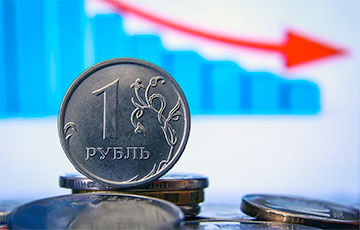
The euro is now worth more than 100 rubles.
The Russian currency market reacted with a new wave of ruble depreciation to the visit to Moscow by CIA Director John Ratcliffe and rumors that Vladimir Putin is preparing for an escalation of hostilities, which could include an attack on NATO and even the use of nuclear weapons, writes The Moscow Times.
On Thursday, the over-the-counter euro exchange rate exceeded the 100-ruble mark for the first time since March, reaching 100.0290 rubles—its highest level since last September. The dollar hit a five-month high (85.8 rubles), while the Chinese yuan reached a one-and-a-half-year high (12.79 rubles). Since the beginning of August, the ruble has depreciated by 8% against the dollar and 9% against the euro and the yuan, and since late May—when the wave of devaluation began—it has lost more than 20% of its value.
The story surrounding the CIA director’s visit to Moscow initially gave the market hope for new contacts between the U.S. and Russia, but quickly turned into a source of disappointment, notes Finam strategist Yaroslav Kabakov: “Reports that the visit may have been more about warning Moscow against escalation than about a breakthrough in the Ukrainian conflict virtually wiped out the positive reaction.”
According to Bloomberg, the Kremlin is preparing to intensify its attacks on Ukraine, and an increasing number of people in Putin’s inner circle believe he will decide to use tactical nuclear weapons. “Reports of a deadlock in the negotiation process and a possible intensification of military activity are once again pricing in the worst-case scenario,” Kabakov notes.
The ruble is under pressure from limited currency supply “due to pressure on exports from sanctions and geopolitics,” notes BCS analyst Dmitry Babin: Major exporters have begun holding onto their foreign-currency proceeds abroad instead of depositing them into Russian accounts, and last month reduced their foreign-currency sales to a historic low. At the same time, demand for foreign currency “remains high,” Babin notes: it is needed to import gasoline and purchase equipment for oil refineries damaged by UAVs.
“With a growing budget deficit and ruble-denominated government debt, the long-term outlook for the ruble appears bleak,” notes Andrei Khokhrin , CEO of Ivolga Capital . Budget spending on the war this year could exceed the plan by 4–5 trillion rubles, which would require increasing the debt by 2–3 trillion rubles beyond the plan. Meanwhile, the “hole” in the treasury reached 6.5 trillion rubles by the end of July, nearly double the level the Ministry of Finance had projected for the entire year.
The long-term “fair” exchange rate for the dollar is in the range of 90–100 rubles, and given recent events, it is closer to 100, according to Alexey Tretyakov, founder of AriCapital. The key risk for the ruble, in his view, is a change in the policy of the Central Bank of the Russian Federation, which has come under growing pressure from the Kremlin to lower the key rate despite the gasoline crisis. For the first time in recent years, there is a combination of risks: hyperinflation and the possibility that the Central Bank may not respond to it appropriately, Tretyakov believes.

Bank's name: Bank Millennium S.A.
Address: ul. Stanislawa Zaryna, 2A, 02-593, Warszawa
IBAN: PL97116022020000000216711123
SWIFT: BIGBPLPW
Name of the account holder: Fundacja “KARTA ‘97”
Purpose/title of payment: Donation for statuary aims
You can contact us by the e-mail charter97@gmail.com