


A "gold Vein" Has Been Discovered Beneath Australia's Red Soil
- 14.09.2026, 21:32
- 1,364

It will last for more than one generation.
Today, the entire world is focused on finding natural sources of hydrogen that can accelerate humanity’s transition to a low-carbon energy future. Hydrogen is an incredibly clean fuel, but most of it is still produced from fossil fuels. Recently, it appears that scientists have discovered a “gold mine” beneath Australia’s red soil, according to Science Alert (translation - “Focus”).
Scientists believe that access to vast natural hydrogen reserves could solve this problem. The data indicate that there are a number of geological processes that contribute to its formation; one of which is the interaction of hot water with magnetite, a mineral found in iron ore.
Studies show that magnetite deposits are widespread in the subsurface of Western Australia. In a new study, a team from Edith Cowan University focused on estimating how much hydrogen might already be present there and how much could be extracted in the future.
The results were published in the *International Journal of Hydrogen Energy* and, according to the team, appear very promising: the scientists gained a more complete understanding of the geological factors that determine the amounts of hydrogen magnetite is capable of generating. According to the study’s co-author, chemical engineer Alizer Keshavarz of Edith Cowan University, Australia may possess colossal but as yet untapped energy reserves—and the potential here is enormous.
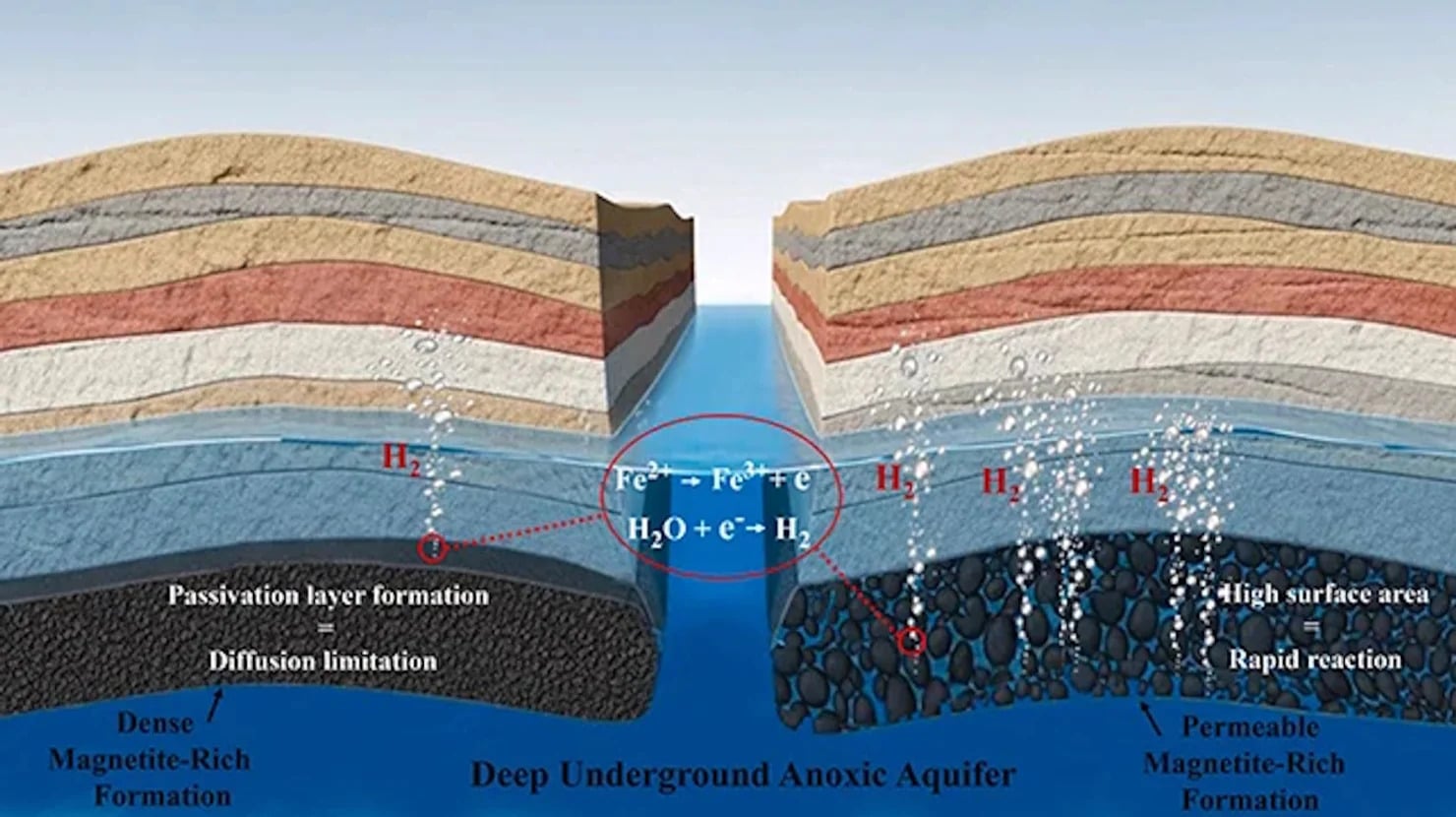
Moreover, it is believed that the hydrogen reserves hidden deep within Australia’s subsoil are sufficient to meet the country’s needs for many generations to come. Moreover, it is believed that Australia has the potential to become a major exporter of clean energy to the entire planet.
It should be noted that during the study, the scientists did not drill wells to search for hydrogen. Instead, they replicated in the laboratory the reactions that occur when water and magnetite interact under high pressure and at a temperature of 200 °C for 60 days. These conditions made it possible to partially simulate underground conditions: as a result, the scientists not only observed hydrogen release but also determined that magnetite powder generates significantly more hydrogen per unit mass than a solid sample of this mineral. The data indicate that the gas yield was approximately five times higher per gram of material.
However, there are still many challenges to overcome on the path to discovering, producing, and extracting hydrogen from such iron ore deposits. Nevertheless, scientists believe that this new discovery represents an important step forward in understanding the amounts of hydrogen that magnetite can release and in the search for the most efficient methods of extracting it.

Bank's name: Bank Millennium S.A.
Address: ul. Stanislawa Zaryna, 2A, 02-593, Warszawa
IBAN: PL97116022020000000216711123
SWIFT: BIGBPLPW
Name of the account holder: Fundacja “KARTA ‘97”
Purpose/title of payment: Donation for statuary aims
You can contact us by the e-mail charter97@gmail.com