

Scientists Received The Ig Nobel Prize For Kisses And Cockroach Milk
3- 4.09.2026, 13:07
- 6,854
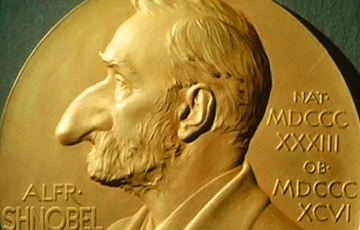
The strangest research projects of the year were honored in Zurich.
The winners of the 2026 Ig Nobel Prize have been announced. In Zurich, they once again honored crazy and unusual research in 10 categories.
However, as the prize description itself states, these works first make people laugh, and then make them think. So these studies are clearly not in vain.
What Is a Kiss and How to Blow Your Nose
The prize in biomechanics went to scientists from the U.S. and the U.K. who developed the most precise definition of a kiss.
So, a kiss is a non-agonistic interaction involving directed, intraspecific, oral contact with some movement of the lips or oral parts and without the transfer of food.
A group of researchers from India, France, Japan, and the U.S. discovered that the milk proteins of viviparous cockroaches contain three times more energy than those of cows. For this, they received a prize in chemistry.
The Japanese scientist Tokuji Unno was posthumously honored for his 1977 study. His work, “How to Blow Your Nose: An Aerodynamic Study of the Process of Blowing One’s Nose,” was selected as the best in the field of medicine.
Scientists from Brazil and Australia won the biology prize. They stepped on venomous snakes numerous times and under various conditions to determine exactly what actions provoke them to attack.
There was also a unique category—for the sense of smell. Here, a group of scientists discovered that babies smell pleasant to their parents, whereas teenagers do not.
The rich steal candy, and friends hate our enemies
There’s also the Ig Nobel Peace Prize. It was awarded for research on the topic of friends. It was proven that people value friends who are hostile toward those we dislike.
In economics, the laureates were scientists from the U.S. and Mexico. They found that members of the upper class are more likely to steal candy from children’s stashes and engage in other types of unethical behavior.
In physics, the prize was awarded for theoretical and experimental efforts to create a urinal that prevents splashing.
Scientists Franz Bender, Marcel van der Heijden, Atlant Bieri, and Pia Viviani buried 1,000 identical pairs of underwear in 25 countries around the world and dug them up two months later. Their goal was to assess soil conditions. For this, they received the Soil Science Prize.
In the field of technology, researchers from China, Canada, the U.S., and Egypt surprised everyone. They used mosquito proboscis as high-precision nozzles for 3D printing.
The Ig Nobel Prizes have been awarded since 1991, and over the past 30-plus years, they have become not just a parody but a genuine event that also helps popularize “serious” science.

Bank's name: Bank Millennium S.A.
Address: ul. Stanislawa Zaryna, 2A, 02-593, Warszawa
IBAN: PL97116022020000000216711123
SWIFT: BIGBPLPW
Name of the account holder: Fundacja “KARTA ‘97”
Purpose/title of payment: Donation for statuary aims
You can contact us by the e-mail charter97@gmail.com