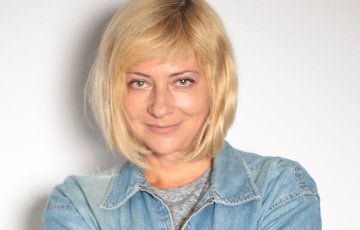


Entrepreneur Yauhenia Bachurnaya: “Prisoners of women’ penal colony eat on their hunkers and sleep in corridors”
- 9.10.2009, 12:30
An entrepreneur from Vitsebsk Yauhenia Bachurnaya, who had gone on 40-day hunger strike protesting against incarceration conditions, was released from the Homel penal colony #4.
She told about life in the penal facility in an interview to Salidarnasts. She had to eat on her hunkers, sleep in corridors, defending herself with polyethylene film from draft, sit in an isolation ward for expressing dissatisfaction of incarceration conditions.
Entrepreneur Yauhenia Bachurnaya was convicted under article 216 of the Criminal Code (infliction of property damage without signs of theft). A credit debt of Vitorzhye company, she headed, was regarded as a criminal offence committed by the director.
The woman has ruined her health during the detention. 40 days ago, she went on hunger strike, which lasted till her release.
“It was the only way to draw attention to violation of incarceration conditions in the women’s colony,” Yauhenia Bachurnaya said after her release. “I addressed repeatedly the Correction Department, Ministry of Internal Affairs, and prosecutor’s office. In response, the colony administration took measures – gave her rebukes, deprived of the right to accept a parcel from outside, kept her in an isolation ward. I was banned to buy food in a shop, though the prison food is uneatable. I have stomach problems.”
The entrepreneur had no choice but to go on hunger strike. She informed the colony administration about her decision in writing. But the penal colony administration denied the fact of hungry strike.
“We don’t have hungry strikes,” the colony chief Ihar Zhastsyanikau assured BelaPAN. “If someone doesn’t want to eat, it is not a hungry strike. We have no such forms of protest... If someone didn’t go to the canteen one time, it is not awful.”
However, Bachurnaya says it is not so simple to miss a visit to the canteen.
“We must visit the canteen, only those who went on hunger strike officially, having warned the colony administration in writing, can’t go there. I didn’t lose much having refused to accept the prison food. The conditions were terrible. There were not enough chairs and tables, sometimes we had to eat on our hunkers,” the entrepreneur reminds.
According to her, the conditions in the colony were far from sanatorium regime. There were 145 people in detachments instead of 80.
“There was not enough space, though there were double decker beds, which is forbidden in a women’s colony,” Yauhenia Bachurnaya says. “About 20 people, including me, had to sleep in the corridor. There were drafts. We didn’t take off clothes. To defend myself from drafts, I covered my bed with polyethylene film. There were not enough chairs and table, but it was forbidden to seat on beds. It was vital for me to have a working place – I was working all the time, writing letters, reading legal documents, helping other prisoners to gain justice. It happened that the detachment head came to you, when you were sitting on the bed, and shouted on you – you stood up, but then sat down again after she went away. There were no conditions for personal hygiene. According to the rules (I studied them carefully), there must be a personal hygiene room in every detachment, but we had just three holes in the floor and cold water.”
Released, Yauhenia Bachurnaya is going to defend the rights of inmates and struggling for my acquittal.