
Liavon Volski: We Help the People to Wage This Fight Against Absolute Evil
- 30.12.2020, 12:44
- 9,837

How athletes, doctors, and musicians joined the common cause of the Belarusians.
The revolutionary events in Belarus forced those who usually stay away from politics to show civic activity. The Insider asked a musician, athlete, and doctor how people in their profession took a fresh look at themselves, the country and learned to be citizens this fall.
"Through music, we help the people to survive these incredible difficulties"
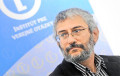
Liavon Volski, Belarusian poet and musician, Volski project, author of the song "Three Turtles"
Most Belarusians thought this government was funny. Yes, of course, the usurper is at the helm of the country, and some deputies with stale gray faces make funny laws. But all this does not concern us; we live in parallel: we bring up children, build our own cottage, equip an apartment, travel abroad, buy, rest. And suddenly it turned out that all this time a completely vicious system was being built here, a complete Mordor.
The hour "Ch" has come, when people, at last, massively opened their eyes. In this situation, old songs came in handy. My song "Three Turtles" is already 20 years old. Although, it has always been popular: it is played by musicians in transitions, by cover bands at events. And I also had to bring songs by Siarhei Mikhalok, "Changes" by Tsoi.
Belarusian musicians showed incredible creative activity, many of whom had previously positioned themselves as far from politics. I was always told that I take too many political themes for songs, that this is some kind of posture, that I write one-day songs. But, unfortunately, these "one-day" songs are relevant for many years. And now those who were out of politics before are composing protest songs - there are a lot of them, they are different in style. There are straightforward ones, and there are those written in Aesopian language. For example, the electronic band Intelligency is now organizing various rallies; police even detained the guitarist - he went in the wrong place.
Everything that this government touches is done sloppily: cinema, theater, music, design. All state performers in the music sphere are very bad, mediocre, cheaply made, although, a lot of money is allocated for this, which is then plundered. There was virtually no normal show business for all 26 years of Lukashenka's rule in the country. There were state executors who stick to state studios. At a certain moment, the state decided that pop culture affects young people's minds and it is necessary to create "its own" pop culture. They poured a huge amount of money into it and introduced a quota so that music on the radio would be 75% Belarusian.
Pro-government pop performers lived well: there is a budget, there is a studio. They had one or two songs, maximum ten, and they traveled with this phonogram with concerts around the country. There was no need to record albums. They had such a scheme: the manager of, for example, a singer comes to a rather rich city, for example, Salihorsk, where there is an industry and goes to the plant's management demanding that the trade union ensure 40% of the attendance at the concert. And the singer is already in the black. Such performers blackmailed by the fact that, for example, they played in the presidential concert, went on a tour "For Belarus" before the elections, so, they say, it is very important that we hold a concert here. And these performers never became popular. And we were on blacklists, which were either weakened or replenished. It was possible to play in a restaurant, then, again, it was impossible. But despite all these restrictions, we and people like us released albums, videos, posted them on the Internet.
Through our music, we support the people and help them survive these incredible difficulties, this struggle with absolute evil. All bands played in the courtyards, even those musicians who a year ago could not imagine that they would perform an acoustic version of their songs. During this time, I managed to give about a dozen concerts in courtyards and traveled to Lithuania and Poland, where I performed at concerts supporting Belarusian protests.
These concerts in the courtyards are a very emotional and touching story. The musicians mobilized because people need to be warmed up, they need to be supported. And people give gifts to musicians. We played near Minsk in the village of Semkava, and there we were handed apples, cucumbers, and pumpkins. And in city courtyards, people give homemade cakes - white-red-white, by the way, very tasty. In the summer and early autumn, they did not pay attention to these concerts. At the very end, they detained everyone, thereby showing that this should not be done. Everyone was given 15 days of arrest. My friend, saxophonist Pavel Arakelian, with whom we play a duet and who gave almost 70 concerts during this time, was also "packed" when he took a taxi after the concert.
And it happens that you come to play in the yard and see that there is a bus with "guys" in civilian clothes, but you know that it's "them." And you know that, most likely, you will not be touched at the concert, but after the concert, they can detain up. Therefore, the task is this: to play at the concert and leave very quickly. Once we had to be very fast to finish the concert in one of the Minsk courtyards. We had a well-organized security and departure scheme. As soon as the car drove up, it immediately became clear that the bus would also arrive.
I am now trying to write a heavy album with evil lyrics. To do this, I wanted to come to Vilnius, but now, apparently, I will have to do it online somehow. A little earlier, in Vilnius, we managed to record "Foes of the People" ("Enemies to the People") literally in one day - both lyrics and music. And the chorus was already finished at the studio. Our Norwegian producer in Vilnius, Snorre Bergerud, said that he would record a song for free to support the Belarusian protests.
"Athletes are recruited by the KGB, and they can't get out"
Andrei Krauchanka, athlete, silver medalist of the 2008 Olympics
I trained all my life and paid no attention to politics. In 2004, when I won the World Junior Championships, employees came to my training camp with the proposal: "There is such a power structure - the KGB. You will be listed there; you will have a rank; you will be seconded." That is, as a member of the KGB, I defended the honor of the country at sports competitions.
Athletes in Belarus are often forced to agree to join the security forces. If you do not receive a presidential scholarship (winners of the World Championships, Europe, or the Olympic Games receive it, and there are not many of them in Belarus), then, not being a military man, you receive a rather low salary. And in the same army, it will be $ 50 more, and this is already a big difference. Therefore, all athletes go to the army. So they are recruited, and then they cannot get out, and they are manipulated.
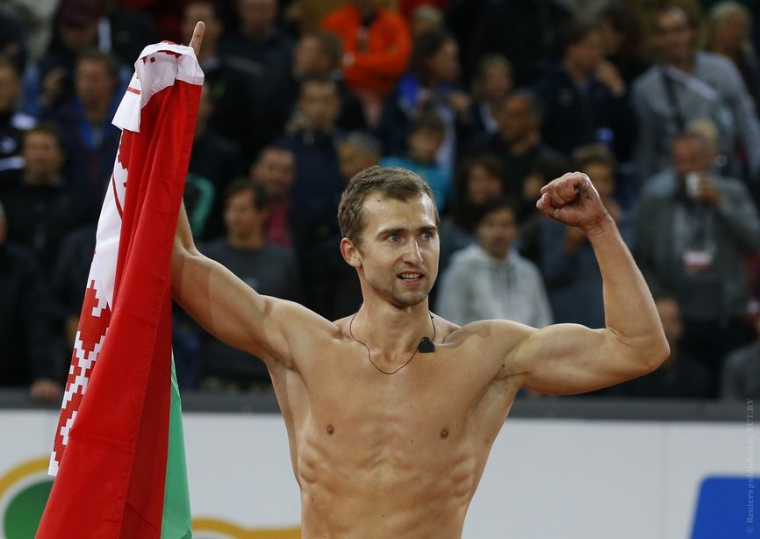
Last year, when the European Games were to be held in our country, I spoke out against them in an interview. Having said that this is not a competition that is necessary for Belarus, that it is worth investing in children's sports, increasing the salaries of coaches. They immediately began to call me from law enforcement agencies, from the Ministry of Sports, and began to shut my mouth. Then I realized that with all my merits, I am simply "zero," I am not worth anything. When this year, before the presidential elections, they began to imprison candidates for president just like that, my eyes finally opened.
At the end of this August, when the athletes decided to write a joint letter against violence, I was literally one of the first signers. Of course, everyone already understood perfectly what the consequences would be if you rebel against the system. And I didn't have to wait long either. The so-called Minister of Sports, Siarhei Kavalchuk, was brought the lists of those who signed this letter. They took me out of the national team and wanted to send me to perform a KGB officer's duties in Maladzechna. I refused, and they fired me, leaving me without a salary, length of service, a place in the national team. And this was their mistake. They thought that this would scare everyone else, and they would withdraw their signatures. But the athletes, if they have already made a decision, go to the end.
Then the Deputy Minister of Sports Mikhail Partnoi with two wrestlers came to me near Minsk without notification. He said that I had one last chance. I asked him: "Are you threatening me?" He hesitated at first, but then said: "You'd better think about your wife and child."
On November 8, I met up with friends for breakfast at a McDonald's in the city center. At this time, the protest was gathering about two kilometers from us. When we had already eaten, we saw that law enforcement officers, paddy wagons, and water cannons began to gather near the McDonald's. I asked my friend to take me in his car to my car, which was farther away. But as soon as we got into the car, we were immediately detained. Hands were handcuffed behind our backs, and we were taken to the courtyards and put against the wall. An AMAP officer ran up, hit my friend and me in the face with his head, shouted obscenities at us. Then they drove us onto the bus, where I lay with my head on the floor. They tried to catch someone else and add to us. But in the end, they took us to the same yard and pushed us into a paddy wagon. We were taken to the central police station, where we stood for 16 hours - hands behind our backs, facing the wall. They pulled out our shoelaces, took our fingerprints, took away our belonging and again, with our hands tied, put us in a paddy wagon.
In Zhodzina, when we got out of the paddy wagon, they put us against the wall, yelled at us, beat us on the calves with a hard rubber band - provoking a reaction. They lined us up, 40 people, head to head, and began to push us so that we rub against each other, tamp us. Then they drove us into a narrow corridor with a blinking light, along which we had to walk 80 meters in single file. Then they put me in the "half-squat" position, then they made me squat right in my winter clothes. In another corridor, people were crouching and jumping out. In the third corridor, only I and my fellow athletes had the strength left. The others laid on the floor. And then we lifted all the others, and, holding the falling ones, we had to crouch. And then I even thought that they want not only to physically exhaust us, but to make sure that we all infect each other with the coronavirus.
We were bullied by young guys who are about 20-23 years old. They put us on all fours and made us crawl, which was very humiliating. Then for inspection - to strip naked, and then put on those things that are all wet from all this physical exertion. After that, we were accommodated - 20 people in a 4-bed cell. Most likely, I got the coronavirus there.
The next day there was a trial. I was convicted according to a fictitious protocol, where it was written that I was seized in a crowd around 18:00, although I had already been detained at that time. There was a man with me, to whom two witnesses were recorded in the protocol - Nikolai Ivanovich Kot and Ivan Nikolayevich Matroskin. I was given 10 days, and they found all the old violations - speeding by car.
We sat and knocked on the batteries and walls"Long Live Belarus" with the Morse code, supported the protest even there. And it was nice! Not a single person in the isolation ward gave up their views. As a special mockery of us, they came up with the idea of spreading white-red-white flags on the floor in each paddy wagon, so that we were forced to walk on them. The authorities did not understand that for us, this is a symbol of the fight against this dictatorship, this violence. If I could now choose which flag to compete under, I would, of course, choose white-red-white. I now associate the green-red flag only with violence.
.png)
Only now I began to return to training gradually. I am supported by the Sports Solidarity Foundation, headed by our swimmer, three-time Olympic medalist (2012 and 2016) Aliaksandra Herasimenia, and I had a chance to prepare for the Olympics. But in such conditions it is very difficult to train, the head is not at all in sports. I am very worried about everyone who is in prison. Therefore, I try as actively as possible to make public what is happening in Belarus - to speak, to give interviews. I can't help with money now because I was left without a salary. But my friends-athletes and I help different people with things - we share our sportswear. Although, at the same time, we try not to report from whom specifically so as not to confuse people. We wanted to help in other ways too. But the people have become so consolidated that as soon as you learn the news that someone needs help, it immediately turns out that help has already been provided. And this gives a wonderful feeling that people cannot be driven into the stall, that the point of no return has been passed.
"The nurse in the isolation ward asked: why do you need insulin if we are not going to feed you"
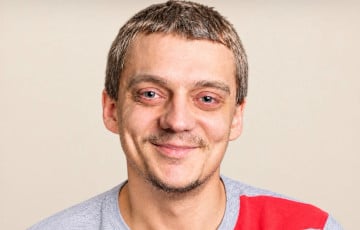
Andrei Vitushka, anesthesiologist-resuscitator, former host of TV programs for children about health
Since December 17, I am officially unemployed - the administration of the Republican Center "Mother and Child" did not renew the contract with me, despite my medical experience of almost 20 years, the highest category, and the degree of candidate of sciences. The reason was not explained to me - according to the law, the clinic's management is not obliged to give such explanations. Of the formal violations of labor discipline that could be blamed on me, I had a warning for not being at my workplace since I was detained by law enforcement agencies in August. In short, I found myself in a worthy company of Belarusian doctors who were dismissed amid protests, together, for example, with Academician Aliaksandr Mrochak, the former director of the Republican Scientific and Practical Center Cardiology.
My wife Krystsina and I were detained on August 10, when we arrived at the central police department of Minsk to look for our 16-year-old son Miron. Shortly before that, he was detained when he and his mother went to visit his grandmother, who lives near the stele "Minsk - Hero City." Moreover, this was done by people in uniform without identification marks (now we know that it was AMAP) and said that in 3 hours, he could be picked up at the Central District Department of Internal Affairs. There, together with the relatives of other detainees, we waited until late in the evening, but in the end, a traffic police car and two police trucks arrived; we were all surrounded, detained, and taken to the notorious detention center on Akrestsina Street.
Relatives who came for the detainees were surrounded and detained
By the way, no charges were brought against me. It was much harder for Krystsina in the isolation ward than for me. She has diabetes, and she has to inject herself with insulin and measure her blood sugar. But in the isolation ward, she was given insulin only a day later, was rarely fed, and it was almost impossible to measure sugar. Upon learning that Krystsina had diabetes, the nurse in the isolation ward asked: "Why do you need insulin if we are not going to feed you." Not surprisingly, we then stabilized her blood sugar for a month and a half.
.png)
Telegram plays an important role in Belarusian solidarity. Not in the sense that someone coordinates and directs something from abroad but as a communication channel. In the first days after the elections, after all the beatings, the White Coats Telegram channel appeared; there are also other chats that unite doctors at the place of work, help them share their views on the current state of affairs. Of course, there is no single body "coordinating protests," all communications are very decentralized. At the same time, the security forces, with perseverance worthy of better use, are trying to "decapitate" these communities and find some coordinators. For example, in mid-November, one of the administrators of White Coats, a 4th year student of the Belarusian State Medical University Ulad Martisnovich, whose whole fault is that he is a brilliant future doctor and social activist. And the channel's fault was that it talked about the repressions against health workers and provided information about the state of affairs with COVID in Belarus.
In their free time, medical workers went out in chains of solidarity, joined the marches of pensioners. For example, cardiologists from the center, which was headed by Mrochak, once left at 7:30 - before the shift, which starts at 8 in the morning, and stood in a chain in front of the building of the center. Already at 7:40, the police arrived, and they were all detained. The doctors were later released, but the operations planned for that morning had to be canceled or postponed. Interestingly, a lecture by major Russian specialists on arrhythmias was held at the center on the same day. It turned out that some authoritative Belarusian colleagues, with whom they wanted to share their experience and communicate, are in the police station. Such is the immersion in our reality.
Medical solidarity takes many different forms. For example, until recently, our doctors had little experience with gunshot wounds and mine blast injuries. Our people are quite calm; the crime rate is not very high, so the Military Hospital used to work with such injuries (even for civilians). But when, amid the suppression of protests, such injuries increased, they began to be treated in other hospitals as well. At the same time, the medical authorities pretend that nothing extraordinary is happening. When it was necessary to systematize the experience of treating these injuries, trauma, and intensive care physicians were forced to exchange experience in doctor chats.
.png)
Also, doctors and patients try to support each other financially. For example, one of the detained doctors, while he was in prison for days, had a fire in a rented apartment. They decided to help and, literally, in a day or two, they collected a significant amount.
Artsem Sarokin, an anesthesiologist at the Minsk emergency hospital, is still in the pre-trial detention center, who allegedly gave the TUT.by journalist Katsiaryna Barysevich information about the state of health of Raman Bandarenka. Raman was beaten by unknown persons, in whom many recognized people close to the Belarusian authorities connected with the field of sports, who came to his courtyard to destroy the protest symbols there. After the scuffle, he was taken to the police station and then to the hospital, where he died a day later from severe head injuries. Colleagues of Dr. Sarokin, who was recently recognized as a political prisoner, as well as ordinary Belarusians, write letters to him and try to support his wife and three children.
The current situation in Belarus often raises serious moral and ethical questions for doctors. For example, the situation with Dr. Sarokin is an illustration of a difficult choice between duty to a patient not to disclose personal information (by the way, Bandarenka's relatives do not make any claims to doctors) and a doctor's duty to society. In particular, because the information was announced that Raman was sober upon admission to the hospital, it was not possible to convince the society that it was an accident - he was allegedly drunk, accidentally fell, and hit his head on the asphalt, like this was hinted at by the official media. Largely thanks to Sarokin's bold act, the so-called "caring citizens," as propaganda calls them, stopped their voyages around the courtyards where people set up symbols of protest. Perhaps, thanks to this, it was possible to preserve someone's health or even life.
Another moral issue that has been widely discussed in the medical community is the acceptability of a medical strike. The idea of a general strike of doctors did not find support in our environment, primarily for moral reasons - we do not want to let down our patients. However, the current events have become a reason for many specialists to think about leaving Belarus for Poland, Germany, Ukraine, and Russia. This is a sad trend because the best are leaving. And this, coupled with the atmosphere of fear and apathy, which is now being spread in Belarus, will certainly seriously hit the national medicine.