

DW: Lukashenka Appoints Bribetakers
8- 21.08.2023, 15:02
- 13,554
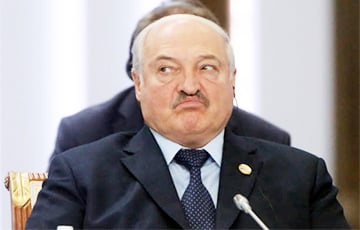
It seems that the establishment deck of the Belarusian authorities lacks fresh cards.
They send any corrupt official, for whose arrest the security forces even hold a plane, to raise a loss-making collective farm right from prison now. Any convicted functionary, according to sources, has a chance to quickly gain freedom in this way, Deutsche Welle writes.
‘Corruption is one of Lukashenka's favourite topics’
Mikhail Kryshtapovich, the former director of the Gorodeya Sugar Plant, was released in July after being sentenced in 2021 to 13 years in prison for taking bribes in large amounts. In order to detain the suspects in that case, the security services ordered the landing of a Belavia aircraft flying to Munich. In prison, Krishptapovich received an offer to apply to Aliaksandr Lukashenka for pardon on the condition that immediately after his release he would go to raise one of the problematic collective farms in the Homel region.
Even before the release of the prisoner, an employee of the Regional Executive Committee who oversees agriculture came to him. As a result, the petition for pardon was considered fast. The previously convicted Kryshtapovich was allowed to spend several days with his family, after that he immediately went to his new job position.
Vadzim Mazheika, the coordinator of the Belarusian expert network Nashe Mnenie ("Our Opinion"), noted that the practice of transferring functionaries from prison to leading positions shows the ineffective anti-corruption policy of the authorities when they resort to storming instead of serious systemic work. Priority, according to Mazheika, is given to high-profile detentions and arrests, although in reality, this is a fight against the results and not the root causes of bribery.
“Corruption is one of Lukashenka's favourite topics. He built his first presidential campaign in 1994 with it, among other things,” Mazheika recalls, "Since then, he has not tired of using rather aggressive rhetoric, arguing about how to solve this problem. But the practice shows the opposite: any official or director of a state-owned enterprise in Belarus knows that even if he gets a sentence term, the one has a chance to be released early and become a leader again.” The analyst is convinced that such a practice destroys one of the main functions of justice - the inevitability of punishment.
In June, the Belarusian authorities prepared legislative changes that will make it easier for those convicted of corruption to become bosses again - they can be granted paroles, as well as lifting the ban on the right to engage in certain activities and hold leadership positions.
Why did Lukashenka cancel his own restrictions for corrupt officials?
Recently, former CEO at Beltelecom Siarhei Sivadzedau was released. He was sentenced to 7 years in prison in 2020 for taking bribes in the amount of about half a million dollars. In his case, there was no pardon in his case, Sivadzedau fell under amnesty and his term of detention was recalculated. The case of the former head of Beltelecom, according to sources, shows the changes in the attitude of the authorities in Minsk towards those convicted of corruption.
In 2019, Aliaksandr Lukashenka signed a decree. According to it, Belarus prohibited the early release of convicted corrupt officials and the replacement of their punishment with a lighter one. The pardon of such persons was also suspended.
Nevertheless, the authorities returned to their previous practice in 2021. For example: Academician Aliaksandr Bialetski, who had been sentenced two years earlier in the so-called "medics' case" to 7.5 years in prison, was released. According to DW, Minister of Health Dzmitry Pinevich vouched for him before Lukashenka. Since then, a well-known scientist in the field of traumatology and orthopedics, Bialetski has been working as just a doctor in a children's clinic.
How does a pardon for an official work?
Vadzim Mazheika believes that the Belarusian authorities, due to a shortage of personnel, have returned to the previous practice of employing officials convicted of corruption. “They oblige CEOs with unrealistic performance figures and tell them that it is their ‘sole responsibility’, and when everything fails, they send them to jail,” the expert tells in DW, “Now there are not enough safe for the regime managers, so they offer convicts freedom in exchange for the execution of any order. Such persons are perfectly suited to the authorities since total loyalty is their priority.”
Lawyer Yuliya Levanchuk draws attention to the fact that a pardon procedure is not transparent at all in Belarus. Neither the convict nor the lawyer has information about the voting of commission members and reasons for negative or positive decisions. In some cases, as in the case of academician Bialetski, the presidential administration requested guarantees from a high-ranking official, but this is not a necessary condition. At the same time, in all cases, convicts are required to confess their guilt, repent and repay the damage.
“The convicts do not know how many months their applications will be considered,” adds Levanchuk, “It’s just that one day a member of the prison administration comes and announces the decision – without argumentation.” According to the lawyer, the act of pardon does not prescribe the obligation of the former convict to work for a certain period for the benefit of a loss-making enterprise - this is an unspoken agreement.
“But I am sure that a convict who agrees to such a pardon has no choice,” the interlocutor notes, “Officially, they are making a regular employment contract, according to which a person allegedly voluntarily agrees to such work.”