

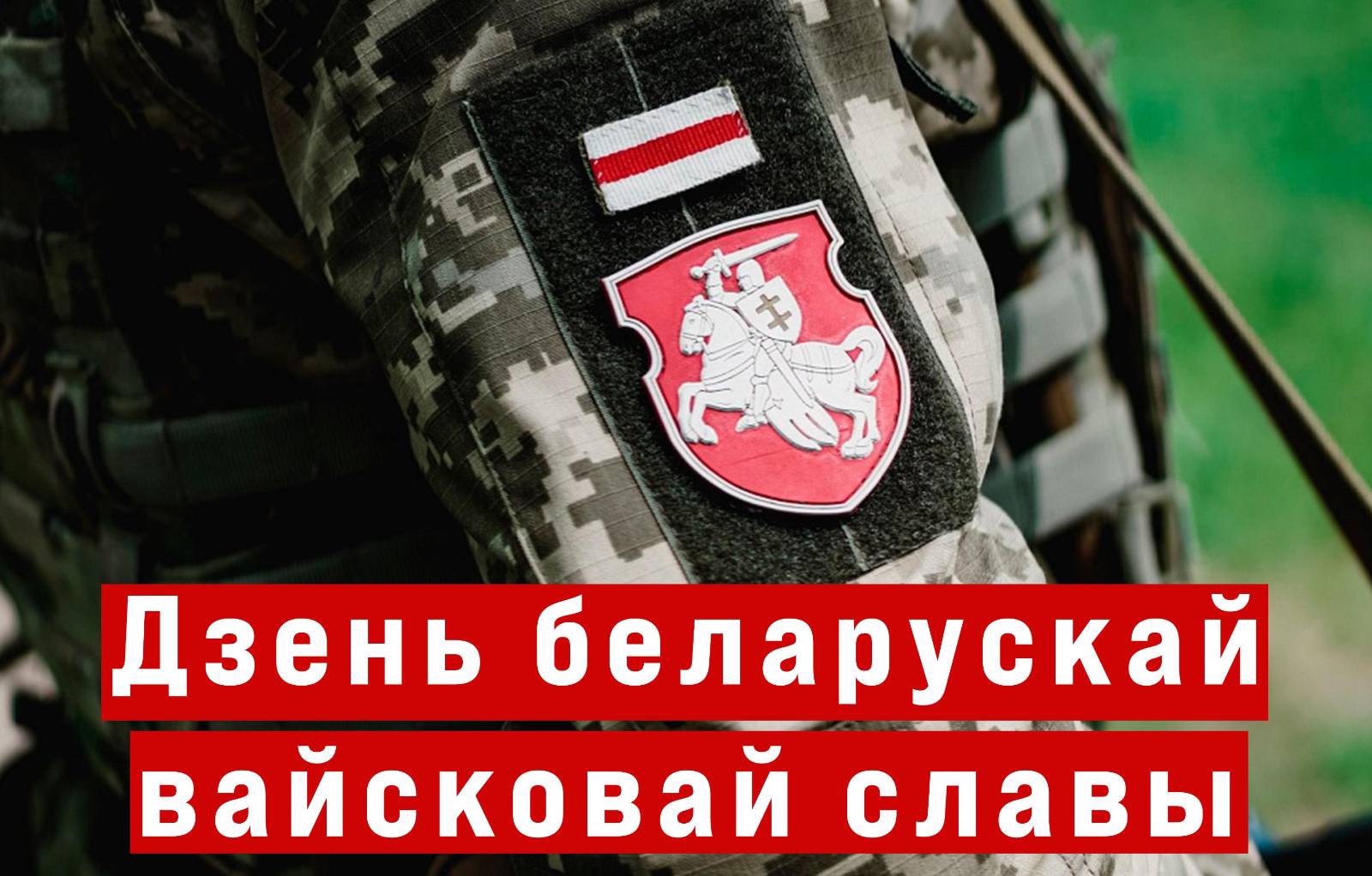
September 8 - Day Of Belarusian Military Glory
23- 8.09.2023, 17:41
- 13,872
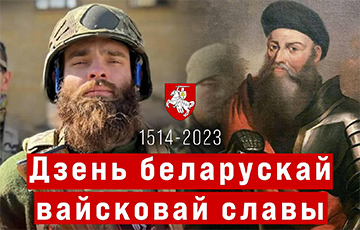
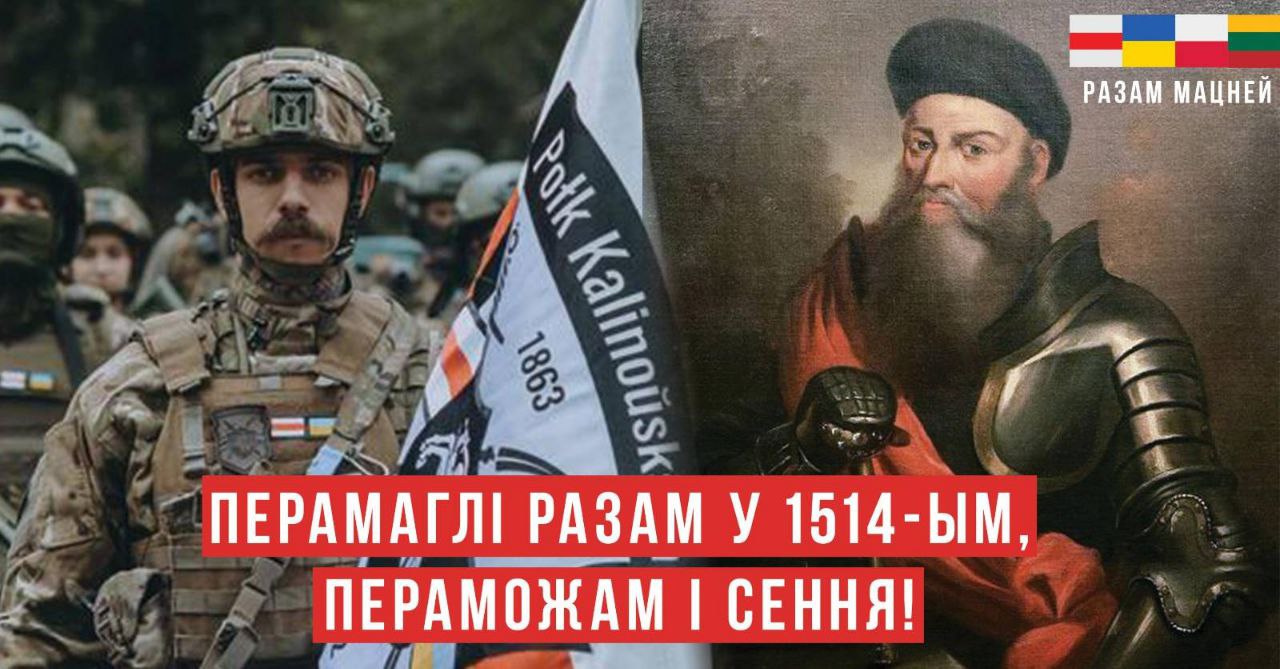
We Won In 1514 - We Win Today.
509 years ago, on September 8, 1514, the troops of the Grand Duchy of Lithuania (GDL) defeated the armies of the Principality of Moscow, which was three times superior in number of troops.
The battle became a turning point during the next war with the Principality of Moscow, when its troops tried to occupy the territory of modern Belarus. One of the main heroes of the Battle of Orsha was Hetman Kanstantyn Astroski. He led an army of 30,000 troops under the Grand Duchy of Lithuania flags, which completely defeated the 80,000 troops of the Moscow army. The prince, headman of Bratslav and Vinnitsa, voivode [governor of a province and military governor - Ed.] Troki [modern Trakai region - Ed.] had won more than fifty successful battles against the Crimean Tatars.
Yuri ‘Hercules’ Radziwill headed the main part of the cavalry. Prince Yuri Olelkovich-Slutski and Ivan Sapeha led separate detachments of the army.
The victory of Prince Kanstantyn Astroski over the army of the Moscow boyars was largely determined by the massive use of firearms, which at the beginning of the 16th century was a sensational innovation in the art of war.
Astroski's tactics in the Battle of Orsha (1514) combined the successive actions of three military branches at once. Hetman set specific tasks for his infantry, cavalry and artillery. The latter played a decisive role in the defeat of the arrogant warlords Ivan Chelyadnin and Mikhail Bulgakov-Golitsa.
Astroski fielded three thousand experienced shooters with cannon artillery against the Muscovites. They were targeting both the enemy front and flanks, shooting through the entire advancing battle enemy formation.
The preparation made by the hetman on the eve of the general battle, when it was necessary to covertly place cannons in position, was also crucial. Astroski sent light сavalry brigades to cover the crossing of the guns, which drove the Muscovites away from the bridges being built across the Dnieper River.
Carts with artillery and ammunition passed along these bridges. The light cavalry brigades of the GDL also trapped the enemy. The German traveller Sigismund von Herberstein writes in his famous book titled Rerum Moscoviticarum Commentarii (literally Notes on Muscovite Affairs) (1549), that Moscow warriors came under massive artillery fire from the GDL. Astroski's gunners were gradually smashing front ranks and transferring the fire of the cannons to targets in the depths of the Moscow regiments.
In fact, Astroski’s and his artillery with their martial art prepared a decisive counterattack by heavy cavalry clad in armor of the Maximilian type, striking with spears in close ranks. These riders pressed the defeated enemies to the banks of the Krapiuna River with their iron wall. Many Moscovites drowned in its waters.
The Moscow Tsar and the Emperor of the Holy Roman Empire had plans for the first geopolitical partition of Eastern Europe. The Grand Duchy of Lithuania was to cease to exist as an independent state, and Moscow was to take its territories. The victory in the Battle of Orsha thwarted these plans.
Our country defended its independence In the Battle of Orsha. The aggression of the Muscovite state was stopped for several decades. The battle disrupted the great alliance of the Holy Roman Empire, the Teutonic Order, the Crimean Tatars and the Principality of Moscow. The German emperor left the alliance with Moscow after that, and entered into an alliance with the Grand Duke of Lithuania and the Polish King.
September 8 was firstly celebrated as the Day of Belarusian Military Glory only in the late 1980s. Belarusian officers solemnly took the oath of allegiance to their native country and people on the anniversary of the great battle on Independence Square in Minsk in 1992. On September 8, 1992, 12 officers and 3,000 reserve soldiers took the oath in Minsk. After a very short time, all the army troops took the oath of allegiance to Belarus.
Belarusians continue the glorious traditions of Hetman Astroski and their ancestors today, fighting as part of volunteer formations against the Russian army in Ukraine.
Every day, commanders and fighters of the Kastus Kalinouski Regiment confirme the military glory of the Belarusians obtained near Orsha: Dzianis ‘Kit’ Prokharau, Dzianis ‘Vaukalak’ Urbanovich, Pavel ‘Dziadzka’ Shurmei, Aliaksandr ‘Kus’ Klachko, Yan ‘Belarus’ Melnikau and others.
The soldiers of the regiment mastered their skills in battles on the most difficult sectors of the front in Ukraine. Thus, the Volat Battalion stormed Russian positions near Bakhmut at a time when the fortified city was the hottest spot on the war map.
Military experts highly appreciate the military skill and experience of the Kalinouski Regiment. More than once, the thesis was voiced that a thousand fighters of the regiment, who have a huge moral and tactical advantage over Lukashenka's troops, are enough to liberate Belarus.
But the main thing is the unconditional support of the people. Today, Belarusians pin their hopes for the liberation of the country on the heroes who gained combat experience in battles with Russian occupiers in Ukraine.
"We Won In 1514 - We Win Today!"