Bloomberg: Kim Jong-Un Has Two Reasons For Selling Missiles To Putin
8- 22.01.2024, 11:07
- 19,508
Not only money.
The sale of ballistic missiles to Russia is an important source of income for the DPRK. In addition, the North Korean regime will receive important information about the characteristics of its weapons on the battlefield.
RBC-Ukraine reported with reference to Bloomberg.
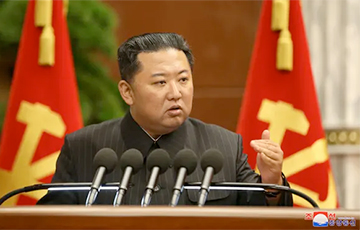
As noted, Russian President Vladimir Putin appealed to Kim Jong-un with a request to provide short-range ballistic missiles and more than 1 million artillery shells. According to weapons experts, the North Korean missiles sent so far are similar in size and flight dynamics to the Russian Iskander series missiles.
A report by the Center for Strategic and International Studies showed that the American Patriot air defence system is still largely effective in countering Russian missiles. In June, when Russia tried to disable the Patriot battery defending Kyiv, the system shot down all 34 Iskander and Dagger missiles fired by Russia.
That’s a warning to Putin about the KN-23 and KN-24 missiles Kim is believed to be supplying. The systems are designed to be deployed quickly, maneuverable in flight and reliably hit targets with a degree of precision. That might not be enough.
“The Patriot missile defense system should be able to intercept North Korea’s short-range ballistic missiles, given its effectiveness against Russian Iskanders,” said Shaan Shaikh, a fellow in the Missile Defense Project at CSIS, a Washington-based think tank.
Rocket sales
Kim’s military has fired off about 120 of its missiles in tests since 2019 and is likely aiming to build an arsenal that could eventually run into the thousands. North Korea’s missiles are priced at about $5 million each, according to data compiled by the Korea Institute for Defense Analyses and released in 2022 by South Korean lawmaker Shin Won-sik, but the costs to Kim have likely dropped since then as he ramped up production.
That makes sales of the weapons a potentially significant driver of foreign revenue or crucial goods from abroad, something the sanctions-hit North Korean economy badly needs. Yet Kim’s isolated regime, which has long used suspect activity to generate hard cash, isn’t just providing the missiles to Putin for commercial reasons.
Any data Kim can get about the characteristics of his weapons on the battlefield can also help his regime refine future designs and attack strategies.
“Russia’s use of DPRK ballistic missiles in Ukraine also provides valuable technical and military insights to the DPRK,” the US State Department said.
Wreckage thought to be from North Korean missiles was in the debris from strikes in Kharkiv in early January, when it wasn’t likely under Patriot protection. Dmytro Chubenko, a spokesperson for the Kharkiv prosecutor’s office, told reporters the missiles were different in key aspects from Russian models, and he believed they were from North Korea.
The transfer of such missiles from North Korea, with ranges of about 400-800 kilometers (250-500 miles), increases the pool of weapons the Kremlin can draw upon to attack Ukraine as the war grinds on.
“North Korea's transfer of several dozen short-range ballistic missiles would be welcomed by Moscow, which has exhausted its pre-war stockpiles despite efforts to increase missile production,” the report by the International Institute for Strategic Studies said.
Kim, meanwhile, is trying to modernize his arsenal even more. His regime started the year by firing off a new type of warhead it said moves at high speeds and turns in the air, which is mounted on an intermediate-range missile designed to hit all of Japan and US bases in Guam.
Air Defence System
South Korea and Japan both deploy Patriot batteries to protect key areas from the likes of North Korea. South Korean forces operate 8 PAC-2 and PAC-3 batteries around Seoul and US forces operate PAC-3 systems in Japan at US military bases, particularly Okinawa.
The Patriot system has a powerful radar that is able to track up to 100 targets including cruise missiles, ballistic missiles and aircraft, according to a report from the Congressional Research Service.
Russia has used heavy barrages of missiles to overwhelm Ukraine’s defenses. In late December, Russia ramped up its bombardment campaign, firing hundreds of missiles at cities across Ukraine, killing dozens. The US determined Russia probably used North Korean missiles in that attack.
Supplies from North Korea are likely to reduce stocks of Patriot missiles and other air defence systems in Ukraine as part of an exhaustion strategy that could increase strike success.
As a result, NATO members pledged in January to ramp up production and procurement of 1,000 Patriot missiles to bolster Ukraine’s air defenses, at a cost of $5.5 billion.
“Patriot is the only system that can deal with all types of Russian missiles,” Ukrainian President Volodymyr Zelenskiy said in October when Germany pledged to provide a Patriot battery to protect Ukraine. Now the effectiveness against North Korean missiles will be known, Bloomberg notes.
Recall, recently the coordinator of the National Security Council of the White House John Kirby said that Russia bought from North Korea ballistic missiles. They have already been used to strike at Ukraine.
In early January, it was reported that the Russians had hit Kharkiv with North Korean missiles. Later, the prosecutor's office confirmed this and told the details.