The European Union Will Offer Ukraine An Alternative To Starlink
2- 15.10.2026, 14:45
- 2,176
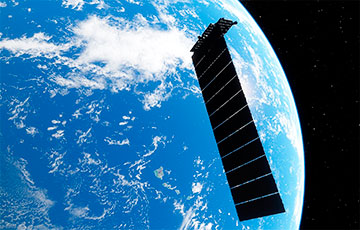
This should reduce dependence on Elon Musk's network.
The European Commission plans to connect Ukraine to its secure satellite communications system, Govsatcom, once commercial capacity is added to it in early 2027. This should reduce dependence on Elon Musk’s Starlink network. The Ukrainian Armed Forces actively use Starlink, but in recent days, due to unexpected speed restrictions, they have lost the ability to carry out medium-range strikes, as well as to partially use their drones on the front lines and to intercept Russian drones.
The Govsatcom system has been operational since January 2026 and combines the capabilities of EU government satellites to provide secure communications, explains Le Monde. A spokesperson for the European Commission Thomas Renier also spoke about plans regarding Ukraine. “We are currently in talks with Ukraine regarding its full integration into Govsatcom,” and Europe has the resources to help Ukraine maintain communications, he replied during a briefing when asked about a possible alternative to Starlink for Kyiv.
Commercial satellite services are expected to be integrated into Govsatcom by early 2027, and “military services could potentially be provided through commercial channels,” Renier explained. However, it remains unclear whether interim commercial solutions (pending the full deployment of the European IRIS constellation of more than 300 satellites by 2029) will be able to replace the capabilities of Starshield—the SpaceX military system used by the Ukrainian Armed Forces. Renier refrained from directly comparing European capabilities with Starlink and Starshield.
On Wednesday, Musk stated that Starshield is owned and controlled by the U.S. government, and that decisions regarding its operation and speed limitations are ultimately made by the president. Starlink, on the other hand, is a commercial service provided by SpaceX for civilian and defense purposes; therefore, it should not be used “for offensive military operations, as that would be unacceptable for a commercial company.”
On the night of October 14, a former adviser to the Ukrainian Minister of Defense Serhiy Sternenko reported interruptions in Starshield’s operation when traveling at speeds exceeding 160 km/h (the Ukrainian Armed Forces install portable terminals to receive the signal on their drones). He later stated that the connection began to drop out even at speeds of 60–70 km/h.
Former Ukrainian Defense Minister Mykhailo Fedorov, at whose request Musk disabled the Russian military’s Starlink terminals earlier this year, reported on Wednesday evening: “Starlink connectivity at speeds of up to 160 km/h is being restored. The complete removal of the speed limit in Starshield is now crucial for Ukraine’s defense.”
Officials in Kyiv believe the restrictions were imposed at the direction of Donald Trump, who has criticized Ukraine for strikes on Russian oil refineries that allegedly led to a sharp rise in global gasoline and diesel prices, the Financial Times reported, citing conversations with Ukrainian officials. A senior U.S. official told Axios that the administration had nothing to do with the restrictions.
However, they “have brought all medium-range strike operations to a complete halt,” a frontline officer of the Ukrainian Armed Forces told Politico, including operations using mesh-network-based systems. In such systems, a single UAV equipped with Starlink receives a signal and relays it to other drones connected to the network. This allows them to strike targets located behind Russian lines and supporting the Russian army’s supply lines in the occupied territories.
Due to the resulting limitations, drone operators cannot effectively support infantry on the battlefield or strike Russian missile and artillery systems located deep behind enemy lines, as well as ammunition depots, command posts, and other targets, the officer explained: “This is comparable to a nuclear strike against us. All operations have been suspended. This will cost many of us our lives.”

Bank's name: Bank Millennium S.A.
Address: ul. Stanislawa Zaryna, 2A, 02-593, Warszawa
IBAN: PL97116022020000000216711123
SWIFT: BIGBPLPW
Name of the account holder: Fundacja “KARTA ‘97”
Purpose/title of payment: Donation for statuary aims
You can contact us by the e-mail charter97@gmail.com