"The Neptunes" Are Changing The Rules Of The Game
- 16.10.2026, 18:29
- 1,916
Attacks on oil refineries are weakening the Kremlin's military.
Ukraine is identifying new vulnerabilities in the Russian military, forcing it to withdraw its air force as far as possible from the front lines and to lose resources without which it is impossible to launch an offensive.
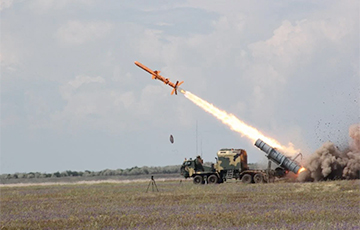
The upgraded “Neptune” missiles can already strike targets hundreds of kilometers away, and strikes on fuel infrastructure pose a threat to the Kremlin that cannot be eliminated simply by redeploying equipment.
Roman Svitán , a reserve colonel in the Ukrainian Armed Forces, flight instructor, and military expert , stated in an interview with “24 Kanal” why the destruction of Russian aircraft could change the pace of airstrikes, which target could deal an even more devastating blow to Russia’s air force, and how the destruction of the oil refining industry could affect the occupiers’ offensive capabilities. The expert also assessed whether Ukraine would be able to continue long-range strikes in the event of reduced U.S. support.
Upgraded “Neptunes” Are a Game-Changer
A successful strike on the Borisoglebsk military airfield in the Voronezh region, during which six Russian Su-34M fighter-bombers were destroyed at once, demonstrated a new level of capability for Ukraine’s military-industrial complex.
The Russians withdrew their tactical aviation 500 kilometers from the front line, considering this distance safe. Previously, the aircraft were based in Baltimor near Voronezh (300 km), but after the appearance of ATACMS missiles, the Russian command first redeployed them to Engels and then moved them closer—to Borisoglebsk.
However, Ukrainian forces deployed modernized land-based “Neptune” cruise missiles. Originally, this missile was developed by the “Luch” Design Bureau as an anti-ship missile (it was this missile that destroyed the cruiser “Moscow”), but its range has now been increased to 500 kilometers thanks to conformal fuel tanks, which allow it to carry a warhead weighing over 100 kilograms.
Russian air defense at the airfield was prepared only for drone attacks, so a salvo of four “Neptune” missiles reached the heavy aircraft parking area unimpeded—aircraft that cannot be quickly dispersed.
Consequences for Russian Aviation and Logistics
The loss of six Su-34s represents a 6% reduction in the total number of such aircraft in Russia (there are about a hundred of them). Now the Russian command will be forced to redeploy the remaining aircraft to the Engels airfield, located 700 kilometers from the front line.
This radically changes the enemy’s logistics: the flight time with bombs will increase to 1.5–2 hours, and the number of sorties per shift will decrease by at least one and a half to two times. Furthermore, this will lead to accelerated wear and tear on aircraft and an increase in unscheduled ammunition failures.
The next logical step would be to strike Engels itself, where strategic aviation (Tu-95, Tu-160) is based and tens of thousands of metric tons of aviation kerosene are stored in karst caves. The explosion of such an arsenal would have catastrophic consequences for the entire base.
The Oil and Gas Industry as the Main Target
In parallel with the strikes against the air force, the systematic destruction of the Russian oil refining industry continues. This is the only way to defeat a resource-dependent country. At present, about half of Russia’s oil refineries have been hit: a third are idle, and another portion is undergoing repairs.
The halt in refining has forced the Russians to fill all the storage tanks at oil transshipment terminals (for example, in Rostov and Novoshakhtinsk) with crude oil. Strikes on these facilities are most effective right now: full tanks burn to the ground, destroying their foundations, and their restoration will cost millions and take years.
Without fuel, the Russian army will be unable to conduct large-scale offensive operations, since its logistical reach in the south extends 500 kilometers (from Rostov to Kherson). Fuel is the lifeblood of the army, and without it, any offensive will grind to a halt within a few weeks.

Bank's name: Bank Millennium S.A.
Address: ul. Stanislawa Zaryna, 2A, 02-593, Warszawa
IBAN: PL97116022020000000216711123
SWIFT: BIGBPLPW
Name of the account holder: Fundacja “KARTA ‘97”
Purpose/title of payment: Donation for statuary aims
You can contact us by the e-mail charter97@gmail.com