


"This Is The Ukrainian Armed Forces' New Objective"
10- 20.10.2026, 15:22
- 2,378
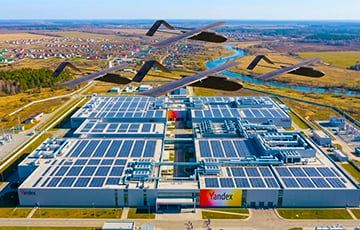
A military expert explained how Ukrainians silenced Russian bots.
The Armed Forces of Ukraine launched a series of strikes on Yandex data centers, disrupting the operation of Russia’s key digital infrastructure. According to analysts, in Vladimir "Galushkin"—the Russian IT giant’s most powerful supercomputer—was destroyed.
Can we already say with certainty that “Galushkin” has been completely destroyed? How painful will the loss of this supercomputer be for Russia?
The website Charter97.org posed these questions to Ukrainian military and political analyst Alexander Kovalenko of the “Information Resistance” group Alexander Kovalenko:
— This is, of course, a very painful loss for Russia, since the country has virtually no domestic supercomputer production. All of this is Western technology, which is now simply inaccessible to Russia due to the sanctions that have been imposed.
Even if the supercomputer wasn’t completely destroyed or burned to the ground, but only sustained serious damage, it will need to be repaired and certain components replaced. This could take many, many months and will, of course, affect Yandex’s operations across the board. The consequences will be felt by both ordinary users and the Russian Ministry of Defense, the military, and the intelligence services, to which the company provided its services.
It was precisely after the attacks on Yandex’s data centers that we saw a sharp the activity of Russian bots in Western countries dropped. Their operations were powered by the high performance of such supercomputers, high-speed data processing, and the capabilities of large data centers. Repair work could drag on for a very long time. They are directly dependent on equipment shipments from other countries, so restoring the supercomputer could turn into a never-ending quest.
The impact of this attack is already seriously affecting the quality of Yandex’s services and the company’s overall operations. But this is so far just one of a few instances of attacks on Yandex’s data centers. I am more than certain that such attacks will continue—and not only against its facilities. We’ve seen that attacks have even targeted St. Petersburg. Not only oil depots and other facilities—including Ozon—were targeted, but also the VKontakte data center.
Consequently, data centers are becoming one of the priority targets for Ukraine’s unmanned systems forces during massive raids on Russian territory.
— You mentioned the military component of Yandex’s data centers. How might the destruction of this infrastructure affect Russia’s ability to wage war in Ukraine?
— Russia will continue to wage this war regardless. However, it will have limited access to cartographic and geolocation data, geopositioning services, and other services that were provided to the General Staff and the Ministry of Defense.
We’re talking about software and various utilities. In addition, Yandex has developed a whole range of artificial intelligence modules that are used in Russian drones, specifically in the “Gerani-4 Seeker.” The autopilot, target acquisition, and artificial intelligence systems in these drones are built specifically on the basis of Yandex modules.
Therefore, a whole range of services that Yandex provided to the Russian military is now in question. This will, of course, negatively impact the Russian military’s ability to effectively use the necessary utilities and software. The Russian military will either lose access to these products entirely or be forced to use outdated and incomplete versions of them.
— Indeed, following the strikes, the activity of Kremlin trolls has dropped sharply. This has been noted in many countries, including Israel. What consequences might this have for Russian propaganda?
— First and foremost, this will affect the presence of Russian propaganda in countries that are priorities for the Kremlin, especially in the run-up to the U.S. elections. Everyone knows full well that Russia constantly interferes in U.S. elections using information technology, bots, and social media. This has already become commonplace.
Now this influence will diminish. Of course, it will persist. Russian entities will attempt to restore the activity of their bot farms and use every available means to regain their former reach.
But if the attacks on the data centers of Yandex and other Russian IT monopolies continue, I think the influence and presence of Russian propaganda in the Western information space can be minimized.

Bank's name: Bank Millennium S.A.
Address: ul. Stanislawa Zaryna, 2A, 02-593, Warszawa
IBAN: PL97116022020000000216711123
SWIFT: BIGBPLPW
Name of the account holder: Fundacja “KARTA ‘97”
Purpose/title of payment: Donation for statuary aims
You can contact us by the e-mail charter97@gmail.com