
For The First Time In Half A Century, Algeria Will Send Troops Abroad
- 26.10.2026, 20:33
- 1,104
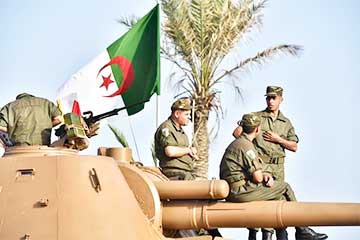
The last time Algerian ground forces took part in an overseas operation was in 1973.
Algerian President Abdelmadjid Tebboune has decided to deploy units of the National People's Army to Niger to protect the energy and economic interests of both countries. The decision was supported by the country’s political parties and civil society organizations, according to the state news agency APS .
The day before, on October 25, both chambers of the Algerian parliament approved the president’s initiative, according to Anadolu. According to the agency, the decision was made at the request of the Nigerien authorities. The plan involves deploying a limited military contingent to ensure the security of oil projects operated by the Algerian state-owned company Sonatrach, which operates in Niger through its subsidiary SIPEX.
As Anadolu notes, this could be the first time Algerian ground forces have been deployed abroad since their participation in the Arab-Israeli conflict in October 1973.
The decision was made against the backdrop of expanding military cooperation between Algeria and Niger. Last week, the countries signed a protocol on defense cooperation during a visit by Niger’s Defense Minister Salifou Modi to Algeria. Algeria had previously transferred helicopters and military equipment to Niger and subsequently sent four Su-30 fighter jets and a refueling aircraft to Niamey, according to Anadolu.
Relations between Algeria and Niger deteriorated in April 2025 after the Algerian military shot down a Malian drone. Niger, along with Mali and Burkina Faso, recalled its ambassador from Algeria. However, in 2026, the countries began to restore cooperation. In February, Niger’s President Abdurrahman Tchiani visited Algeria, where the two sides agreed to strengthen cooperation in the areas of security and the economy, Reuters reports.
In June, Niger and Niger, and Algeria began construction of the 4,128-km Trans-Saharan Gas Pipeline, which will be able to supply Europe with up to 30 billion cubic meters of natural gas per year to reduce the EU’s dependence on Russia. The pipeline will run from the city of Warri in southern Nigeria, cross Niger, and reach the Hassi Messaoud gas hub in Algeria, from where the gas will be transported to Mediterranean export terminals and pipelines serving European markets.

Bank's name: Bank Millennium S.A.
Address: ul. Stanislawa Zaryna, 2A, 02-593, Warszawa
IBAN: PL97116022020000000216711123
SWIFT: BIGBPLPW
Name of the account holder: Fundacja “KARTA ‘97”
Purpose/title of payment: Donation for statuary aims
You can contact us by the e-mail charter97@gmail.com