

India Has Set A Record For Ammunition Sales To Ukraine's Allies
1- 28.10.2026, 10:43
Bloomberg has released the figures.
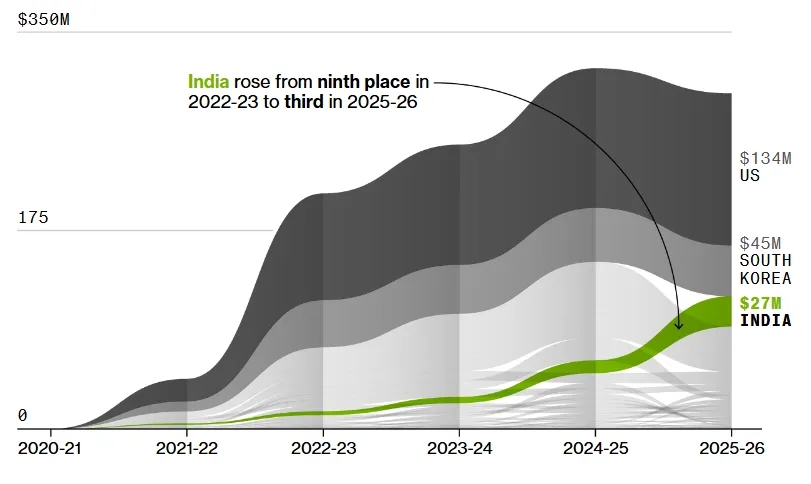
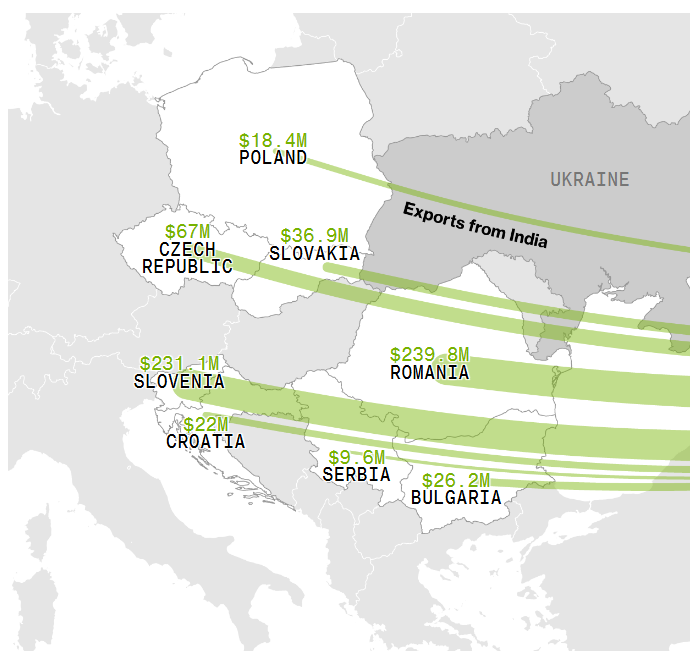
In recent years, India has significantly increased its arms shipments to Ukraine’s allies. Since Russia’s full-scale invasion of Ukraine, Indian arms manufacturers have shipped at least $872 million worth of ammunition to European countries.
These figures represent a surge of more than 1,600% compared to the $49.2 million shipped over the four-year period prior to the war. This was reported by
How Arms Deliveries Work
Three-quarters of these deliveries went to 13 countries in Eastern and Central Europe that actively support Ukraine. As of today, India ranks second among arms suppliers to this region, trailing only South Korea.
Officially, New Delhi adheres to a policy of non-alignment and frames the growth in exports as a purely commercial initiative. However, the increase in arms shipments to U.S. and European allies is putting India’s long-standing partnership with Moscow at risk.
Despite Prime Minister Narendra Modi’s efforts to localize production under the “Make in India” program, most exported goods are still based on Soviet and Russian technologies.
Customs documents record transit through intermediaries. For example, the American company Regulus Global and state-owned entities such as Romania’s Romtehnica or Poland’s Nitro-Chem purchased Indian shells, mortars, and explosives, which were then diverted to meet the needs of the Ukrainian defense sector.
Record Financial Performance and Global Demand
The rapid growth of the defense sector has already been reflected in stock market prices. The defense sector index on the National Stock Exchange of India has risen by nearly 15% this year. According to official data, for the fiscal year ending in March, the total volume of arms exports reached $4 billion, which is approximately 25 times more than a decade earlier.
The main drivers of this trend are state-owned enterprises such as Munitions India Ltd., which were reformed in 2021 to enhance competitiveness.
At the same time, experts note that India will have to tighten its end-use control regulations to avoid potential international sanctions and diplomatic risks resulting from weapons ending up in active conflict zones.

Bank's name: Bank Millennium S.A.
Address: ul. Stanislawa Zaryna, 2A, 02-593, Warszawa
IBAN: PL97116022020000000216711123
SWIFT: BIGBPLPW
Name of the account holder: Fundacja “KARTA ‘97”
Purpose/title of payment: Donation for statuary aims
You can contact us by the e-mail charter97@gmail.com