

"Even When It's Freezing, The Kids Here Run Around Barefoot And In Shorts."
3- 28.10.2026, 12:48
- 1,570
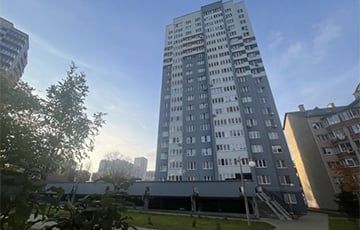
A woman from Minsk explained how much her family pays for utilities in their apartment building.
In a 90-square-meter apartment in Minsk, a family of five pays about 250 rubles for utilities in the winter. At the same time, residents decide for themselves when to turn on the heat and do not face summer hot-water shutdowns, according to "Argumenty i Fakty".
Electric-heated buildings differ from conventional high-rises in that they lack central heating and hot water supply; instead, each apartment is equipped with its own electric boiler and water heater. Residents can independently regulate the temperature in their rooms and turn on the heat at any time of year.
Ekaterina, her husband, and their three children moved into such a building on Hrushevskaya Street nearly three years ago. According to her, it’s especially convenient to control the heating yourself during the off-season.
“I remember rainy days when laundry would take a week to dry in the apartment. I just turned on the heat, and by evening everything was dry. We live like we’re in a country house—it’s warm and cozy. Even in the freezing cold, our kids run around barefoot and in shorts,” said the Minsk resident.
The apartment has two electricity meters. One measures regular consumption—lighting and household appliances—while the other is for heating and water heating. A preferential rate applies to these needs—about five kopecks per kilowatt-hour. However, electricity costs rise significantly in the winter.
“If you recall the January cold snap, when the temperature outside was as low as -30°C but the apartment was a comfortable +28°C, we paid 100–150 rubles just for the electricity used for heating. Taking into account all other housing and utility charges, the total bill for a ‘three-room apartment’ came to about 250 rubles; for some of our neighbors, it even reached 300 rubles,” Ekaterina explained.
In the summer, the family spends about 30 rubles a month on water heating; in the winter, expenses for heating and hot water start at 100 rubles.
At the same time, the hot water supply in the apartment isn’t unlimited—the family has a 200-liter water heater, which is barely enough for the five of them. For example, it’s not possible for everyone to take a bath one after another—they have to conserve water and wait for a new batch to heat up.
Another drawback is the need to maintain the equipment themselves. According to Dmitry Pochebyta , director of the management company “Triumph” , electric boilers and water heaters are considered the property of the apartment owners, so their repair and replacement are paid for by the residents.
Ekaterina explained that annual maintenance for an electric boiler costs about 80 rubles, and it’s not easy to find a technician to repair or replace a water heater.
“Official services are reluctant to take on this work. If the water heater breaks down, it’ll cost us a pretty penny,” the Minsk resident laments.
However, during their time living in the apartment, the family has not experienced any serious breakdowns, nor have they faced any power outages.
The property management company explained that two independent power lines are connected to the building. If the main line fails, the automatic system switches the building to the backup line.
According to experts, the absence of central heating networks also simplifies building maintenance: there’s no need to flush or pressure-test the building’s central heating system before winter. And in apartments with electric convector heaters, there is no risk of flooding neighbors due to leaking radiators.

Bank's name: Bank Millennium S.A.
Address: ul. Stanislawa Zaryna, 2A, 02-593, Warszawa
IBAN: PL97116022020000000216711123
SWIFT: BIGBPLPW
Name of the account holder: Fundacja “KARTA ‘97”
Purpose/title of payment: Donation for statuary aims
You can contact us by the e-mail charter97@gmail.com