

Roman Svitán Revealed Why The Ukrainian Armed Forces Are Targeting Fertilizer And Rubber Plants
- 28.10.2026, 15:15
- 1,006

Systemic pressure on Russian industry is becoming a decisive factor.
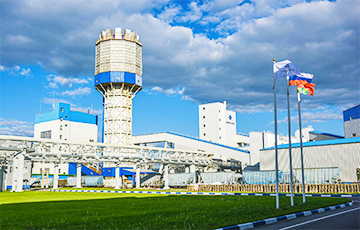
In recent days, the Ukrainian Armed Forces have been systematically striking factories linked to the Russian military-industrial complex. Among the targets the Azot chemical plant in Novomoskovsk, facilities synthetic rubber plants, and facilities in Lipetsk. This infrastructure supplies the Russian Federation’s military with components for explosives, solid rocket fuel, and military equipment.
The website Charter97.org asked Roman Svitana, a retired Ukrainian Armed Forces colonel, military expert, and flight instructor, about the main strategic objective of these strikes.
— This is purely military production. Synthetic rubbers are used to produce rocket fuel. The plants that manufacture them also produce additives for motor fuel that increase the octane rating. Therefore, these are military facilities involved in the production of explosives and fuel.
The chemical plant targeted today in Novomoskovsk produces, among other things, such fertilizers. The main objective is to disrupt the production of raw materials used in the further manufacture of explosives. Virtually all nitrogen plants produce ammonium nitrate, and many also produce concentrated sulfuric acid. Both components are used in the production of explosives. The entire Russian chemical industry supplies raw materials for this purpose.
Additionally, there was also a strike on the metallurgical complex in Lipetsk, which produces alloy steels needed by the Russian military. This, too, is purely military production.
— How quickly will this affect the production of missiles and ammunition, as well as the operations of the Russian military?
— The impact is immediate: after the strikes, individual production chains are disrupted and halted. But the Russians have the ability to reroute supplies; they have other production facilities as well. That is why the synergistic effect of sustained, continuous strikes is crucial: such facilities must be kept under constant fire control. That is the main objective.
Take the oil industry, for example. While oil refineries were being targeted, fuel production fell. As soon as the strikes stopped, it rose again—by 30%. What’s needed here is constant fire control, and so far, that’s not happening.
If we strike only from time to time—that is, sometimes we strike, sometimes we don’t—we won’t achieve the desired effect. In that case, it’s impossible to predict the consequences. I can’t say right now how much this will affect Russia’s military machine: there’s no guarantee that we won’t stop striking the chemical industry tomorrow. In that case, these strikes would be pointless.
— It’s true that recently the Ukrainian Armed Forces have been striking Russian oil refineries significantly less often. Is this a tactical pause and a shift of efforts toward defense industry facilities, or are there signs of agreements with the Trump administration within the framework of the “energy truce” he announced?
— It’s definitely an agreement. The only question is, with whom and what kind of agreement. What we’re being shown on the air isn’t always the truth. I wouldn’t base my judgment on just one version of the story. The main thing is that agreements definitely exist.
They are 100 percent harmful to Ukraine: the attitude toward them is negative, no matter who they were reached with. Moreover, this negative attitude is now directly falling on Ukraine’s leadership.

Bank's name: Bank Millennium S.A.
Address: ul. Stanislawa Zaryna, 2A, 02-593, Warszawa
IBAN: PL97116022020000000216711123
SWIFT: BIGBPLPW
Name of the account holder: Fundacja “KARTA ‘97”
Purpose/title of payment: Donation for statuary aims
You can contact us by the e-mail charter97@gmail.com